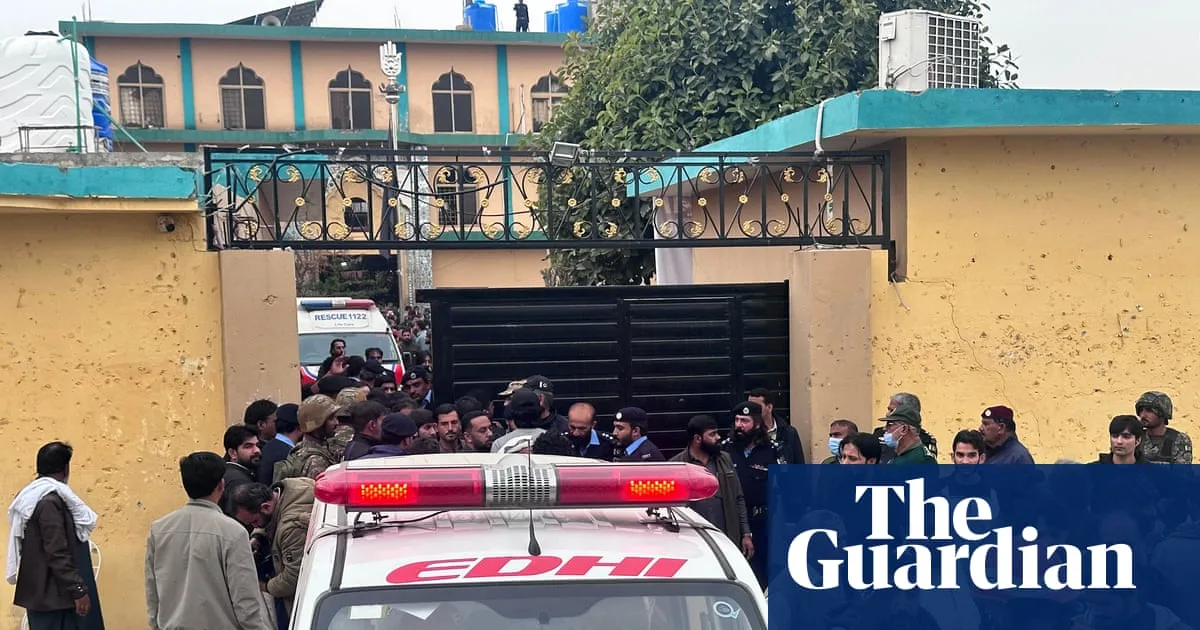
At least 31 people have been killed and 169 others injured after an explosion ripped through a Shia mosque on the outskirts of Pakistan's capital, Islamabad, during Friday prayers. Police are investigating whether the blast was a suicide attack, and officials fear the death toll could rise as some of the injured are in a critical condition.
The blast occurred at the Khadija al-Kubra mosque, with television footage and social media images showing police and residents transporting the wounded to nearby hospitals. Witnesses described a harrowing scene, with bodies lying on the carpeted floor. Hussain Shah, who was praying in the courtyard, said he heard a loud explosion and later counted about 30 bodies inside the mosque.
The Islamic State group claimed responsibility for the attack on its Telegram channel. It has previously targeted Shia worshippers, who are a minority in Pakistan. The attack follows a surge in militant violence in recent months, blamed largely on Baloch separatist groups and the Pakistani Taliban.

Pakistan's President Asif Ali Zardari and Prime Minister Shehbaz Sharif condemned the attack, with Sharif ordering a full investigation. 'Those who are responsible must be identified and punished,' he said. The interior minister also condemned the attack and urged authorities to ensure the best medical care.
The attack occurred while Uzbekistan's president was on an official visit to Islamabad, attending an event several miles from the mosque. A top Shia leader, Raja Nasir Abbas Jafri, expressed deep sorrow and criticised the authorities, calling the attack 'a serious failure in protecting human lives'. He urged blood donations as hospitals faced urgent shortages.
Pakistan's mainstream media faced backlash for initially failing to report the attack, with journalist Nadir Gurmani noting that news was circulating on social media while TV channels carried no coverage. The attack is one of the deadliest in Islamabad since a 2008 suicide bombing at the Marriott hotel killed 63 people.