A growing number of thwarted and executed Islamic State-sponsored terror attacks across Europe have sparked fears terrorism is once again on the rise across the continent, according to a new report.
The most feared terror network the world has ever known is growing again, and individuals and groups are being radicalised at a terrifying rate, according to sources. Terror threats across Europe, including the UK, could spark a reaction from far-right extremism, prompting a self-perpetuating competition between militant Islamists and anti-Islam groups.
Concern over Iran-linked groups
There is also alarm over growing links between terror groups such as ISIS, al-Qaeda and shadowy groups loyal to Iran, such as Hezbollah-affiliates in Lebanon and Syria.

A European security source told the Mirror: "The rise of ISIS-inspired attacks across Europe is a cause of huge concern. History shows that they do trigger further attacks by inspiring others, this is then producing a cycle of increasing right wing political responses and right wing groups gaining traction and vigilante type attacks. There is huge concern in the EU community."
Evolving terrorism landscape
Respected former FBI terror expert Ali Soufan’s organisation, The Soufan Centre, highlighted the alarm over ISIS in Europe, including in the UK, in the recent report.
It highlights fears ISIS and other foreign terror groups have stepped up a campaign, twisting the minds of mostly young men of what it describes "indirect influence through online radicalisation and engagement."
This means ISIS operatives may have found a more subtle and persuasive method of appealing to vulnerable would-be terrorists than direct invitations to join their terror campaign. And subtle radicalisation means the group is increasingly at arms-length contact with European extremists online but in ways that are far less traceable than those previously used.
Now the Soufan Centre, a US-based non-profit organisation warned: "A string of thwarted and executed attacks across Europe — many either proven or suspected to be aligned with the Islamic State (IS) — have shined a light on an evolving terrorism landscape.
"Recent attack plots and terrorism charges in Europe have featured youth suspects, highlighting a concerning risk matrix of online radicalization and coordination with foreign terrorist networks, creating challenges for law enforcement agencies. Recent cases have not revealed embedded foreign terrorist networks in European cities, but rather indirect influence through online radicalization and engagement, demonstrating a more passive dynamic that make detection, prevention, and interdiction difficult."
Resurgence after military defeat
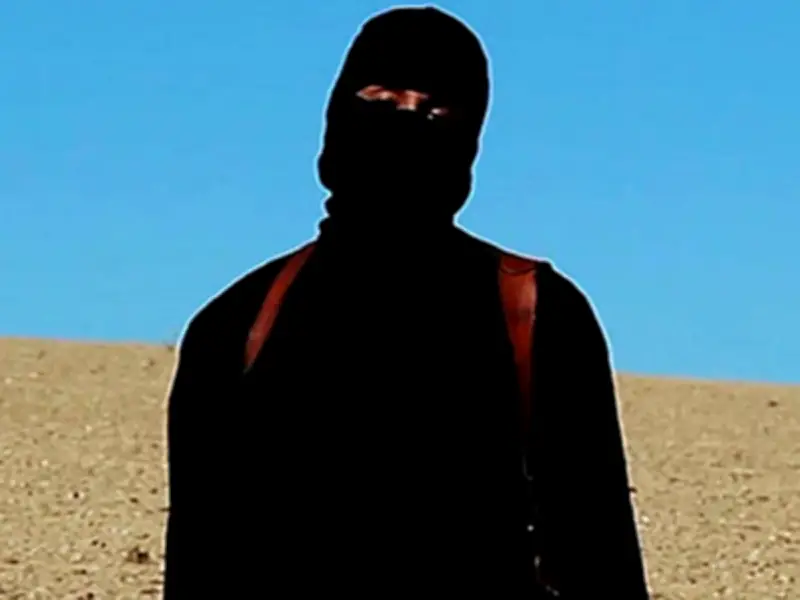
A huge military campaign led by Iraqi and Syrian Kurds, supported by US special forces, effectively demolished ISIS’s ability to hold ground in the Middle East by 2019. In particular, members of British Islamic State groups in Syria, led by Mohammed Emwazi-AKA ‘Jhadi John,’ killed by Alexanda Kotey and El Shafee el-Sheikh, were killed or arrested by Syrian Kurds.
Emwazi was killed by a Hellfire missile attack in 2015 and Kotey and El Sheikha are thought to be behind bars in a US Supermax prison in Colorado. But since then, US withdrawals from Syria and partial down-sizing of its military in Iraq have led to a resurgence of the group, even in Africa and elsewhere across Asia.
Evil Kotey laughed when he told the Daily Mirror, during an interview conducted in his jail in Syria in 2019: "Joining Islamic State was like being in al-Qaeda on steroids." But the future he feared more than anything was being caught and jailed in the US, which is exactly what happened.
Huge concern about radicalisation
Taliban rule in Afghanistan since the chaotic and disastrous withdrawal in 2021 also prompted ISIS to grow in the region, in Pakistan and even in India in the form of ISIS in the Khorasan.
Now European agencies are under pressure for not having been able to disrupt or tackle terror plots in countries such as France and Germany The Soufan report adds: "...plots, arrests and attacks have drawn in criticism across the political spectrum in France and Germany where there were recent deadly attacks that highlight lapses prevention, deradicalisation and post-attack investigation processes."

In the UK there has been alarm over a huge increase in reporting of young victims of radicalisation to the government anti-terror Prevent scheme.
Last month, Italian authorities arrested a teenage girl in Pavia on terror charges after she was suspected of being involved in ISIS related social media. She was suspected of participating in pro-ISIS Telegram conversations and downloading bomb-making instructions. On July 25, French police raided a six member cell of terror suspects over a plot to attack a Jewish synagogue in Sarcelles, outside Paris. Other plots, according to the Soufan Centre "against Jewish community sites have been flagged elsewhere in Europe and North America particularly since the outbreak of the Iran war."
These plots are often linked to Iran backed militia such as Kataib Hezbollah or crime gangs with Iranian links. On the same day as the foiled plot in Sarcelles a Berlin Pride event was attacked by a German of Lebanese descent called Abdul Ballout. Ballout, an ISIS loyalist killed one and injured 31 others in a car-ramming and stabbing spree. On July 27 another individual armed with knives stabbed three women in Paris.