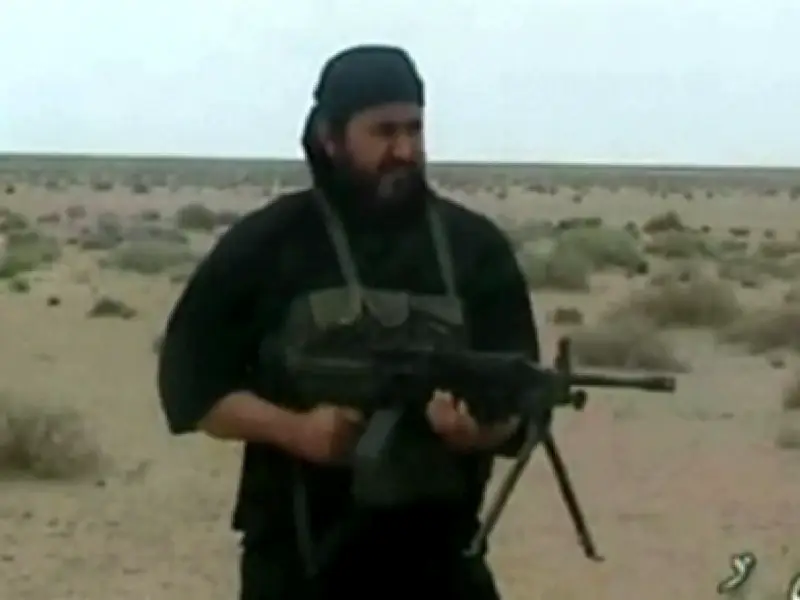
The Islamic State group, once described as a self-confessed version of 'al-Qaeda on steroids,' has left a legacy of extreme violence since its emergence in the mid-2000s. Its brutal tactics became so severe that al-Qaeda's leadership formally cut ties with the group in 2014, judging it too murderous even for their network.
Origins and the Rise of Zarqawi
Islamic State began to take shape in 2006 under Abu Musab al-Zarqawi. In 1999, al-Zarqawi travelled to Afghanistan, where he met Osama bin Laden and committed to building a Middle Eastern branch of the network. He subsequently set up various terror groups in Iraq, orchestrating the 2004 kidnapping and beheading of British civil engineer Ken Bigley, who had no military involvement.
As an al-Qaeda operative, al-Zarqawi pledged allegiance to bin Laden in 2005, building up al-Qaeda in Iraq and turning an anti-US insurgency into a full-blown Sunni-Shia sectarian war. Al-Qaeda cut off the so-called Sheikh of Slaughter, known for beheadings, car bombings and suicide attacks, months before he was killed by US special forces in Iraq in 2006.
The Caliphate Declared
After al-Zarqawi's death, Abu Bakr al-Baghdadi, a former teacher, took over the group. In March 2013, it renamed itself the "Islamic State of Iraq and Levant." Baghdadi declared Islamic State an international caliphate with himself as emir, seeking to absorb al-Qaeda's Syrian franchise, al-Nusra, which sparked internecine conflict.
By 2014, the group's campaign of violence had swept across much of Syria, where it held the city of Raqqa, and northern Iraq, where it took Mosul. Baghdadi claimed the title of Caliph. Thousands of young police officers and soldiers in both countries were killed, and thousands of Yazidi girls were kidnapped, raped and sold as slaves by ISIS fighters.
The Beatles Cell and Its Downfall
Lurid videos of marching jihadis executing lines of men attracted European recruits, including "The Beatles," a group of Londoners led by Mohammed Emwazi, also known as "Jihadi John." They earned their nickname from their British accents. Their victims included US journalists James Foley and Steven Sotloff, and British aid workers David Haines and Alan Henning. They held more than 20 Western hostages in Raqqa, torturing captives with weapons, mock executions and waterboarding.
Emwazi was killed in a US drone strike at the end of 2015. Aine Davis was convicted in 2017 in Turkey for membership of a terrorist organisation. The two remaining members, El Shafee Elsheikh and Alexanda Kotey, were captured in early 2018 by the Kurdish-led Syrian Democratic Forces and transferred to US custody in Iraq before the Turkish invasion in January 2019. Both are designated by the US as terrorists and are held in US prisons.
Defeat and Signs of Resurgence
A major US-UK training programme launched in 2014 taught the Kurdish-led Syrian Democratic Forces to fight, and after four years ISIS was driven out of Raqqa and Mosul. Prisons in north-east Syria filled with ISIS prisoners, who remain held there. The US then began withdrawing troops from Iraq and Syria, effectively abandoning the Kurdish forces who had beaten ISIS.
Latest reports suggest ISIS is resurging, filling a security vacuum left by the withdrawal. It is doubtful the group could rule as much territory as before, having learned its lesson. Sleeper cells are emerging from desert hideouts and caves, determined to avenge their late leader al-Baghdadi, who was killed in 2019.