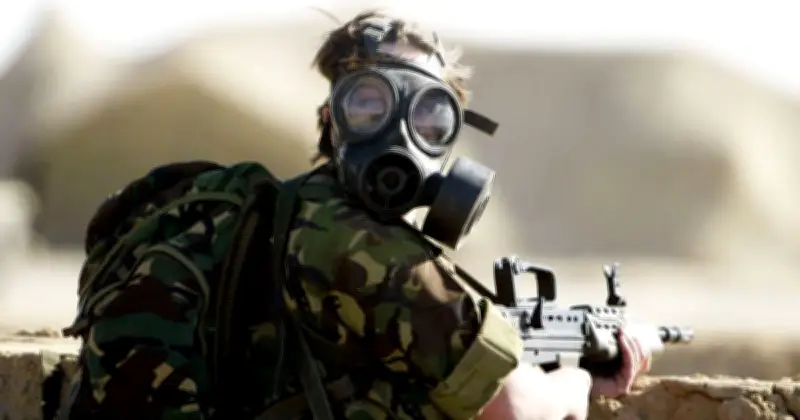
A former senior NATO commander has warned that amateurs who “probably can’t even spell science” could create catastrophic biological weapons using Artificial Intelligence (AI), and is calling for tighter regulations.
Rapid advances in technology mean terrorists and militias could build the horrific weapons, capable of causing epidemics, according to experts. The warning comes after Chinese developer Moonshot AI launched an internal review after two of its models told researchers how to make biological weapons and carry out assassinations.
Fewer barriers to developing doomsday munitions
Two experts said there are fewer barriers to developing the doomsday munitions, warning Britain and its allies are underprepared for the threat, which is becoming harder to stop. Former British Army colonel Hamish de Bretton-Gordon said AI can “enable somebody who probably can’t even spell ‘science’ to actually get started” in developing bioweapons.
Mr de Bretton-Gordon, who commanded UK and NATO Chemical, Biological, Radiological and Nuclear (CBRN) units, said biological weapons in the hands of a state actor could be “more dangerous” than nuclear warheads. The retired senior officer is calling for stronger laws over the weapons, which the World Health Organisation (WHO) warns can cause “large numbers of deaths in a short amount of time”.
Millions of scientists working unregulated
Mr de Bretton-Gordon said there are now more than one million scientists worldwide working “completely unregulated” in laboratories capable of producing biological weapons. “We have no scrutiny of these thousands of laboratories, no scrutiny of scientists,” he said.
The expert added: “COVID, a very low-potency pathogen, brought the world to its knees for two years. I think that really highlighted the issue here. Then throw on top the ease of manipulation, genome synthetic biology and of course AI… the potential to create a very virulent, highly-potent pathogen that is also highly transmissible is a reality.”
Last month, US tech firm Anthropic said it blocked efforts by bad actors to use its AI models for malicious activity, including research that could have led to biological weapons. It comes amid rising fears over the rapid growth of AI, with some industry researchers warning it could even endanger humanity.
International safeguards urged
World leaders are being urged to introduce international safeguards over the tech. An influential cross-party group of MPs and peers last month said a new bill was needed “to address the scale and seriousness of threats posed to human rights” by AI.
Biological weapons are classed as weapons of mass destruction, a term often used when discussing nuclear threats. Along with chemical weapons, they are banned under international law.
In 2024, fears were raised after satellite images showed construction activity at a military site in Russia previously used for Soviet Union research into bioweapons. Moscow earlier claimed, without evidence, that Ukraine was developing them with US support.
Mr de Bretton-Gordon said it is “not unreasonable to suspect” Russia has a biological weapons programme. Terrorist groups Al Qaeda and the so-called Islamic State are known to have investigated acquiring the weapons.
Ben Atkinson, from Chemring Sensors and Electronic Systems, which manufactures biological warfare detection systems, warned that technology is a growing concern. He told the Express that large language models and generative AI tools can help make the knowledge to build biological weapons “accessible to almost anyone”.
He said: “The result is that biological weapons are now within reach of once state-sponsored proxies or lone actors who would previously have lacked the scientific expertise to develop them. With the rise of new technologies such as synthetic biology and artificial intelligence, many of the hurdles of using biological weapons are decreasing, while the complexities of mitigating them are rising.”
WHO warns that biological agents, capable of “secondary transmission”, can trigger epidemics. “The use of biological agents is a serious concern, and the risk of using these agents in a terrorist attack is thought to be increasing,” the UN health agency says.
Response to such attacks can be complicated as they can mimic a natural event, it adds. Shortly after the 9/11 terror attacks in 2001, five Americans were killed, and 17 others were left sick after letters laced with the anthrax agent were sent through the post. The incidents were the worst biological attacks in US history.
A Government spokesperson said: “UK law is clear - it is illegal to develop chemical and biological weapons, and online platforms must take action to prevent illegal content on their sites. Through the AI Security Institute, the UK has built the largest team in any Government dedicated to tackling the most serious risks from advanced AI and works directly with developers to fix vulnerabilities before models are widely used. We will continue to take a long-term, science-led approach to understand and prepare for emerging risks from AI, including its potential misuse by hostile actors.”