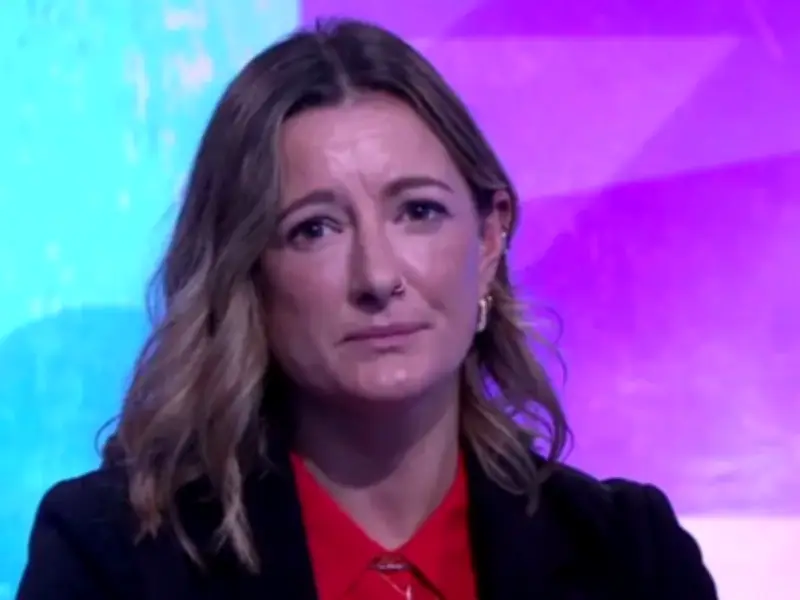
Morwenna Loughman, 37, from north London, has spoken out about her experience of giving evidence against the man who raped her, saying the defence barrister branded the attack "rough sex" and questioned her about her clothing and drinking. She sustained 48 injuries in the assault.
During the trial, an injury on her arm, which she described as so painful it felt like the attacker "had torn flesh off", was dismissed as a "love bite". Loughman told the Mirror: "He was persistently questioning 'what was I wearing?', 'what was I drinking?', 'why hadn't I run away earlier?'."
Survivor describes traumatic cross-examination
Loughman, who has waived her anonymity, described collapsing after the two-hour cross-examination. "At the end of the cross-examination, which was about two hours long, I just collapsed. I crumpled to the floor. It was so traumatising and I think even more harrowing than I'd expected it to be," she said. "You are treated like a piece of meat. I was thrown to the lions."
In November 2025, her attacker Aaron Moona was convicted and sentenced to 15 years in prison. Loughman said the case shows how easily outdated myths can sway jurors when they are not warned against them.
Victims' Commissioner warns of 'all-time low' confidence
Following outrage over how complainants were questioned during the Russell Brand trial, Claire Waxman OBE, Victims' Commissioner for England and Wales, said victims' confidence in the justice system has hit an "all-time low". She is calling for judges to be instructed to dispel rape myths in court.
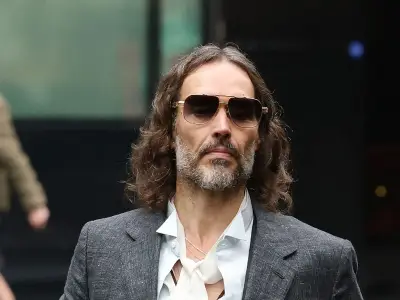
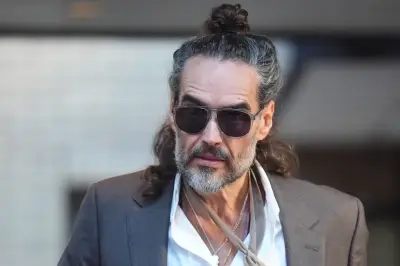
During Brand's trial, his barrister Ian Winter KC grilled a complainant over why she had not come forward during the #MeToo movement and said of the 21-year-old woman Brand raped: "She didn't roll over, or kick out, or try to stop him in any way." Before sentencing, where Brand was jailed for ten years and six months, Winter described the rape as a "short and momentary failure" of consent and claimed the attack should be regarded as "a man who went too far and overrode consent that had been given".
Waxman told the Mirror that Brand's case brought into sharp focus the "persistence of harmful rape myths and outdated assumptions about how victims are expected to behave."
Calls for mandatory jury warnings
The Office of National Statistics reported 217,567 sexual offences were reported to police in England and Wales between March 2025 and March 2026. Under current rules, judges have discretionary guidance to warn jurors against rape myths, such as assuming a genuine victim would scream, fight back, or report an attack immediately. However, research by the Law Commission last year found that guidance is being applied inconsistently.
On Monday, the House of Lords will debate a proposal to require judges in sexual offence trials to warn juries against myths. The reform, championed by Waxman, is being taken through the House of Lords by Baroness Levitt KC, who has tabled an amendment to Labour's Courts and Tribunals Bill to introduce the legal duty.
Waxman told the Mirror: "At the moment, it's discretionary…all this amendment that Baroness Levitt has brought into the bill is just to mandate what's sitting in good practice, but the judges will still have the independence to choose what they direct on. No one wants to take away their independence or undermine judges."
Baroness Levitt KC, a practising barrister who spent 20 years defending serious sexual offence cases, five years as principal legal adviser to the Director of Public Prosecutions, and three years sitting as a circuit judge at Snaresbrook Crown Court, told the Mirror: "Most judges already give warnings to juries about the dangers of harmful assumptions, but it is not being done consistently."
She added: "Victims are entitled to know that if they have the courage to come forward, the jury in their case is going to focus on the evidence and not on myths such as 'if it was rape she would have said something straightaway'."
Levitt also wants judges to give such directions at the beginning of a trial rather than waiting until the end, saying: "During my time as a judge, there were many occasions on which I felt I would like to have given a myths and stereotypes direction earlier, either before evidence or straight after cross-examination, when things might have been put to a witness and you're thinking, 'That might sound to the jury as though it makes sense but now they're going to have to wait until my summing up, which could be in several days' time, before I get to tell them not to judge on that basis'."
Waxman said cross-examination too often shifts blame onto complainants, leaving survivors feeling as though they are the ones facing criminal charges. She said: "Of course, we have to recognise that victims going into a courtroom when they're being cross-examined will be robustly challenged, but it should be on evidence."
She added: "What really throws them during that cross-examination is when they start to have personal attacks of, 'Well, why didn't you report immediately?' or 'Why didn't you resist?', 'Why did you go back and consent to some part of it?'"
Wider impact on victims coming forward
Waxman warned the damage extends beyond individual trials. "The trust and confidence amongst victims is already at an all-time low, and [the Brand] case has not helped to encourage people to come forward," she said. "They don't want to be treated like that in a courtroom. I don't think anyone does."
She added: "I speak to rape victims who've gone into court, and when they have those experiences where these rape myths are being weaponised, they tell their friends and family. And if those people become victims, they are deterred from coming forward."
Waxman also called for wider action on barristers' conduct and training, saying: "There's also something about barristers' conduct and the training that's still needed." Adding that mandatory directions would help shift attitudes in court, she said: "We can start to deal with the barristers' behaviours who want to bring in these outdated assumptions and myths, and we start to change a culture in the courtroom, which I think everyone agrees needs to take place."
Waxman warned that failing to act would undermine the government's flagship target to halve violence against women and girls within a decade, saying: "You won't achieve that if victims don't come forward and report and come into our criminal justice system."