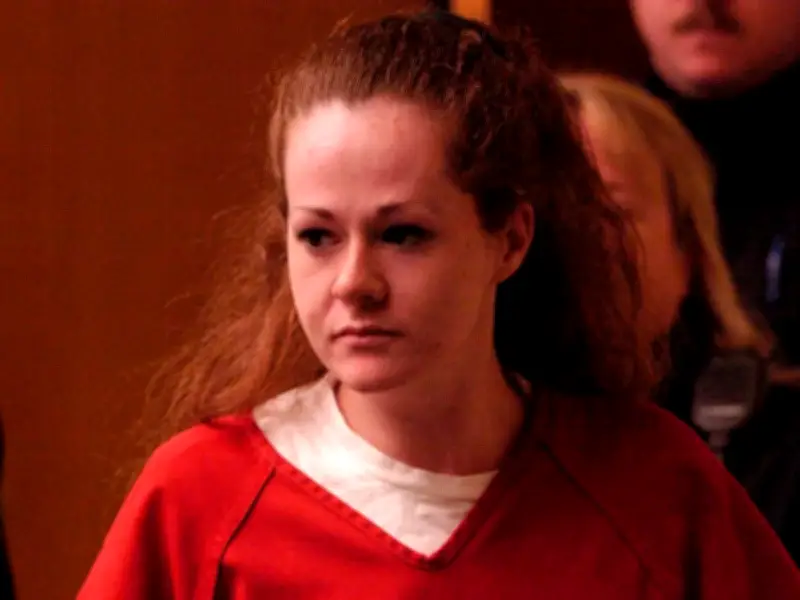
Christa Pike, the condemned murderer who survived two rounds of lethal injection, is now up and walking around her hospital room. Her lawyers were earlier told she was brain dead, but she has defied expectations in what has been described as a medical mystery.
Pike was sentenced to death for the 1995 murder of 19-year-old Colleen Slemmer. She would have been the first woman executed in Tennessee in 200 years had the procedure gone as planned. The case has divided opinion, with some, including the victim's family, arguing the sentence should have been carried out decades ago. Others point to Pike's background as a teenage rape survivor with unmedicated mental health issues at the time of the murder.
Survival Raises Unprecedented Questions
The 50-year-old survived two doses of pentobarbital, a drug commonly used for executions in the US. Typically, inmates slip into deep unconsciousness within seconds before entering respiratory arrest. Instead, Pike was observed snoring and whimpering in pain. She was rushed to a Nashville-area hospital as medics tried to clear the drugs from her body.
Robin Maher, executive director of the Death Penalty Information Center, told USA Today that a second attempt would be "uncharted territory." She noted that the US Supreme Court has not decided whether a second execution attempt would violate the constitution since 1947. All executions in Tennessee have been halted until the end of the year while an investigation is carried out, and Pike's legal team plans to call for her sentence to be commuted to life in jail.
Legal and Medical Challenges
Pike's lawyers had argued against lethal injection, citing her small, difficult-to-access veins and thrombocytosis, a blood disorder that can increase the risk of blood clots. She had requested death by firing squad or hanging, but both were denied as the state does not have the facilities for hanging or permit firing squads. The only remaining option would be the electric chair.
Pike's lawyer, Randy Spivey, said on Wednesday that his client has suffered "extraordinary" swelling to her hands, which he described as looking like "if you tried to blow up a surgical glove." She also woke up with a blood clot and pneumonia and was unable to swallow, eat, or move her badly swollen arms. "I don't know what function she will regain," he said. "We do know that there is a long road ahead."
Dr Joel Zivot, the anaesthesiologist advising her team, told BBC News that Pike has some memories of being in the hospital but no memory of the execution attempt. Another lawyer, Stephen Farrell, told Radio 4 that Pike is doing "fairly well" and is up and walking for the first time today, though she is not mentally fully recovered.
Potential Clemency and Broader Implications
Under US constitutional law, a prisoner deemed legally incompetent cannot be executed. Maya Foa, CEO of Reprieve, told The Mirror that if Pike has suffered severe brain damage, she may be found incompetent to be executed. Foa also suggested that the controversy could lead to a different execution method being chosen if a second attempt is ordered, as states are being forced to reckon with the reality that lethal injection is a "broken method."
The decision on clemency will ultimately sit with state governor Bill Lee. Foa explained that the governor could acknowledge the harm done to Pike and say she has been punished enough. Lee has said he will have an independent review conducted of the death penalty in his state. Pike's legal team could also renew its appeal for clemency, which had previously been denied despite challenges regarding her age, mental illness, and history of childhood sexual abuse.
Pike previously said: "I was a mentally ill 18-year-old kid. It took me numerous years to even realise the gravity of what I'd done. Even more to accept how many lives I affected. I took the life of someone's child, sister, friend. It sickens me now to think I had the ability to commit such a crime."
Foa believes this incident will shift perspectives on the death penalty, stripping back the "culture of secrecy around lethal injection." She noted that support for capital punishment is highest when lethal injection is the method, but when other methods are discussed, support goes down. "Now, if the public is exposed to what is really happening on the journey behind the execution curtain, as they were to a degree with Christa Pike's execution, it's undeniable that support for the death penalty will go down," she said.