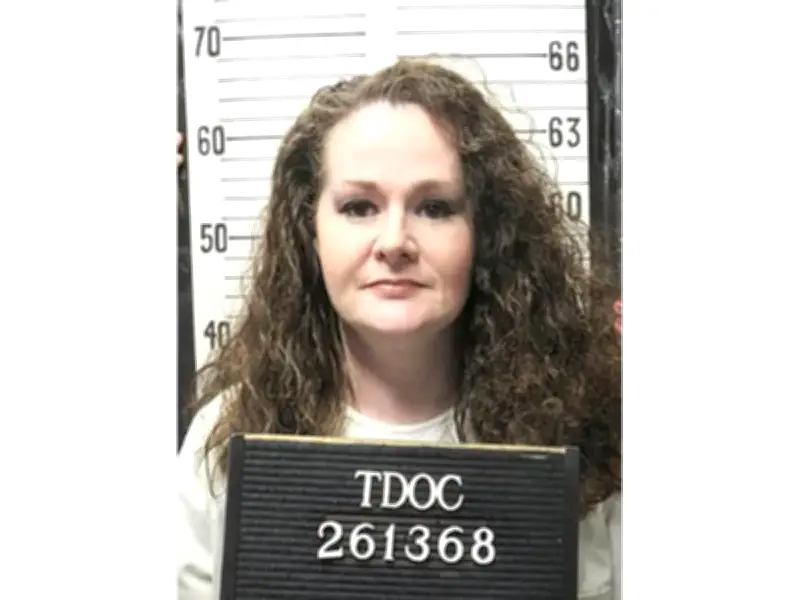
Colleen Slemmer's mother has said "it doesn't matter" after her daughter's killer, Christa Pike, survived a botched execution. Pike, who was 18 when she murdered 19-year-old Slemmer in 1995, was sentenced to death. The Tennessee death row inmate is now conscious and able to speak following an unsuccessful execution that left her unconscious and reliant on a ventilator.
Pike, now 50, received two doses of pentobarbital as executioners attempted to end her life on September 30. Six days later, her lawyers provided an update on her health, reporting that her arms were left burned and blistered.
Recovery called 'medically unprecedented'
In a statement, Pike's attorneys said: "Against all odds, Christa Pike is conscious, speaking, and continues to receive critical medical care. Despite the severe damage she endured to her arms, she is still handcuffed and shackled to the bed. Her recovery is medically unprecedented."
May Martinez, the mother of Slemmer, revealed she had a premonition that Pike would survive. In an interview with NBC affiliate WBIR, she also expressed doubt that Tennessee would make another attempt to execute her daughter's killer. When asked about her preference for what should happen next, Martinez responded, "It doesn't matter what I think. They're going to do what they're going to do."
Legal and medical implications
Dr. Joel Zivot, a professor of anaesthesiology and surgery in Atlanta who served as an expert consultant for Pike's legal team, said the development "bodes well for a good recovery." However, he added that it could be weeks or months before anyone knows exactly what her recovery might look like, and whether her competency could be restored to a level that might enable the state to try again to execute her. He confirmed, "She's still in the ICU."
Pike surviving two lethal injection doses has raised questions about competency, including whether she can understand why she would be put to death. Deborah Denno, a Fordham Law professor who has studied execution methods for 36 years, said Pike has strong arguments that it would be cruel and unusual to try again, and that it would violate the prohibition on double jeopardy. "She has satisfied this very, very high standard for cruel and unusual punishment," Denno said. "She also has a very good double-jeopardy argument. They carried out every aspect of the execution. She didn't die, but every process they intended, they did it."
Seattle University Law Professor Michael Russo, who handled capital cases as a public defender in Los Angeles, described the failed execution as horrible but doubted whether the Supreme Court would prevent the state from trying again on double-jeopardy grounds. "There's nobody else in the history of the death penalty in this country who has gone through what she's been through," Russo said. But, he added, "I think what this Supreme Court would say is, her sentence was to die - to be executed - not to suffer an attempt at execution."
Next steps for Tennessee
Pike's legal team said in their Tuesday statement that they continue to urge outgoing Tennessee Governor Bill Lee to commute Pike's sentence to life imprisonment without the possibility of parole. Governor Lee suspended all further executions following Pike's hospitalisation and ordered a "comprehensive, third-party review to determine exactly what occurred." U.S. Senator Marsha Blackburn, the state's Republican candidate to succeed him, urged the state to examine alternative execution methods to ensure capital punishment can continue to be carried out.