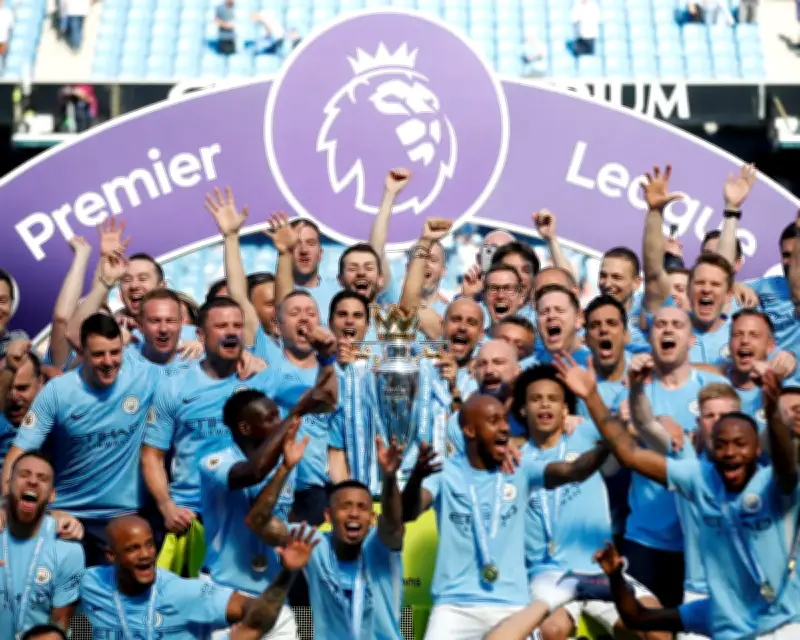
Manchester City have been found guilty of breaching Premier League financial rules, a verdict that could have profound consequences for the club and the league. The independent panel's decision, which covers the period from 2009-10 to 2017-18, means that successes such as the 6-1 win over Manchester United at Old Trafford and Sergio Agüero's 94th-minute title-clinching goal in 2012 are now tainted, even if they are not officially stripped.
What the verdict means for City's achievements
The verdict relates to 115 charges, with 35 of them concerning a failure to cooperate with Premier League investigations between 2018 and 2023. Without those earlier successes, City would not have been in the position they were for the past eight seasons. The 14 successive wins that led to the 2018-19 title, the 2023 Treble, and the record four league titles in a row all depended on what went before.
While an appeal is expected, and the final truth could still be a long way off, the verdict has already cast doubt on the legitimacy of those achievements. The authorities appear reluctant to reallocate titles, even if they are stripped, because priorities for other teams would have changed had they known the outcome. Ersatz glory, as one analysis put it, satisfies nobody.
Financial and legal fallout
If the guilty verdicts are upheld, the consequences will be profound. There will be appeals for mitigation, and there are wheels within wheels. Bloomberg reported last month that the government had been warned of potential negative consequences for UK-United Arab Emirates relations should the verdict go against City. Andy Burnham, who was mayor during a period of significant UAE investment in Manchester, spoke to the UAE president, Sheikh Mohammed, within a week of becoming prime minister in July.
Everton's one breach in 2022, overspending the profitability and sustainability threshold by £19.5m, earned them a six-point deduction and they had to pay Burnley £26m in damages plus £9m in interest. City's offences are almost incalculably worse, and they failed to cooperate with the investigation. The potential for financial claims against City extends beyond those who missed out on titles during the period in question. Other sides were denied European places, prize money was lost, and even relegated sides may argue that City were a factor in their dropping out of the Premier League.
Long-term impact on the club and league
There are knock-on effects to the years after the period in question. Leicester, for instance, narrowly missed out on Champions League qualification in 2020 and 2021. Had City, who finished above them, not been artificially juiced, Leicester might have qualified and avoided their current mess. Less direct consequences include the impact on a club's, manager's, or player's global reputation and their capacity to generate commercial income.
Somebody will have to calculate which, if any, of those claims are worth pursuing and what they might be worth. The financial cost to City, irrespective of the official sanction, could be crippling. When City were found guilty of illegal payments to players in 1906 and forced to sell off the bulk of their squad, it took them 30 years to recover. When Sunderland were similarly convicted in 1957, they were relegated for the first time the following season and never retained their previous status.
But the biggest cost, perhaps, is the one that is hardest to calculate: emotional energy. The Agüero goal was arguably the most famous moment in Premier League history. What does it mean to say it didn't happen? Even if City are not stripped of the 2012 title, it is tainted, much like Marseille's 1993 Champions League success, which remains on the record but is undermined by being stripped of the Ligue 1 title that season for match-fixing.
That emotion, the euphoria of City fans, the despair of United fans, the amazement of everybody else, cannot be dismissed. For many connected to City, it must be the greatest surge of emotion they have experienced. Several City fans online have been desperately trying to find a way to cope, pretending this is conspiracy or irrelevance, rather than the consequence of the actions of their club's owners.
Those actions are a consequence of the Premier League's laissez-faire attitude to club ownership, which itself sits in the context of a world where anything can be sold off to foreign states or private equity. The fans' anger is understandable enough, even if it is often misdirected.
For everybody else, there's a sense of being cheated, and not just by City. This great human drama wasn't real? What about now? Why should I care about this season when an independent panel might decide in 17 years that it wasn't real, either? Will interest wane, revenues drop?
For the Premier League, that is a big issue – a potential problem whenever a competition becomes concerned with profit; revenue generation and sporting justice do not necessarily go hand in hand. But what is the alternative? Not to act is to legitimise rule-breaking, to say the game is not about technical excellence or tactical coherence, but about who can afford the best lawyers.
It is a painful route the Premier League has chosen. There could be lean years ahead, consequences as yet unimagined. But it is also the right path, because if a sport cannot govern itself, if its regulations can simply be ignored if you're wealthy enough, it is no longer a sport.