
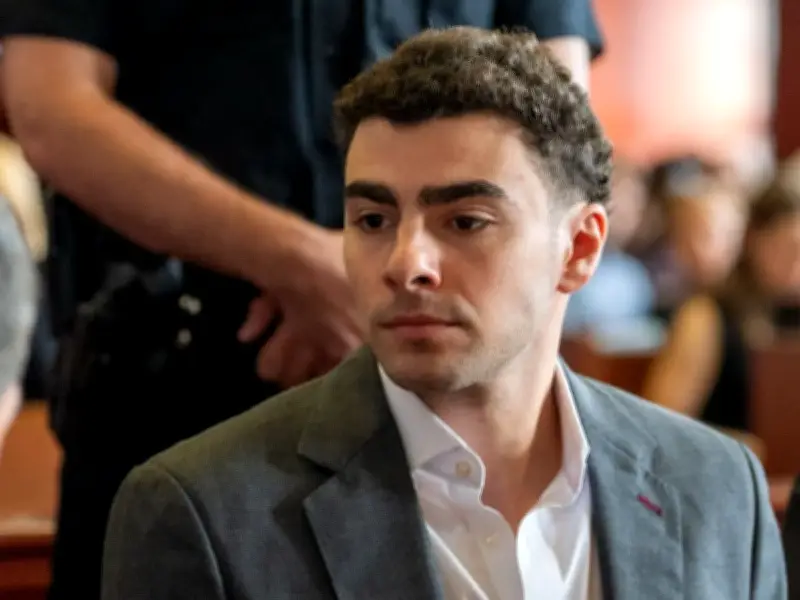
Luigi Mangione has pleaded guilty to federal charges in the shooting death of UnitedHealthcare CEO Brian Thompson. The 28-year-old entered the plea at a federal court hearing that was hastily requested by prosecutors and defence lawyers earlier this week.
Mangione was charged with ambushing Thompson, 50, outside a New York City hotel on December 4, 2024, as the insurance executive walked to an annual investor conference. In a prepared statement, Mangione admitted to the killing, saying he had researched the conference online and used a 3D printer to make part of a gun.
"I travelled to New York with the intent to shoot Brian Thompson," he said. "I shot Mr. Thompson in Manhattan and he died. I understood that my actions would place him in fear of death or bodily injury. I knew what I was doing was illegal."
Court Proceedings and Reaction
Mangione told the court he had suffered for a long time with back pain. When he admitted to killing Thompson, the CEO's widow, Paulette Thompson, began to sob and was comforted by two women next to her. The defendant replied "guilty" when US District Judge Margaret Garnett asked how he pleaded to the two counts in the indictment. The judge said she would enter his plea.
Mangione faces two federal charges that he stalked Thompson to cause his death. A trial on state murder charges is scheduled to start next month, and it is unclear whether that would go forward if Mangione pleaded guilty in the federal case.
Legal Implications
Both the federal and state cases could lead to a life prison sentence, while a federal judge earlier this year tossed out additional charges that could have exposed Mangione to a potential death penalty. Mangione had complained about the prospect of two trials, telling a judge in February: "It's the same trial twice. One plus one is two. Double jeopardy by any common sense definition."
Under New York law, a state prosecution could potentially be barred if the federal case is resolved first. The state's double jeopardy protections kick in if a jury has been sworn in a prior prosecution, such as a federal case, or if that prosecution ends in a guilty plea. Mangione's cases involve different charges arising from the same course of conduct. In a letter last month, state prosecutors objected to the possibility of a guilty plea in the federal case wiping out the state case.
Evidence and Background
Judge Garnett previously delivered some setbacks to the defence, including ruling in January that prosecutors could use items collected from Mangione's backpack during his arrest as evidence against him. They included a 3D-printed pistol that investigators said matched the one used to kill Thompson and a notebook in which authorities say Mangione described his intent to kill an insurance executive.
In June, Mangione's lawyers said they would pursue a psychiatric defence in the state case but reversed course a day later. The defence, involving claims that he was suffering from extreme emotional disturbance at the time of the killing, isn't allowed in federal court.
Surveillance video of the killing showed a masked gunman shooting Thompson from behind. Police say "delay," "deny" and "depose" were written on the ammunition, mimicking a phrase used to describe how insurers avoid paying claims. Mangione, a University of Pennsylvania graduate from a wealthy Maryland family, was arrested five days later at a McDonald's in Altoona, Pennsylvania, about 230 miles west of Manhattan. He has become a cause celebre for some people upset with the health insurance industry.




