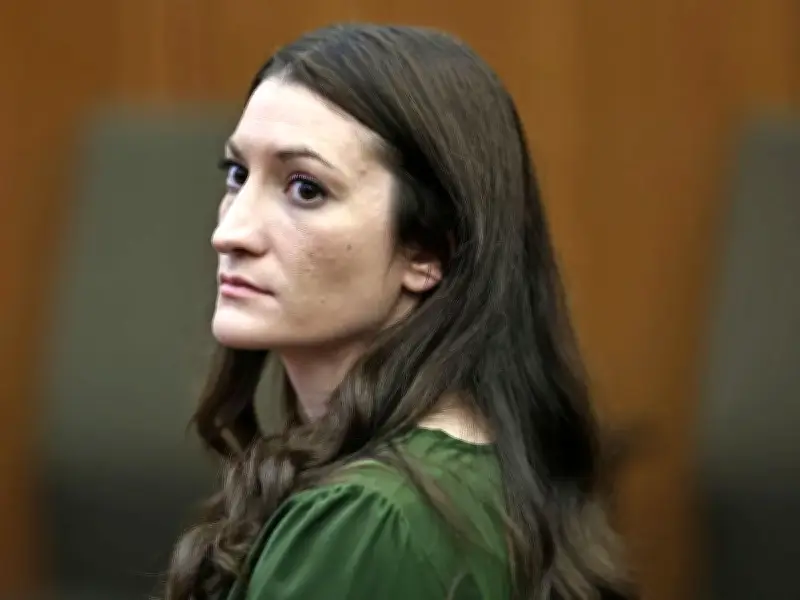
The jury in the trial of Lindsay Clancy, a Massachusetts mother accused of murdering her three children, has failed to reach a unanimous verdict for the second time. Deliberations will resume on Thursday at 9am local time (2pm UK time) for a sixth day.
Charges and defence
Clancy, 36, is charged with murder in the 2023 deaths of her children: Cora, 5, Dawson, 3, and Callan, 8 months. The former labour and delivery nurse has not denied that she killed her children but argued that postpartum psychosis led to her actions. She pleaded not guilty by reason of lack of criminal responsibility, while prosecutors argue she knew what she was doing.
Clancy was at home on maternity leave when her then-husband Patrick Clancy went to run errands and pick up dinner on January 24, 2023. When he returned to their home in Duxbury, Massachusetts, he found his three children dead in the basement and his then-wife in the garden, injured from a suicide attempt.

Possible outcomes
Massachusetts law does not put the burden on Clancy to prove her mental illness or that she lacked criminal responsibility. Instead, the prosecution must prove beyond reasonable doubt that she was criminally responsible. If a not guilty verdict is returned, Clancy could go free. A verdict of not guilty by reason of insanity could lead to her being detained in a hospital, according to the BBC.
Clancy is charged with three counts of first-degree murder and three counts of assault and battery. In Massachusetts, a first-degree murder verdict results in a life sentence without the possibility of parole.
Mistrial and retrial
If the jury still cannot reach a unanimous verdict, a mistrial would be declared and the case would return to the same status as before the trial. Clancy has been held at a psychiatric hospital since her arrest in 2023. Criminal trials in the US require a unanimous jury decision to convict, unlike the UK where a judge can allow a majority verdict.
In the event of a mistrial, prosecutors would decide whether to try again with a new jury. A plea deal could also be offered, according to Brad Bailey, a Boston defence attorney and former prosecutor not involved in the case. He said: "Any time the threat of a retrial with murder one hanging over the client is re-interjected, defence lawyers will, at the very least, explore whether or not there’s any interest in a resolution."
The district attorney's office could also decide not to retry the case. Bailey said: "Sometimes they decide not to, because of the sense that there may be the same result each time they try it, and because of the expenditures involved in trying the case to begin with, particularly when you have expert witnesses."