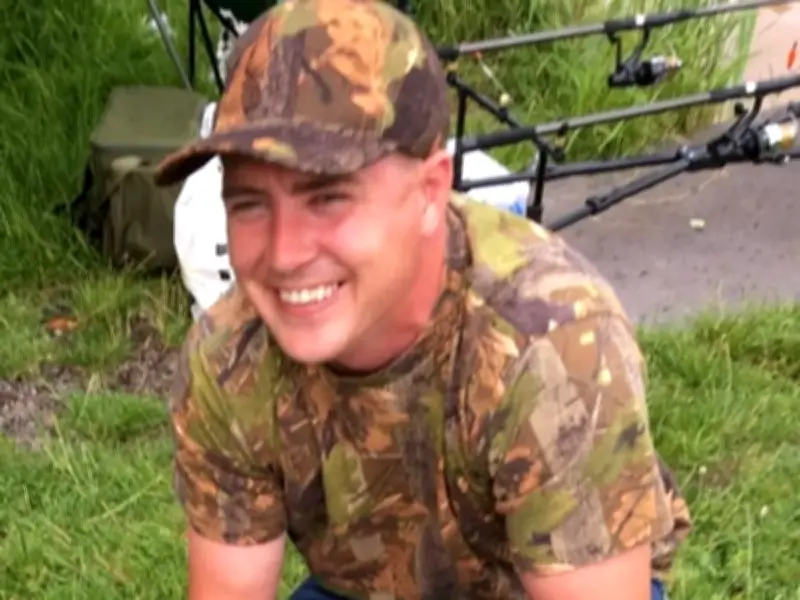
The family of a man whose body was dumped in a wheelie bin say they have not been "told the full truth of what happened". Paul Smith was found dead in an overgrown garden outside a derelict house on Thirlmere Road in Everton a week after he started the fire which claimed the lives of elderly couple Eric Greener and Sheila Jackson.
But he was said to have died of a drug overdose in the bath of Steven Wales as early as two days before his body was discovered by Merseyside Police. With the occupant of the flat where the 40-year-old died having himself been a convicted killer, he allegedly "panicked" upon finding his friend dead while out of prison on licence, supposedly leading to his decision to "violate the most fundamental of dignities to be afforded to someone" in leaving his body in the bin.
Family's statement in court
Wales was branded a "little scumbag" today as he was put back behind bars over the episode, with Smith's loved ones having told him in a statement during the hearing: "We believe you had help doing this, yet you will not tell us who. We believe you chose to reveal only part of the truth, and that you've done this because you're selfish and a coward."

One of the city's top judge's meanwhile said that the case "raised as many questions as it answered, not least how a 61-year-old man with COPD was able to move the body", adding: "I suspect there are all sorts of reasons why you do not want to answer that question. That and other unanswered questions add to the distress of Mr Smith's family."
Liverpool Crown Court heard on Wednesday that Smith had been a "working family man" but developed a class A drug dependency in late 2024, having been leading a "chaotic lifestyle" following his release from a term of imprisonment. Christopher Hopkins, prosecuting, said: "It appears that he was with this defendant at the defendant's home on the weekend of July 19 and 20 last year. At some point, they had taken drugs together."
Discovery of the body
Mr Smith's mother spoke to him daily. She last spoke to him in the late afternoon of Saturday, July 19. His brother reported him missing on Monday evening. It was at 9.22am the next morning that the defendant dialled 999 and reported that a man had died of a drug overdose in his bath two days previously.
Police then attended Wales' then home on Coniston Street in Everton, where the 61-year-old, now, of Pope Street in Bootle, told them that he had moved Smith's body to a wheelie bin in a nearby garden. Officers were subsequently led to a nearby overgrown garden and discovered that attempts had been made to conceal the body beneath litter, green waste and furniture.
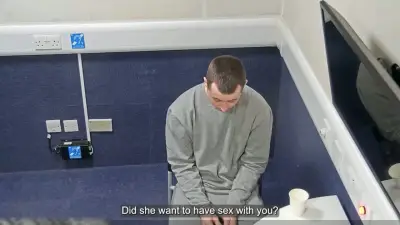
Wales was arrested on suspicion of murder as a result, later telling detectives under interview that Smith had asked to use his flat to bathe and wash his clothes. Having left the other man at his address, he then reported that he later returned to find him dead in the bath and "was worried about going back to prison", leading to him placing the body in the bin.
Family's grief and unanswered questions
Smith's cause of death was ultimately given as mixed drug toxicity, having died "no later than Sunday night". Mr Hopkins told the court of Wales' actions: "He has violated the most fundamental of dignities to be afforded to someone. His actions were deeply disrespectful."
In a statement which was read to the court on their behalf, Smith's family said: "Paul was a son, a brother, a father, a partner. He was and always will be a deeply valued human. His life mattered."
The intentional actions of Steven Wales meant Paul was treated in a degrading and humiliating manner in his final moments. When Steven Wales chose to conceal our Paul’s body and failed to contact the emergency services for two days, he demonstrated a shocking callousness and, above all, cowardice.
"Paul would always call us. When that first call was missed, we instantly knew something was wrong. For two days, we were left in a state of limbo with no answers. We could never have anticipated just how horrific the events would be.
"Those two days of delay unnecessarily prolonged our agony. To know it never had to be that way enrages us. No one can truly understand the impact or turmoil this has until they experience it themselves. It truly shattered us.

"We never knew the last time we saw Paul would be the last. His children never knew it would be the last time they'd see their dad. Paul has five children. They cannot understand why they couldn't say goodbye to their dad's body.
"We don't believe you've told the full truth of what happened to Paul. We do not believe you singlehandedly lifted Paul down the stairs into that bin. We believe you had help doing this, yet you will not tell us who.
"We do not believe it was because you feared being recalled to prison. We believe that's a pathetic excuse which you have fabricated. We believe you chose to reveal only part of the truth and that you've done this because you're selfish and a coward.
"You continue to deprive us of our chance to know what truly happened. We have so many questions that remain unanswered. The complete cruelty of how Paul was treated in his last moments has deeply compounded our grief.
"Our minds are consumed with the sheer horror of how Paul was treated. Steven Wales stripped our Paul of all his human dignity in his final moments. Paul was left like an object for days."
Sentencing and background
Wales has a total of 32 previous convictions for 64 offences, including receiving eight years for manslaughter in 2009 and five years for possession of heroin and cocaine with intent to supply, affray, possession of a bladed article in a public place and being in charge of a dangerous out of control dog causing injury in 2023. He was recalled on licence for nine months in relation to the latter sentence as a result of his arrest in connection with Mr Smith's death, having been released in October 2024.
Joanne Maxwell, defending, said on his behalf: "Mr Wales left Mr Smith in his flat and, he told me, he returned the following morning, at what point he is unable to say, to find that Mr Smith was dead in the bath with a needle close by. He experienced immediate, significant shock, in his words. He clearly did not think properly. He panicked.
"Mr Wales was candid with me. He said he had taken cocaine and diazepam. He was conscious that he was on licence at the time and fearful of being returned to custody. He knows that he should have contacted the emergency services immediately, and certainly before he moved Mr Smith's body.
"He has accepted full responsibility for his actions, and he is only too aware of the seriousness of those actions. He feels great shame, and he is, of course, aware of the impact it must have had and the distress he has caused to Mr Smith's family.
"He also says that, by carrying out those actions, it has had a significant and lasting psychological impact on him and is something that will live with him for the rest of his life. He asks me to mitigate on his behalf that he did not cause or play any role in the death of Mr Smith.
"He suffers from COPD and some PTSD. He had a difficult childhood and, of course, has an antecedent record that perhaps reflects that. He has remained largely absent from illicit substances since this incident. He does say that he has occasional relapses into cocaine use. The aim of Mr Wales is to become drug free and put his life back together as best as he possibly can in the future."
Wales admitted one count of preventing a lawful and decent burial during an earlier hearing. Wearing glasses and a black and grey Berghaus coat over a black Monterrain t-shirt in the dock, he showed no reaction as he was jailed for 28 months.
Smith's brother then shouted "you little scumbag" from the public gallery as Wales was led to the cells. Sentencing, Judge Neil Flewitt KC said: "In recent years, he had struggled with an addiction to class A drugs and, in the period before his death, was living what has been described as a chaotic lifestyle, finding himself over that fateful weekend in your accommodation in a house of multiple occupation.
"Although the cause of his death has been established as mixed drug toxicity, the precise circumstances of his death are uncertain. The information available to me is entirely dependent on your account, which raises as many questions as it answers, not least how a 61-year-old man with COPD was able to move that body from the bath and the flat into a wheelie bin to a location where it was concealed.
"I suspect there are all sorts of reasons why you do not want to answer that question. That and other unanswered questions add to the distress of Mr Smith's family. That is the only basis on which I can sentence you, because I have no other independent evidence of what actually happened.
"Your failure to alert the emergency services, or indeed anyone, to what happened meant that he was lying in that wheelie bin for getting on for two days. In that period, his family, who had reported him as missing, were beside themselves with worry as to what had happened to him, completely in ignorance of the undignified way in which he had been treated.
"This is not a case where you committed this crime with the intention of preventing an investigation into the cause of an unnatural death. But it is an offence where the body has been deliberately concealed and, although the police were not actively misled, that concealment had the effect of leaving up in the air what had happened to Mr Smith in that period.
"This is not the less serious sort of case where there has been a passive failure to report the death. Aggravating factors include that this prompted a murder investigation, albeit one that was relatively short-lived, with the inevitable drain on police resources and increased anxiety for Mr Smith's family.
"It was an offence committed on licence at a time in your life when you should have been using the support offered to you and putting behind the offending that led you into prison. Instead, you have fallen back into drug-taking. That, in turn, led to the commission of this offence.
"It is also an aggravating factor that you have an extensive criminal record, and not just for minor offences. There are some particularly serious offences. The mitigating factors are the fact this was a relatively short period of concealment and, after two days, you called the police and took them to where the body had been hidden. You are, I accept, genuinely remorseful, and you have made some, albeit limited, progress on recall."
The ECHO previously reported that Smith set fire to the home of Eric Greener, 77, and Sheila Jackson, 83, on South John Street in St Helens in the early hours of July 15 last year, killing both of the occupants. Mrs Jackson's son George was said to have been the intended target due to his apparent refusal to deal drugs for Kevin Weetman, who gave the orders for the arson attack.
Smith, known as "Smigger", travelled to the scene on a motorbike alongside Owens, with the plot having been hatched with the assistance of "trusted lieutenant" Kylie Maynard. All three were later convicted of manslaughter following a trial before the same court earlier this year.
Weetman was later jailed for life with a minimum term of 25 years. Maynard, who also admitted drug offences, was handed 23 years, while Owens was sentenced to 13-and-a-half years.