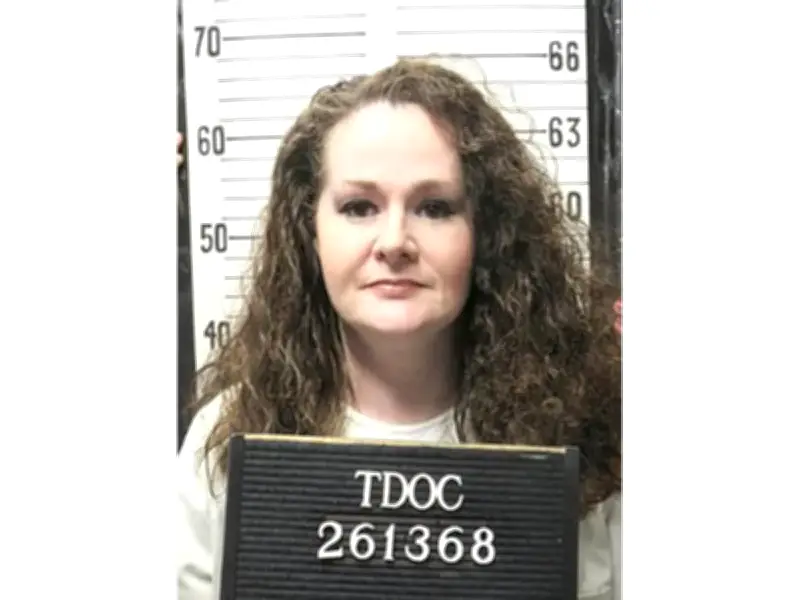
Death row inmate Christa Pike is conscious and talking as she continues to receive treatment in hospital, according to her legal team. Pike, 50, remarkably survived two lethal injections last week while facing execution in Tennessee. Her lawyers have now confirmed she is alert, describing her survival as "medically unprecedented", reports the Mirror.
Lawyers confirm recovery
"Against all odds, Christa Pike is conscious, speaking, and continues to receive critical medical care," they said. "Despite the severe damage she endured to her arms, she is still handcuffed and shackled to the bed. Her recovery is medically unprecedented. Her prognosis remains unclear but, at a minimum, we expect a long recovery."
Her legal team expressed their gratitude towards the first responders and hospital medical staff "who treated Christa like a human and have provided exceptional care to her."
Failed execution attempt
The statement marked the first sign that Pike's condition has improved since an ambulance transported her from a Nashville prison last Wednesday. Pike endured two doses of pentobarbital as Tennessee authorities attempted to carry out her execution.
The 50 year old had been set to become the first woman put to death in Tennessee in over 200 years when officials attempted to execute her by lethal injection on September 30. Instead, she survived two administrations of the execution drug pentobarbital following difficulties in establishing intravenous access.
Until now, Pike had remained unconscious and on a ventilator while doctors worked to establish the full extent of any damage she may have sustained. An allegedly leaked photograph laid bare the severity of her injuries, with the image purportedly showing significant damage to her arm from the elbow downwards, with her solicitor previously stating she arrived with "swollen, burned, and blistered" arms.
Legal implications
The state of Tennessee has yet to confirm whether it intends to pursue a second execution attempt. While lawyers have confirmed she is conscious and communicating, no details have been released regarding her mental or neurological condition following the failed execution.
US constitutional law forbids the execution of a prisoner deemed legally incompetent. The US Supreme Court has enshrined that protection through a number of landmark cases, including Ford v Wainwright, Panetti v Quarterman and Madison v Alabama. Tennessee courts have similarly acknowledged that an individual cannot be executed if they lack the mental capacity necessary to comprehend the punishment they are about to face.
Should Pike survive but be left with severe cognitive impairment, medical professionals and the courts may ultimately be required to assess whether she is capable of understanding that she has been condemned to death and the reasons why the state seeks to carry out her execution.
Background of the case
Pike had been on death row for the brutal killing of Colleen Slemmer in January 1995. Slemmer was murdered aged 19, after being lured to a secluded location on the University of Tennessee agricultural campus.
According to those present, the curtains shielding Pike from the viewing area were drawn at 7.46pm, only to be pulled back three minutes later at 7.49pm. Onlookers reported Pike gasping and groaning as she thrashed against her bedsheet. One witness stated: "Her mouth fell open a few times, and she began to loudly snore. She gasped a few times."
Those in attendance confirmed that a second dose of pentobarbital had been administered by 8.26pm. Yet Pike could still be heard snoring behind the closed curtain until the microphone feed was switched off at 8.53pm, at which point media witnesses were directed to leave the area. Pike was subsequently rushed to a nearby hospital, where she has remained under guard and unconscious until now.