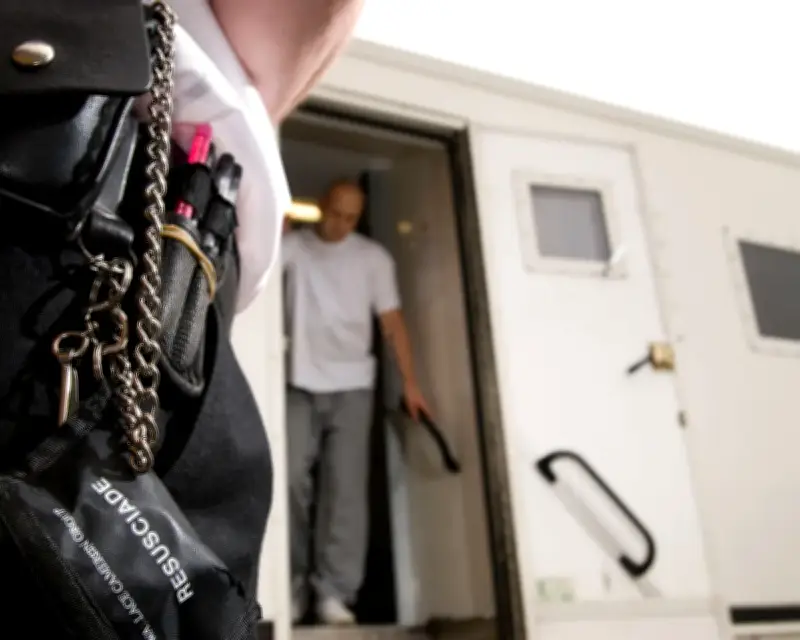
The planned early release of nearly 2,000 prisoners from Thursday, with an estimated 5,000 releases over the coming year, will address the immediate crisis in England and Wales jails, but it is not a permanent fix.
According to Enver Solomon, chief executive of the criminal justice charity Nacro, wider reforms are needed across the system to ensure the new approach to early releases does not need to be further accelerated.
Challenges inside overcrowded jails
Inside a prison in the south-east of England, a flipchart in a staff meeting room lists gangs, the destruction of cells, prisoners exploiting each other and complex behaviours under the heading “Challenges”. Committed, hard-working staff report high levels of psychosis, often combined with drug abuse, and examples of people committing crimes to go back into jail for respite from chaotic, dysfunctional lives.
As a first step, the staggering increase in people recalled to prison needs to be addressed. Recall now accounts for one in seven of the prison population, compared with one in 13 a decade ago. Cases of people being recalled for missing probation appointments because transport was delayed or for moving out of accommodation to get away from drug dealers and gangs are too often punished with a return to custody. A justice secretary under the last Labour government described this as a ludicrous approach that must change if prisons are not to stagger from crisis to crisis.
Probation service under strain
The probation service is critical to fixing prisons and too often undervalued. It is a long way from its original social-work ethos to advise, assist and befriend those once described as clients but now always labelled offenders, with the focus much more on surveillance and compliance. Consecutive reports by the Chief Inspector of Prisons during the last two weeks reveal how, after years of being run down, the service is struggling to get the basics right.
Electronic tags are a critical and expanding part of supervision on release from custody, but the inspector found the “systems, processes and frontline practice needed to make it effective have not kept pace”. The standard of probation work is not consistently what it should be, with staff shortages, poor information sharing and gaps in the capability of probation officers to keep people safe. The government is committed to recruiting thousands more probation staff and to improving practice, but a more person-centred approach closer to the profession’s social-work roots is needed. Those coming out of custody whom Nacro works with say they want probation officers to get alongside them and build trusting relationships so they can get their lives back on track.
Need for transparency and connected services
Ministers need to be much more transparent about the importance of rehabilitation as well as punishment. The justice secretary’s speech to Labour conference this week started this, but far too many are still leaving prison to commit further offences because the system does not provide the drug treatment, access to employment, training and education – and then stable accommodation on release – that will help turn them away from crime. The fact that half of those rough sleeping in England and Wales have spent time in prison is a stark reminder of what’s not working.
Fixing this cannot be achieved by the justice system alone. Public bodies from the NHS to local councils have a role to play in giving people the support they need to stay out of prison. Community providers can step in where state agencies are not best placed to reach people.
In his party conference speech, Andy Burnham spoke of the importance of being honest with the country. To be honest about prisons would be to recognise that continuing to lock up more and more people on longer sentences in overcrowded jails will not deliver rehabilitation, nor will it protect communities. This means levelling with the public about what current sentences look like, who needs to be locked up and for how long. There is a precedent: when Labour was last in government, in 2010, there were more than 2,000 children behind bars in England and Wales; today there are fewer than 500.