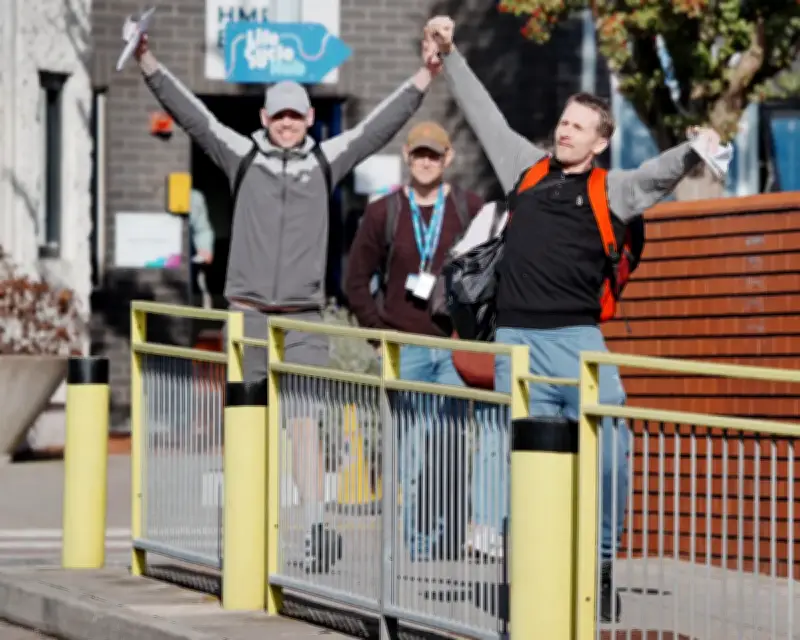
The first wave of early prisoner releases began on Thursday, with 700 offenders expected to be freed across England and Wales under the government’s plan to ease prison overcrowding. Those released from dozens of prisons were greeted by huddles of journalists requesting their personal messages for the prime minister.
Among the first releases, Michael Bogle, 38, a former bus driver turned shoplifter from Brent, north London, stepped into the sunlight outside HMP Wandsworth, a south London prison notable for a string of recent scandals. Having served 78 days in prison after breaching a 32-week suspended sentence for shoplifting, he was released early and was pleased that he had been given a place in a bail hostel in south-east London. Asked for his message to Burnham, he said: “Keep the early release going. It’s good.”
Releases across England and Wales
Bogle, who has been jailed five separate times for 100 convictions, said he was driven to shoplift “so he could eat” after being made homeless. Prison was “terrible”, Bogle said, adding that there were “too many drugs”. He said there was a risk he would shoplift again “but hopefully not”.
Outside HMP Durham in north-east England, a prisoner, dressed in shorts, a T-shirt and trainers and holding his belongings in a bin bag, said to the press as he left the prison: “Justice system, what justice system? Thank you Andy Burnham.” A man leaving HMP Cardiff, who was asked if he had a message for the prime minister, said: “Thank you very much and don’t get me back here again, bro.”
Government plan and supervision
The prisoners are among thousands the government has been forced to let out to free up space in overcrowded jails and stop the collapse of the justice system. About 2,000 criminals including domestic abusers and violent offenders are to be freed over the next month, with another 3,000 in stages over the next year to ease overcrowding. The number was reduced from 6,000 after an intervention by Burnham. Prisoners guilty of manslaughter will also be excluded, meaning the killers of PC Andrew Harper, who died in the line of duty in 2019, will not be eligible.
The number of people behind bars has jumped by more than 1,700 in the past three months. The prison population in England and Wales was 87,499 on Monday, according to Ministry of Justice (MoJ) data. This is up from 85,761 on 29 June, a rise of 1,738, or 2%. The MoJ said released offenders would be monitored under the “toughest supervision in British history”.
Reactions and concerns
The victims’ commissioner, Claire Waxman, said the government’s confidence in the plan “is not yet matched by the reality on the ground”. The Labour MP for Derby North, Catherine Atkinson, who is chair of the Commons justice committee, said the releases were “regretfully a matter of necessity after more than a decade of policy failure to manage the estate’s long-running capacity issues”. The safety of victims and the public “must be paramount”, she said, adding: “Serious questions remain over the pressures on probation and prison staff, the effectiveness of electronic monitoring, as well as the system’s readiness to manage the return of offenders back into communities in the coming months.”
The justice secretary, Alex Norris, said: “We understand the anxiety victims face ahead of offenders’ release dates, but the greatest danger to victims would be prisons running out of cells for dangerous criminals, which was the crisis this government inherited. Our plan will make sure this never happens again by building 14,000 prison places while subjecting offenders to the toughest-ever controls, leaving them nowhere to hide and under no doubt that we are watching them.” The move coincides with the justice secretary being sworn in as lord chancellor at a ceremony at the Royal Courts of Justice in central London on the first day of the new legal year, where he vowed to the most senior judges in England and Wales that he would be “ambitious” in his effort to cut the backlog of court cases.