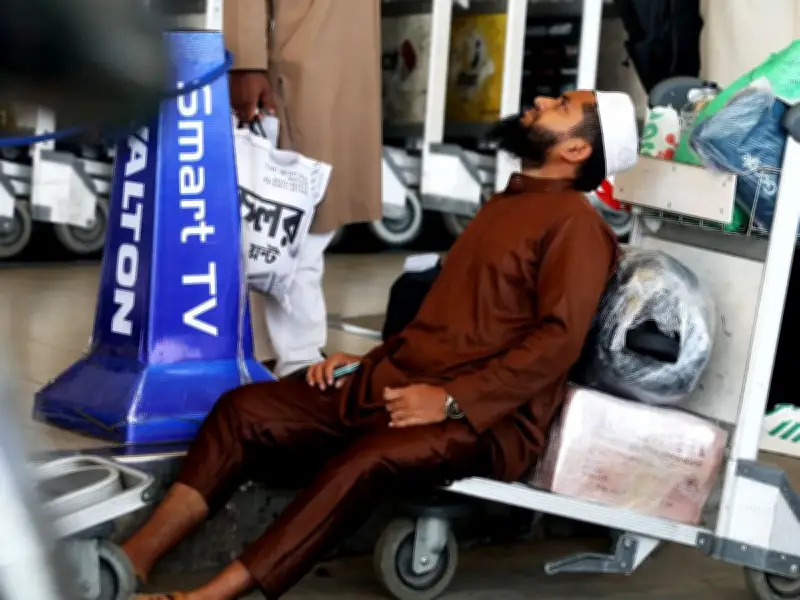
Passenger terminals at King Khalid International Airport in Riyadh were targeted for the second time in 24 hours on Sunday, following a missile strike a day earlier that killed 12 people and injured more than 300. The UK condemned the action as a "dangerous escalation" by Iranian-backed Houthi militants, who also issued a warning against using Saudi airports or airspace.
UK Response and Travel Warnings
Defence Secretary Wes Streeting said the UK would continue to support Saudi Arabia but is not currently considering joining military offensives. He told Sky News: "This is completely contemptible action and it’s one of the reasons why the UK is providing support to Saudi Arabia in the form of air defences, but also air-to-air refuelling." He added: "Even in the context of Houthi attacks and an escalation, what we saw in terms of the attack on the airport in Riyadh was a shocking escalation. Hundreds of casualties, and an attack on a civilian target that can't be possibly justified in any circumstances."
On Sunday, the Foreign Office advised against all travel to parts of Saudi Arabia, including anywhere within 10km of the border with Yemen. It also urged people to avoid non-essential travel to Aseer province, Riyadh province, Najran province, Jizan province, Taif city and Taif International Airport.
International Reaction and Casualties
Foreign Secretary Ed Miliband said: "I am appalled by the latest attack on King Khalid International Airport, my thoughts are with those families who have lost loved ones, and those injured in this horrific attack. We stand in solidarity with those affected."
Saudi authorities said those killed in Saturday's airport attack included four Saudi citizens, two Bangladeshi nationals, a Palestinian, a U.S. citizen, an Egyptian, a Jordanian, a Syrian and a Sudanese. The injured were being treated at several hospitals.
US Stance and Broader Conflict
Asked if the US would commit forces to support Saudi Arabia, President Donald Trump told reporters outside the White House: "We may. We’re going to look at it." He added: "We just found out about the recent attack. So we’ll make a decision. We move very quickly."
The Houthis, a militant group with around 20,000 fighters, have been targeting shipping routes in the Red Sea since the October 7 attack in 2023. Last month, militants seized two strategic islands—Greater and Lesser Hanish—having previously taken control of the port of Mokha and Perim Island. These are on key shipping routes connecting the Red Sea to the open ocean, crucial for transporting oil and gas. They have also targeted facilities run by Saudi state-run energy firm Aramco.
The heightened tensions have caused oil prices to soar—between June and September this year, the global oil price rose from £52 to over £80. Escalating conflict between the Houthis and Yemen's government has led to the displacement of around 100,000 people in recent months.