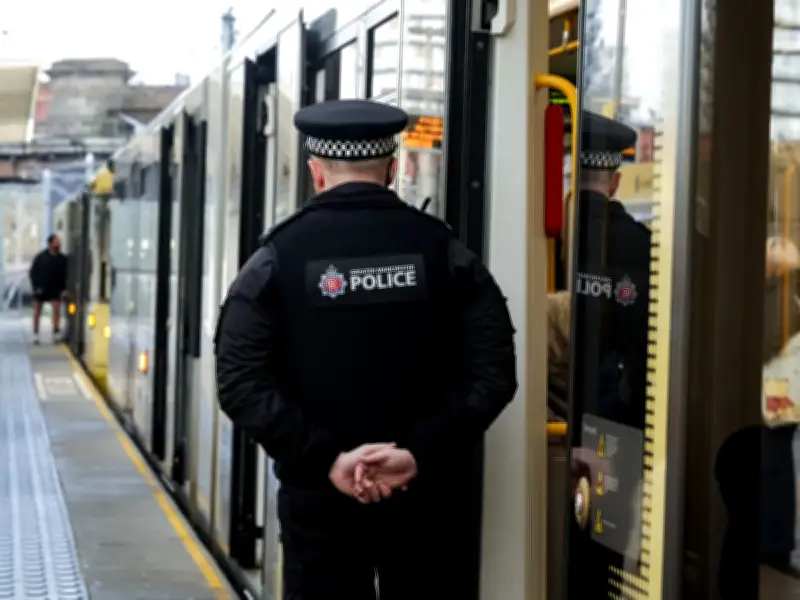
Greater Manchester Police (GMP) has launched a new policing team dedicated to the region's transport network, making four arrests on its first day of operation. Known as Greater Manchester's 11th policing district, the Transport Police and Crime Command is tasked with maintaining law and order across the Bee Network, which carries four million journeys each week.
Launch Day Impact
The specialist team began its work on Thursday, October 29, and immediately demonstrated its presence with four arrests. Chief Inspector Neil Humphreys said a key part of the team's role is to make Greater Manchester's transport network a safer place for everyone.
"It's to ensure the growing network from the passengers we have using the bus, Metrolink and road network as well feel reassured and that visibility is increased," he said. "We've got four million passengers per week using the bus and Metrolink, and it's about visibility on that system, making sure people feel safe."
Focus on Violence Against Women and Girls
An operation on Friday, October 30, saw the team at Victoria station in Manchester city centre with a particular focus on violence against women and girls. Chief Inspector Humphreys highlighted a recent incident where a man had "exposed himself" on a tram. The man was identified through GMP's live chat system, and although he had left before officers arrived, they were able to apprehend him days later when the woman encountered him again.
"I'm a father of two girls myself, when those children get to an age where they can use this network on their own, I want them to be really safe. What I need to do now is make sure that is futureproof," he said.
Chief Inspector Humphreys also noted that plain-clothes officers are deployed to look for indicators of predatory behaviour. "That's where we can then step in to speak to those individuals, to find out who they are, what they're doing, and why they are where they are," he added.
Facial Recognition and Reporting
The team has also worked with GMP's live facial recognition unit at transport interchanges, using facial recognition and sex offender management systems to interact with individuals who could pose a risk to the public. The operation at Victoria station was launched amid concern that some women and girls face intimidating behaviour or sexual offences on the network.
"Over 50 per cent of people using the network are women and girls, and there's an underreporting of intimidation and sexual offences that occur, which is why we want that visibility," said Chief Inspector Humphreys. GMP said rising reports would not be a bad thing but would help it see the "true picture" of what is happening and identify crime hotspots.
Chief Inspector Humphreys said the end goal in 12 months is for every passenger to feel safe on their journey and for police to respond if something occurs. While the unit's work initially focuses on roads, trams and buses, conversations are taking place with Transport for Greater Manchester and the British Transport Police about how this will work when some railway lines join the Bee Network from December, in a phased approach up to 2030.
British Transport Police Collaboration
Sergeant Sorcha Cantwell-Crook, who leads the violence against women and girls team at British Transport Police for the railways, said, "We cover the whole of the Pennines including Manchester, it's all about supporting women, supporting the staff, making it an uncomfortable area for offenders." She added, "We use CCTV, plain clothes, and also uniformed officers to protect women and girls."
The team conducted a survey in Manchester on Friday to ask how people feel when travelling on the railways and aims to have a visible presence. Sergeant Cantwell-Crook advised women and girls who find themselves in uncomfortable situations on trains to report it to 61016, or 999 in an emergency, and to try to break the barrier with the person, such as saying "my stop is next" or asking "I know you from school don't I?"