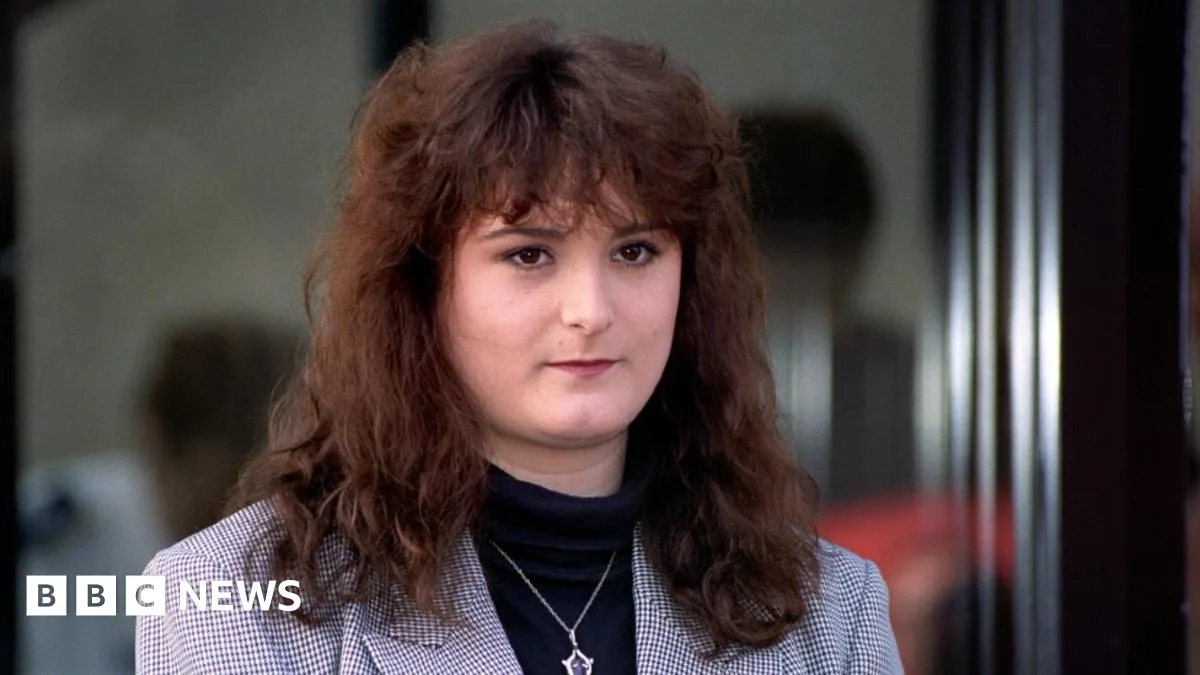
In 1992, Stephanie Slater, a 25-year-old estate agent in Birmingham, was abducted at knifepoint by Michael Sams, who posed as a potential house buyer. She was held captive for eight days, handcuffed, gagged and blindfolded in a coffin-like box inside a wheelie bin in Sams' workshop in Newark-upon-Trent, Nottinghamshire. Sams later murdered 18-year-old Julie Dart from Leeds using similar methods.
After collecting a £175,000 ransom from her employers, Sams released Stephanie, dropping her two streets from her home. She staggered to her door, partially blind from the pressure of the blindfold, and was met by a family liaison officer who initially did not recognise her. When her father appeared and cried out, the officer blocked her from hugging her parents, citing the risk of contaminating forensic evidence.
Stephanie recalled: 'He pushed me to the back of the room, sat me in a chair and said 'You stay there. Don't touch the arms of the chair.' I was absolutely terrified. To a police officer, you are a walking crime scene. But I should never have been denied just a hold of a hand to know that I was home.'

Her best friend Stacey Kettner said Stephanie was made to undress on a sheet of brown paper in her living room while people watched through a frosted glass door, leaving her feeling exposed. Despite the trauma, Stephanie's evidence helped convict Sams of both her kidnap and Julie Dart's murder.
In 1995, Stephanie published 'Beyond Fear: My Will to Survive', saying: 'I wrote the book for women who are in danger. I wanted to speak out because nothing seems to be done for women these days.' Her case led to changes in how victims of crime are treated by police.