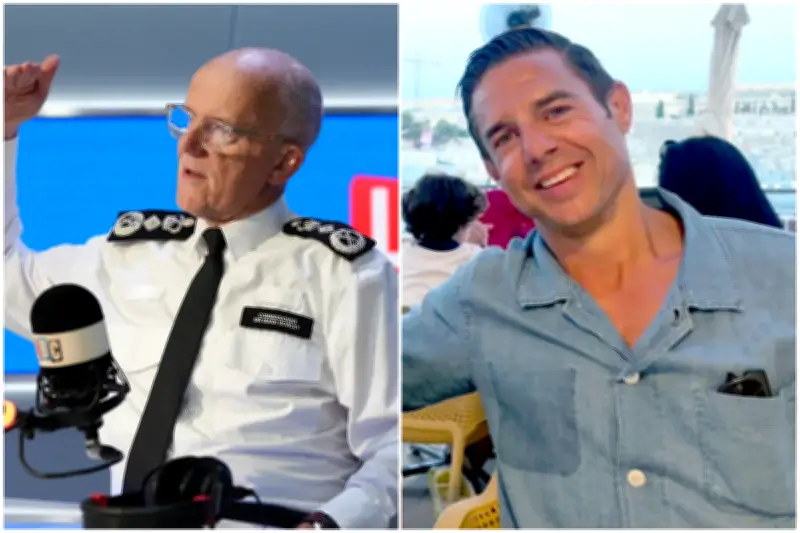
Met Commissioner Sir Mark Rowley has defended the Metropolitan Police investigation into Putney Pusher suspect Nicholas Brandram, saying he will not apologise for the pressure placed on criminal suspects.
Mr Brandram, 44, a banker and former Army officer, was found dead inside a property in Chiswick, Hounslow last month. He had been arrested in June in connection with an incident on Putney Bridge in which a jogger shoved a woman headfirst into the path of an oncoming bus in 2017, and had been released under investigation.
Family's complaint and IOPC referral
A statement released on behalf of his immediate family after his death said Mr Brandram “took his own life after months of immense pressure caused by a Metropolitan Police investigation into whether he was the so-called ‘Putney Pusher’”.
The Met referred itself to the Independent Office for Police Conduct (IOPC) over its contact with Mr Brandram. The IOPC then said the Met should investigate itself over the arrest, considering issues such as the necessity and proportionality of arrest, dealings with the media and Mr Brandram’s welfare.
Sir Mark's response on LBC
Addressing the case on LBC on Thursday, Sir Mark said: “That case has been live all that time, and we had some new information, and that led us to treating that man as a suspect. The family have complained. When people complained, we have a duty to think about that complaint. We asked the independent officer of police complaints if they wanted to look at it.
“Every criminal suspect, of course they're under pressure. That is that is obvious. I'm not going to apologise for that. The thing that the family are saying is they're saying, ‘Met, you were unreasonable. He was obviously innocent.’ I'm not saying I necessarily agree with that, but we've got to review and look at their complaints alongside continuing the investigation.”
DNA evidence downplayed
Britain’s most senior police officer also addressed criticism from Mr Brandram’s family that a DNA test they claim will prove his innocence was not processed quickly enough. Mr Brandram gave a DNA sample to police some two months before his death but never received the results, his sisters said. It remains unclear if the DNA has been processed.
“I think the DNA is not as significant as has been pretended in the media”, Sir Mark said. “If I was to give you a push now, Nick, we may get a bit of DNA off your jacket, but we probably wouldn't. So, even the absence of it wouldn't prove I didn't push you. So, it's not like some crime scene where there's lots of blood, etc, and you will get it. So, that's just one line of inquiry the officers have. That is not going to be the most critical line of inquiry, and the absence of DNA is not going to be the most definitive issue.”
When pressed on whether the Putney Pusher could still be at large he said: “So, we're investigating the case. We have a suspect, he died, family have complained. We need to continue with that.” When LBC host Nick Ferrari suggested the Met didn't know if he was still at large, he said: “Well, or it could be the person we're investigating. So let us work it through.”
Inquest details
An inquest was opened and suspended into Mr Brandram’s death on September 22 at West London Coroner’s Court. The court heard that on the evening of Tuesday September 15, Mr Brandram did not attend a family meal as planned. His brother-in-law attended his home address and found Mr Brandram in an upstairs room. Paramedics attended and despite resuscitation, he was pronounced deceased at 8.58pm.
The coroner added the death was not considered suspicious and there was “no evidence of third-party involvement”. A full inquest will be held on a later date.