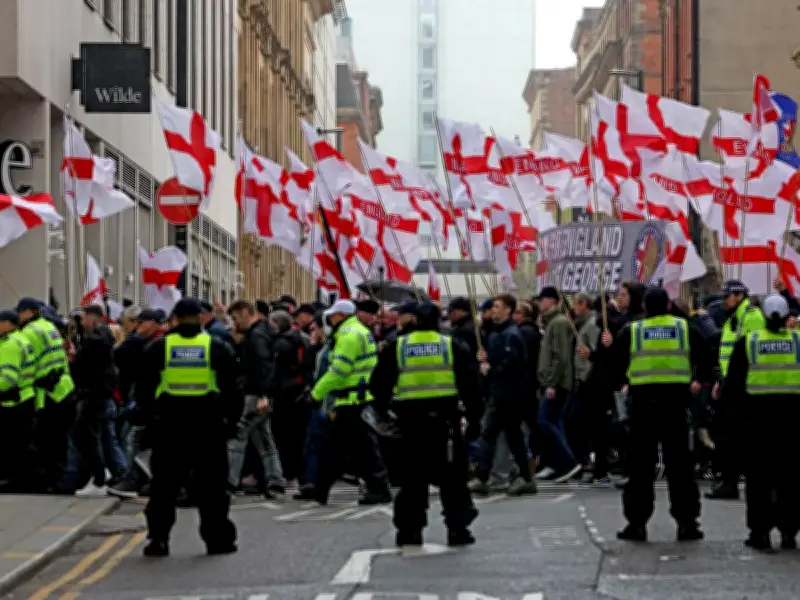
Greater Manchester Police (GMP) will have more officers on duty this weekend than for a Manchester derby as a planned protest and counter-protest are set to take place in the city centre. Additional police powers will be in place ahead of Saturday, October 31.
The force said it expects hundreds of protesters and counter-protesters in separate parts of the city centre as far-right, anti-migration demonstrations take to the streets.
Protest and counter-protest plans
GMP said the organisers of the main protest in Albert Square have engaged with them, and the group is due to start gathering around midday. Counter-protests are also expected to take place in the city centre during this time.
Chief Superintendent Marcus Noden said: “The public can expect to see a large police presence in the city centre on Saturday as part of our policing operation focused on keeping people safe and minimising the wider impact during the planned protest and counterprotest.
“We’ll have a flexible and resilient policing plan to mitigate any disruption. Our aim is to facilitate protest and to ensure our local communities, businesses and visitors to Manchester can go about their day safely and with as minimal impact as possible.
“Our officers will police without fear or favour, ensuring those exercising their right to protest can do so safely, while intervening when behaviour crossing the line into criminality.”
Additional police powers
The force added that its priority is public safety and that it will “facilitate people's right to protest and intervene quickly and proportionately if behaviour crosses the line into criminality.” Additional police powers will also be used on Saturday “to minimise serious disruption to the lives of people and businesses in the local community.”
The following pieces of legislation will cover the city centre on Saturday:
- Section 34 of the Anti-Social Behaviour, Crime and Policing Act 2014, a dispersal power allowing officers to direct people to leave an area to prevent anti-social behaviour or disorder. Anyone who fails to comply can be arrested.
- Section 60AA of the Criminal Justice and Public Order Act 1994, which allows officers to require the removal of face coverings when a constable reasonably believes that person is wearing them wholly or mainly for the purpose of concealing their identity.
GMP added that they are working with partners and local businesses to minimise the wider impact and advise people to plan ahead.