A jury inquest into the death of Arthur Robert Mallory, who collapsed in police custody after a spit hood was placed over his head and later died in hospital, has concluded that officers failed to react, showed a lack of leadership, and made inappropriate comments.
The inquest, held at Swansea's Guildhall, opened on Monday, November 2, and concluded on Wednesday, November 18. Assistant coroner Kristen Heaven heard how Mr Mallory, referred to throughout the hearing as Robert, was 55 years old and lived in supported housing managed by Caredig at St Helen's Avenue.
Mr Mallory had a lengthy history of mental health struggles and drug use, and had been diagnosed with paranoid schizophrenia, for which he had been prescribed various medications including clozapine. He was under the secondary mental health care of Swansea Bay University Health Board, with consultant-led care and a community care co-ordinator in place.
Arrest and collapse
On March 26, 2024, Caredig support workers grew concerned about Mr Mallory's behaviour and contacted South Wales Police for assistance, informing them that they believed he had not taken his clozapine medication. The inquest was told he had been seen laughing to himself and jumping out of his bed.
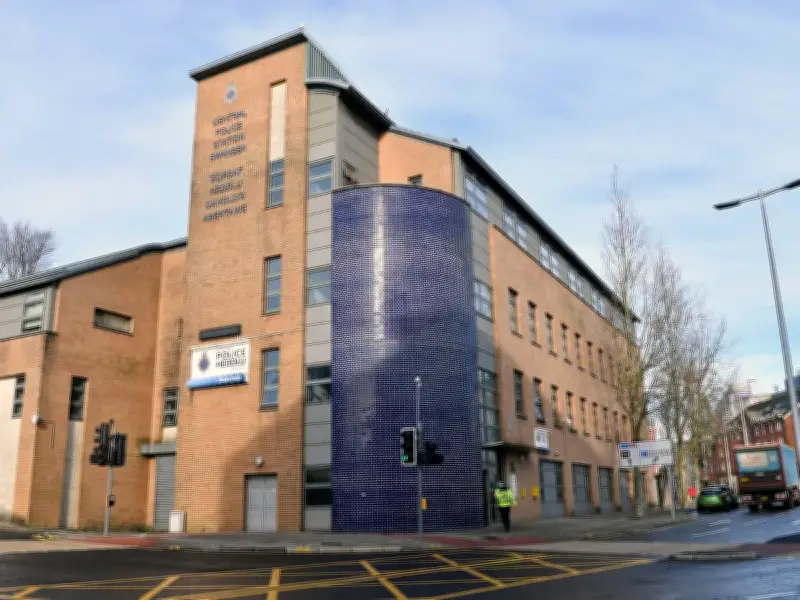
Two officers attended the property, and Mr Mallory was subsequently arrested. He was taken to Swansea Central Police Station and placed into an airlock where he remained for a period of time under restraint.
He was subsequently moved into the custody area where a spit hood was placed over his head, causing him to collapse shortly afterwards. A healthcare worker from a company called Mitie was summoned, who established that Mr Mallory had no pulse.
CPR was immediately started and an ambulance was called. The paramedics applied a defibrillator but discovered that Mr Mallory "was in asystole", meaning there was no electrical activity in his heart. He was rushed to Morriston Hospital but was pronounced dead shortly after his arrival.
Family tribute
The inquest heard how Mr Mallory was a former Cefn Hengoed comprehensive school pupil who had been "quiet, thoughtful, imaginative and intelligent" as a child. He had developed a "deep passion" for painting aircraft models, and for music, with a love of Kiss and The Who.
A family statement described how he had been "warmly loved" by his relatives, with a particularly close bond during his formative years. It detailed how he "fell in with the wrong crowd" as he transitioned into a young adult and started experimenting with illicit substances, causing his mental health to deteriorate.
This, in turn, made it "challenging" for his family to maintain contact with him, which proved to be a "source of immense heartache and worry", particularly for his mother. His family noted that he had found stability upon moving into his home at Caredig, adding that he was "deeply loved and missed by his mother Shirley who has resided in a nursing home for many years". His family recalled him for "the warmth and potential of his early years".
Jury findings
The jury concluded that Mr Mallory died as the result of hypoxic cardiac arrest. It also noted a tumour of the lung and schizophrenia as contributory factors.
The jury said that "appropriate force and action" was used initially by police officers, however the tone of voice used by officers could have been better. Inappropriate comments were also made by police officers.
The jury found that the arrest of Mr Mallory was carried out correctly but that officers later failed to call for assistance and failed to raise concerns about his deterioration. If they had, it is "probable" that the situation could have been escalated sooner.
The jury found there was an "initial lack of urgency" and that a number of officers "failed to react". They also found that there was a "lack of leadership and responsibility" shown.
Assistant coroner Kristen Heaven will issue prevention of future deaths reports which will be sent to both South Wales Police and the IOPC because she is "concerned about the delay" in the coroner and pathologist being notified of the death. She also raised concerns about the adequacy of the IOPC investigation and the conduct of South Wales Police officers.