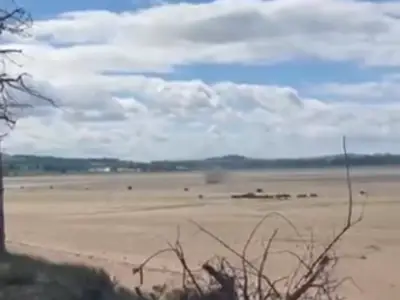
Three local men leapt into action to rescue several children caught in treacherous rip currents at Tywyn's expansive sandy beach on Saturday, June 27, during the tail end of last week's heatwave. A regular beach-goer reported that "four or five" children were saved in separate incidents, renewing demands for a lifeguard presence at a beach where rip currents are described as "not uncommon".
Rescues and Community Reaction
Those involved in the rescues said they were "shocked" by the sequence of incidents. Online, residents commented that without their swift action, "we would be looking at another drowning". A woman said: "Parents need to keep an eye on their children..... sitting on the beach and oblivious to the danger their children were actually in." Another added: "Things could have gone very differently today!"
Historical Tragedies
Throughout the years, Tywyn's rip currents have resulted in several tragedies. In July 2015, 74-year-old grandfather Richard Guest, a former bank manager originally from Bethel, perished while attempting to save two girls caught by a rip current. He held onto one girl until a lifeboat reached them but succumbed during the ordeal. His daughter continues to campaign for the beach to be "properly lifeguarded". Three years later, following an incident where three teenagers required air ambulance transportation after encountering difficulties, a petition emerged demanding lifeguards at the beach. This referenced a 2014 RNLI study highlighting the hazards of a rip current linked to a rock breakwater at the location.

Understanding Rip Currents
Rips are powerful currents flowing seaward, which can rapidly sweep people from shallow areas towards deeper water. The RNLI said: "They tend to flow at 1–2mph but can reach 4–5mph, which is faster than an Olympic swimmer." Conditions at Tywyn beach last Saturday were reasonably calm – tides, surf and wind were moderate. What occurred afterwards triggered demands for improved signage at the beach to stop people mistakenly believing it's safe when it isn't.
Demand for Better Signage and Lifeguards
On social media, one woman said: "It's a disgrace that children's lives are being put at risk to save the cost of a couple of signs." The beach does feature a small sign alerting visitors to rips but residents want warnings to be more visible. Red flags are also displayed at Tywyn to indicate danger. Residents claim the flags are consistently disregarded as they are seldom removed.
Current Lifeguard Provision
RNLI lifeguards patrol more than 30 Welsh beaches. The majority are in South Wales, although lifeguards operate in Ceredigion and Denbighshire. Daily patrols at Rhyl and Prestatyn beaches commence on July 4 and run until September 6, between 10am-6pm daily. With county councils holding responsibility for lifeguard provision, Tywyn Town Council has repeatedly urged Cyngor Gwynedd to dedicate resources. Given the county possesses a coastline extending nearly 300km and incorporating dozens of beaches, the council's Maritime Service has taken a distinct strategy.
Cyngor Gwynedd's Approach
A spokesperson said: "An annual and specific risk assessment is carried out for individual beaches which identifies relevant hazards as well as associated mitigation measures. The identified measures then form the basis of the beach management and safety arrangements along the coast. Cyngor Gwynedd employs between 35-40 seasonal beach wardens who carry out a wide range of roles and duties, but do not include lifeguards. Such an approach is consistent with other local authorities in north west Wales. Cyngor Gwynedd continues to work closely with the RNLI and other agencies to promote safety on our beaches and along the coastline. This involves raising awareness of the inherent hazards that exist at seaside locations and encouraging visitors to our beaches to respect the environment, respect other beach users and take notice of relevant guidance and safety signage."
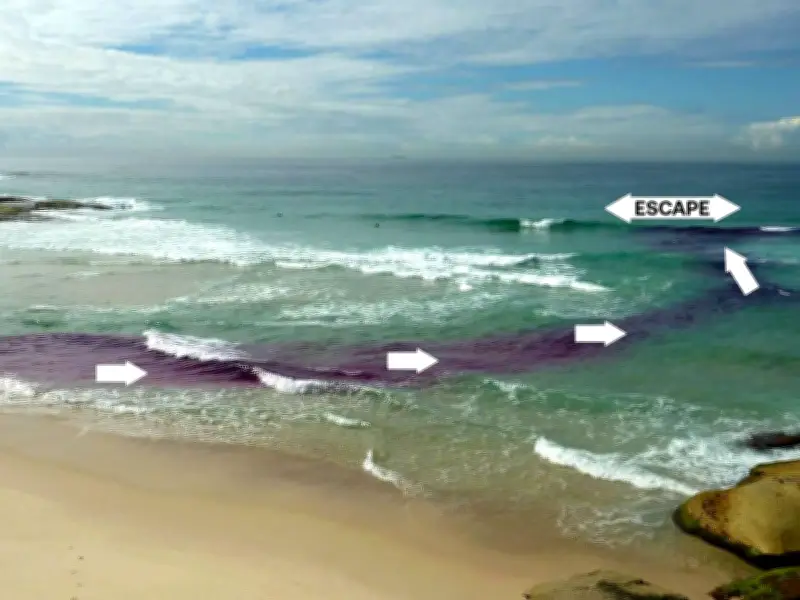
How to Escape a Rip Current
The RNLI states rip currents can be challenging to identify but typically present themselves as a channel of turbulent, rough water on the ocean's surface. The lifesaving organisation offers guidance to "break the grip of a rip". A Tywyn surfer recorded himself entering a rip current to demonstrate the hazards and illustrate how to escape.