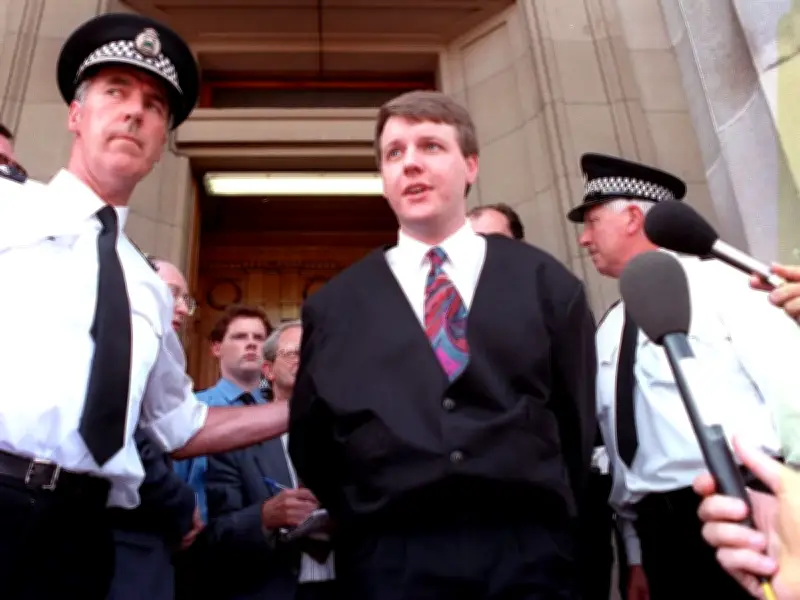
Paul Ferris would have struggled with the “constant stress” of being hunted over his criminal actions, a former top cop claimed following the gangster’s death.
Ferris, who was 62, was admitted to Glasgow’s Queen Elizabeth University Hospital on Sunday and died on Tuesday, October 6. He had been cleared by a jury over the murder of Arthur “Fatboy” Thompson Jnr in 1992 – but jailed for his part in a major gun-running operation in 1998.
Former top cop on Ferris's stress
Ferris claimed he had gone straight after his release from prison – but police who spent much of their careers chasing the gangster claimed he could never be at peace before his death due to his criminal past.
Former top cop Graeme Pearson said: “I think his life would have been extremely stressful... the constant stress of being hunted by the police.
“Even though he wouldn’t admit it. Ferris and his ilk spend their entire life looking round corners and keeping an eye on their backs. Ferris more than most.”
Gangland figure's criminal history
Ferris was Scotland’s best-known gangland figure after he first came to public attention in 1992 when he was cleared at the High Court in Glasgow of the murder of Thompson Jnr – son of crime godfather Arthur Thompson Snr – in what was then the longest trial in Scottish criminal history.
He then stood trial at the Old Bailey in London in 1998, where he was convicted of conspiracy to sell or transfer prohibited weapons, deal in firearms, and possess explosives. He was jailed for 10 years – later reduced to seven. While in prison he brought out his first book, The Ferris Conspiracy. It was turned into BAFTA-winning movie The Wee Man, starring Line of Duty star Martin Compston as Ferris.
Life after prison
Ferris always claimed he went straight after his release in 2001 and became a legitimate businessman with interests in security and construction.
Pearson, former head of the Scottish Crime and Drug Enforcement agency, said that Ferris had probably gone straight because he realised his life of crime was at an end. Pearson remembers him as a young man in the '80s stealing cars who then went on to become an enforcer for Arthur Thompson Snr and a major figure in organised crime.
He added: “Paul Ferris came at a time when a handful of criminals like him had bigger ambitions beyond Scotland.
“Ferris was unlucky that he began to realise that ambition just at a moment policing was changing and we began to take him and his ilk seriously. We were taking them on at their level not at the local level where they had operated previously.”
Pearson added: “I think he realised his days were finished.”