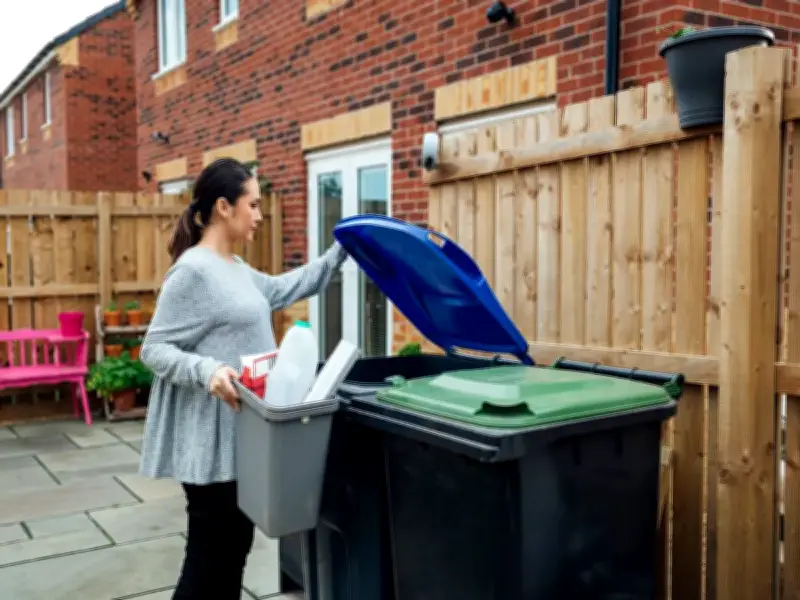
Placing your rubbish in a stranger's wheelie bin without permission can be legally classed as fly-tipping, and in Wales local councils can issue fixed penalty notices for the offence, with fines typically ranging between £150 and £400.
Many people have considered disposing of waste in another person's bin while out and about, though few actually do it. Yet putting your waste in someone else's bin could create difficulties for both yourself and the homeowner if the refuse is inappropriate for collection.
When bin use becomes an offence
Depositing garden waste in a general waste bin might result in the wrong type of rubbish being collected, while discarding a dog waste bag into a recycling bin could contaminate its contents. In certain situations, using another person's wheelie bin might even be classified as fly-tipping.
Depending on your location, your local council could issue a fixed penalty notice for leaving waste in an unsuitable location. Local authorities possess powers to issue fixed penalty notices for certain minor fly-tipping offences, including what is occasionally termed "bin stuffing". The sum can vary depending on the circumstances and the regulations established by the local authority.
What the experts say
Wheelie Bin Solutions said: "It could be argued that using a neighbour's rubbish bin is fly tipping – after all, you are taking waste that you can't dispose of at home and placing it in public, rather than taking it to your local waste recycling site to be disposed of correctly.
"Yes, even if it's just a singular drink cup! Additionally, you are disposing of your waste in a bin that was specifically provided for use by or owned by someone else."
"On top of that, you are technically trespassing if the bin is on your neighbour's property!"
Ethical considerations and public opinion
The company noted that, from an ethical standpoint, it's likely more acceptable to place rubbish in somebody else's bin when it's relatively empty rather than when it's already nearly full. Should you fill the bin so the lid no longer sits flush, the waste collection team may decline to empty it – potentially leaving your neighbour with an overflowing bin.
On Reddit, one user asked: "Is it rude to put dog poo in someone else's bin? I just got yelled at for putting a tied bag of dog poo in someone's bin.
"Their bin was on the path so I did not enter their actual property in order to use it, but they saw and yelled at me from their window.
"I apologised but I am also confused - is it considered rude to do that? I didn't realise it was a big deal."
In response, one user said: "I personally would not like it if you did. I've had that happen to me before and as nice and careful as you might be, the bin stinks so much of dog s***.
"Maybe it's not noticeable to dog owners, but it definitely smells. I appreciate you thinking about it and questioning your view. I think that's a sign of someone who is considerate."
Another added: "Yes, you shouldn't use other people's bins to get rid of your waste. Personally I wouldn't mind, but their within their rights to get p***ed.
"Unfortunately you signed up for being someone who has to carry excrement around with them when you chose to get a dog."
Penalties in Wales
In Wales, you can technically face a penalty for putting dog poo in someone else's wheelie bin. While it might seem like a harmless way to dispose of bagged waste while out on a walk, doing so without permission is legally classed as fly-tipping (the illegal dumping of waste) under UK waste laws.
Because a wheelie bin is assigned to a specific household and property, depositing your waste into it without the owner's consent falls under small-scale fly-tipping. Local councils in Wales can issue a Fixed Penalty Notice (FPN) for this, with lower-level fines usually ranging between £150 and £400 depending on the specific local authority.
If you walk onto someone's private driveway or garden to reach their bin, you are also technically trespassing. Persistent "bin stuffing" by neighbours can also be investigated by councils as a form of anti-social behaviour.