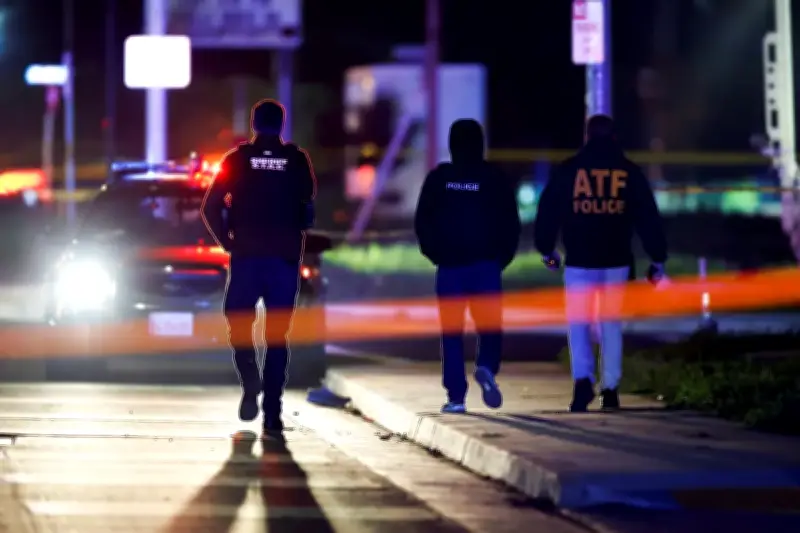
The Trump administration is crediting increased immigration enforcement for a historic drop in US homicides, but experts say the claim is unsupported by data. The decline in the homicide rate began in 2023, during Joe Biden's presidency, according to researchers.
White House claims and expert rebuttals
Speaking to the UN general assembly last week, Trump said: "We have the most secure border in the world, nobody comes in, unless they're invited. Unless they have permission. As a result, last year we achieved the largest drop in violent crime ever recorded." Vice-president JD Vance made a similar claim at a rally in Iowa, saying: "When you get the violent criminals out of your country you see the largest drop in violent crime in the history of the United States of America. Murder rates, because we got the bad guys out."
Experts say there is no data proving that mass deportations or enhanced immigration enforcement leads to lower crime rates. Research shows no relationship between immigrants, documented or not, and homicide rates in the US, they say.
Pratheepan Gulasekaram, a law professor at the University of Colorado, Boulder, said: "It's a specious claim if you've never attempted to verify anything with actual facts and are willing to believe what the administration will tell you. If you live in a fact-free world this is the type of nonsensical data you're willing to imbibe."
Immigration and crime data
A Guardian analysis published in February showed more than 75% of people who entered deportation proceedings for the first time had no criminal convictions. Only 34 of more than 18,400 people arrested by ICE between 2025 and June this year were convicted of killing someone, according to DHS data. The most common convictions were for illegal re-entry, driving under the influence, and a category marked as "other."
The government accountability office said in a 28 September report that there is no comprehensive or centralized data on the citizenship status of people incarcerated in local jails and state prisons, by the federal government's own acknowledgement.
Political narratives and policy impact
Michael Light, a sociology professor at the University of Wisconsin-Madison, said anecdotes of crimes by undocumented migrants have long been used to push for tougher immigration policies. "The argument in their tragic cases is that they should have never been at risk because this person should have never been able to commit these crimes," he said. "But that's more of a political disagreement than an empirical one."
Light added: "There's no question that they've increased enforcement and we've seen a historic decrease in homicides. But the idea that immigration policy is the only thing that's changed is problematic. And if we misdiagnose what's actually driving the homicide decline, that's going to lead to bad public policy."
This week, the Department of Justice announced a new $25m grant program to support people whose loved ones were killed or injured by undocumented migrants and fund law enforcement efforts to prevent future deaths. The Guardian reached out to DHS and the White House for data or research proving a causal relationship between immigration enforcement and the declining homicide rate; both agencies reiterated their claims but did not supply evidence.