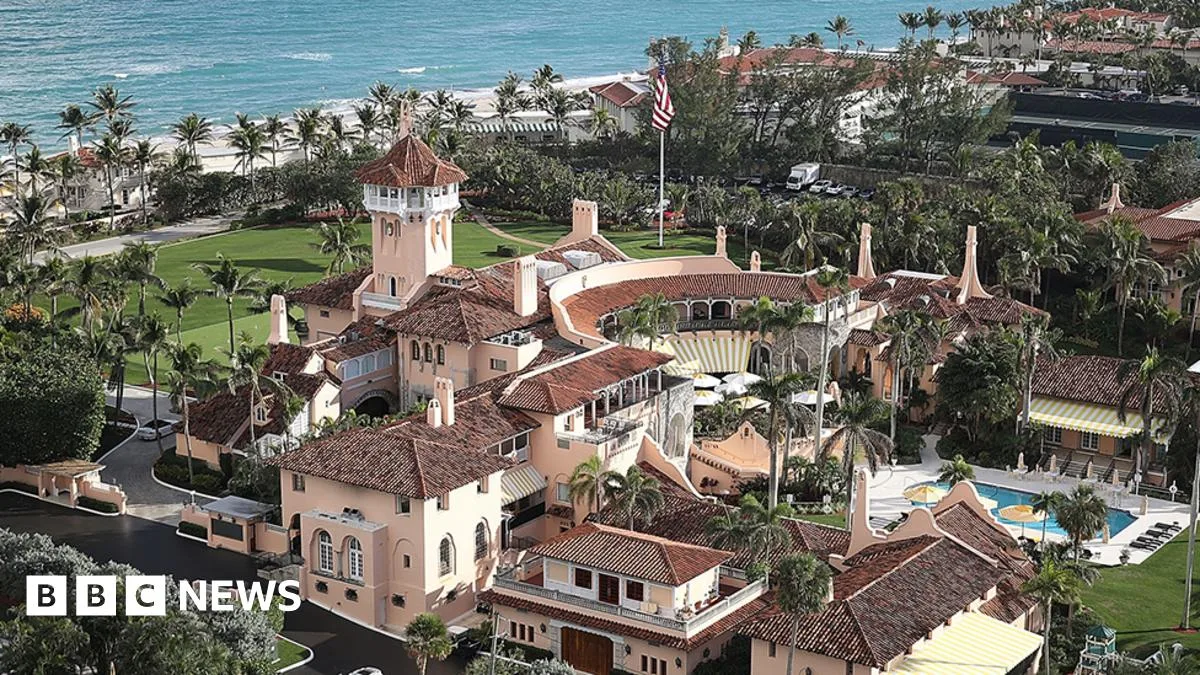
The valuation of Donald Trump's Mar-a-Lago estate is a key issue in the civil fraud trial that threatens his family business. The trial, now concluding in New York, has seen disputes over the property's worth, ranging from a tax assessment of $18m to a witness estimate of over $1bn.
New York Attorney General Letitia James accuses Trump, his sons, and the Trump Organization of inflating asset values by $2bn to secure better loan rates, saving over $150m. Judge Arthur Engoron has already ruled that financial documents contain fraudulent valuations, with Trump appealing that decision.
Mar-a-Lago's value is complicated by deed restrictions limiting its use to a private club, preventing subdivision and requiring preservation costs. Trump himself called it a 'white elephant' in the 1990s before converting it to a club. Real estate agent Rosalind Clarke noted that without restrictions, the value would be significantly higher.
Between 2011 and 2021, Trump allegedly valued Mar-a-Lago as if unrestricted, with figures up to $612m, compared to the county assessor's $27.6m—an overvaluation of at least 2,300%. The attorney general argues this was fraudulent, as the Trump Organization knew of the restrictions.
The former president, who called the case politically motivated, had been expected to testify again but declined. Mar-a-Lago, his home and club, also featured in the classified documents investigation.