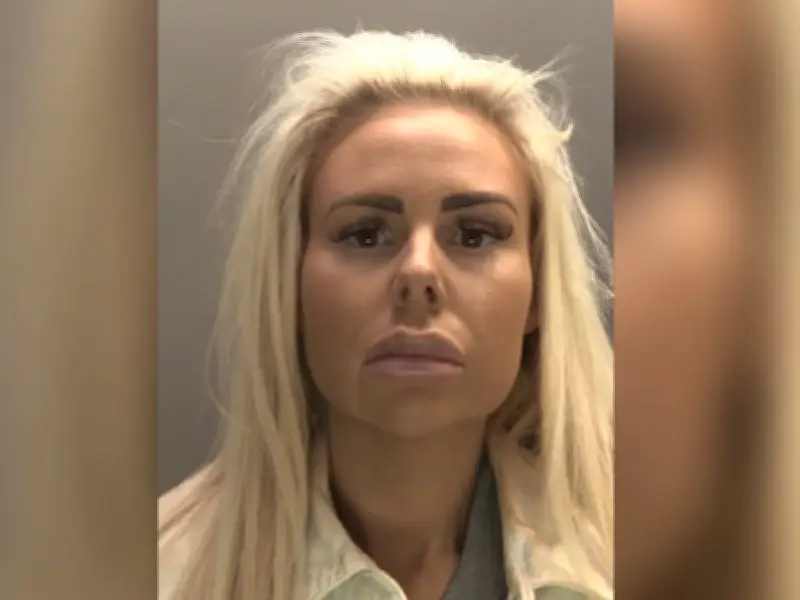
A mother's incriminating text message helped convict her daughter's counterfeit clothing enterprise, which sold fake luxury goods through Instagram and deposited more than £4m over four years.
Sandra Carney, 65, aided "prime mover" Megan Carney-Borrowman in the illicit operation, which saw huge quantities of counterfeit Chanel, Burberry and Versace clothing sold online. Carney-Borrowman, 35, a mother of four, began selling the fake goods after being approached because of her success selling weight-loss medication online.
Over £4m deposited into business accounts
Business accounts linked to the mum showed over a four-year period more than £4m was deposited, although it could not be confirmed how much was from legitimate income. Carney-Borrowman was aided by her husband, 35-year-old Jordan Borrowman, and by her mum, who also involved her long-term business partner, 53-year-old Adam Yaffe.
The four defendants were sentenced over two days at Liverpool Crown Court this week. The plot was first uncovered by Chanel's own brand protection team, who passed details to specialist anti-crime units. The North West Regional Organised Crime Unit (NWROCU) took on the investigation and first arrested Carney-Borrowman, her husband and mum in November 2022.
Phone hidden on curtain rail provided evidence
Carney-Borrowman and her husband's phones were not recovered, but a large number of counterfeit items were seized. In a follow-up search in April of the following year, Carney-Borrowman's phone was found hidden on top of a curtain rail, providing overwhelming evidence showing how she sold the goods.
The court heard there was no way that Carney-Borrowman and her conspirators did not recognise what they were doing was illegal. This was evidenced through messages between the fraudster and her own mum, discovered on her phone.
James Rae, prosecuting, said messages up to March 8, 2021 concerned mundane matters such as paying bills. After that, messages were dated from November 3, 2022, the day after their arrest, when topics changed to identifying solicitors and other matters arising from it.
'You sell hooky stuff'
The court heard Carney-Borrowman sent a message: "Just dno wha to do mum x," to which her mum replied: "I know, but got to face up to it. We knew it was illegal." Three days later, Carney-Borrowman expressed concern about her husband being recalled to prison following his previous conviction for drug supply offences, writing "can't believe all this".
Her mum replied: "Well you're going to have to if he does, but don't worry about it til it happens. It was always on the cards sadly...you sell hooky stuff and have a wedge of undeclared money." Mr Rae added: "The crown says that it is quite clear from these exchanges that neither of these defendants were under any illusion that their conduct was criminal and what is more it is equally clear that Megan Carney-Borrowman's concerns were self-pitying rather than remorseful."
Resumed trading days after first arrest
The court heard this was evidenced given that she had resumed trading just days after her first arrest. Following her first arrest, Carney-Borrowman made significant cash withdrawals and her home was searched again on April 12, 2023. Her phone was recovered hidden on her curtains, while officers found £158,000 in cash concealed in her baby's bedroom, with the mum claiming it was her children's savings.
Mr Rae told the court that the phone showed a "very large volume of chats from which it was overwhelmingly evident that she was selling counterfeit goods and using a 'drop-shipping' method to import them from the overseas supplier directly to the customer's address". Police found Carney-Borrowman had eight business bank accounts as well as 18 personal accounts, some in the name of her young children. Between 2019 and 2023 the business accounts received nearly £4,319,952.73, and £753,419.50 of it was paid into her personal accounts.
Carney-Borrowman was then arrested for benefit fraud on May 2, 2024, with an investigation by the Department of Work and Pensions finding she benefited to the tune of around £68,300 made up of a failure to declare her self-employment income, her purchases of two houses, her residing with Borrowman, and their joint assets. The court heard Carney became involved in the same offending by allowing her daughter to have her benefits paid into a Monzo account in her name.
'Genuine fear for her children'
In mitigation, Nicholas Clarke, defending Carney-Borrowman, told the court her remorse was not self-pitying but "reflective of the genuine fear she has for her children". He said there were developmental concerns regarding all her children, and her youngest had ongoing appointments at Alder Hey Children's Hospital.
Mr Clarke said: "Her children revolve around her and most of her waking life is dealing with them...the reports set out the concerns she has about all of the children being looked after by others...the older children's dad has his own court case in this building. Megan has serious concerns if Jordan will be able to deal with the younger children on his own." He told the court that Carney-Borrowman had PTSD following the tragic death of a child in April 2022. The prosecution said that Carney-Borrowman had lied to the author of her original pre-sentence report and claimed she only started selling counterfeit goods as a result of her daughter's death when she felt unable to engage in conventional employment.
Michael Lavery, for Carney, said his client had worked her whole adult life, had carried out several selfless acts "over a number of years to assist people less fortunate than her" and had supported her two daughters, both of whom had children of their own. He told the court: "It seems to anyone approaching this case that this is a mother doing her best for a daughter who has a number of problems, including the loss of a child. There is no more a person than a mother who wants to help her child, misguided and naïve it has been."
'You enabled your daughter to grift'
Sentencing, Judge Louise Brandon told Carney-Borrowman: "I can't accept that your customers all believed they were buying counterfeit goods. If that was the case we would not be here today...You feel you are the victim. Your actions caused your children to see the police in your own home. You have no one else to blame for the impact on your children. You seem unable or unwilling to grasp that your situation is entirely of your own making."
The judge told Carney: "You enabled your daughter to grift as much as she could. Your messages made it clear the family business was illegal and you knew the full extent of its criminality...What you should have done is encouraged her out of it."
Carney-Borrowman, 35, of Birdling Drive in Southport, was sentenced to four years and three months for conspiracy to commit trademark offences, conspiracy to launder money, benefit fraud, and conspiracy to defraud. Carney, 65, of Court Road, was handed two years, suspended for 18 months with 120 hours of unpaid work after pleading guilty to conspiracy to commit trademark offences, conspiracy to acquire criminal property, aiding and abetting fraud and conspiracy to defraud.
Borrowman, 35, of the same address, received 12 months, suspended for 18 months and 120 hours of unpaid work after admitting conspiracy to commit trademark offences, conspiracy to launder money and benefit fraud. Yaffe walked free from court with an 18-month community order and 120 hours of unpaid work after he admitted conspiracy to commit trademark offences and conspiracy to acquire criminal property.
Speaking after sentencing, Detective Inspector Adam Williams of the NWROCU said: "This was a sophisticated and long-running trademarks and money laundering offence which generated significant profits through the sale of counterfeit designer goods while simultaneously exploiting public funds and defrauding an insurance company. The defendants went to considerable lengths to disguise their offending, but detailed financial investigation and partnership working enabled us to uncover the full extent of their criminality. Counterfeit goods are far from a victimless crime. The proceeds often support wider organised criminality, while consumers are deceived into purchasing products they believe to be genuine. This case demonstrates our commitment to pursuing offenders who seek to profit through fraud and protecting both businesses and the public from financial harm."