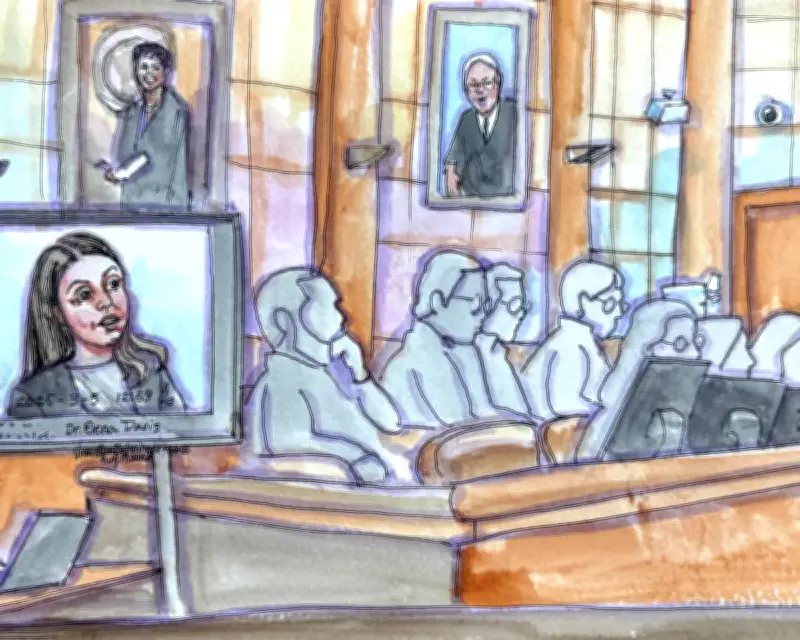
A blockbuster case against Meta went to trial a week ago in Oakland, California, just north of the US tech company’s headquarters in Silicon Valley. California and 28 other US states are suing the £1tn ($1.36tn) company for allegedly designing products that are addictive for children, and hiding that information from the public.
Allegations and courtroom fireworks
The courtroom has already seen minor fireworks. On the witness stand, a whistleblower who worked extensively with Mark Zuckerberg accused the CEO of lying to the public about his commitment to child safety. The prosecutor who opened the case framed her argument around four words that start with the letter H: Meta “hooks” in users, “holds” them on its platforms for as long as possible, “harvests” their data and then “hides” the truth from the public. She contended that this business model “worked especially well for kids”. More pyrotechnics are expected. Zuckerberg himself is expected to face tough questions on the stand, as is the CEO of Instagram.
Meta has denied all allegations. Liza Crenshaw, a spokesperson for the company, said: “Rather than sticking to the facts or the law, the states have instead decided to chase an outlandish payout.”

Courts as regulators in the US
The trial presents a major challenge for Meta, not in the least, because in the United States, it’s proceedings like these that regulate the tech industry. China regulates tech by crackdown; the UK and Europe regulate the industry with legislation – Brussels’ prescriptive stipulations have become global defaults. But in the US, it’s mostly the courts that set the boundaries. They move much faster and with the vindictive authority that Americans often crave in response to harms. The slow wheels of democratic debate and bill drafting feel ill-suited to respond to Zuckerberg’s mantra of “move fast and break things”.
US regulators have famously, obviously, and avowedly had difficulty keeping pace with the innovations that arise from Silicon Valley. As one Republican representative told a quantum computing expert during a 2018 hearing on Capitol Hill: “I can understand about 50% of the things you say.” Members of Congress would undoubtedly say the same about AI today.
“Courts have the ability to force these changes much quicker than legislation. Courts have this authority to say, ‘Look, you either comply with these orders … or you stop doing business in our state’. States have the ability to enforce that. I think for these companies this is a real point of reckoning,” said Laura Marquez-Garrett, an attorney with the Social Media Victims Law Center, which is representing individual plaintiffs suing Meta and other social media companies in thousands of cases in California. Her organization was deeply involved in Meta’s first loss of a social media addiction trial in March in Los Angeles.
Potential impact and historical parallels
Other tech companies have faced significant government lawsuits in recent years, and come away only stronger. Google faced perhaps the most significant antitrust litigation of the 2020s, losing its antitrust case against the US Department of Justice last year. The penalty was not divesting the Chrome browser but a “slap on the wrist”, critics said. But in the 1990s, a coalition of US states sued tobacco companies and secured a settlement that banned a laundry list of marketing tactics, including advertising on transit or anywhere outdoors, paid product placement for cigarettes, cartoon mascots, branded apparel and nearly all free distribution of cigarettes.
Like those tobacco suits, the states’ suit against Meta may force the company to operate its social networks in less harmful ways and to keep them out of the hands of children. The states are explicitly asking the court that Meta be forced to change the design of its products to make them safer for children. “These AGs have a real chance at fixing the product,” said Marquez-Garrett.