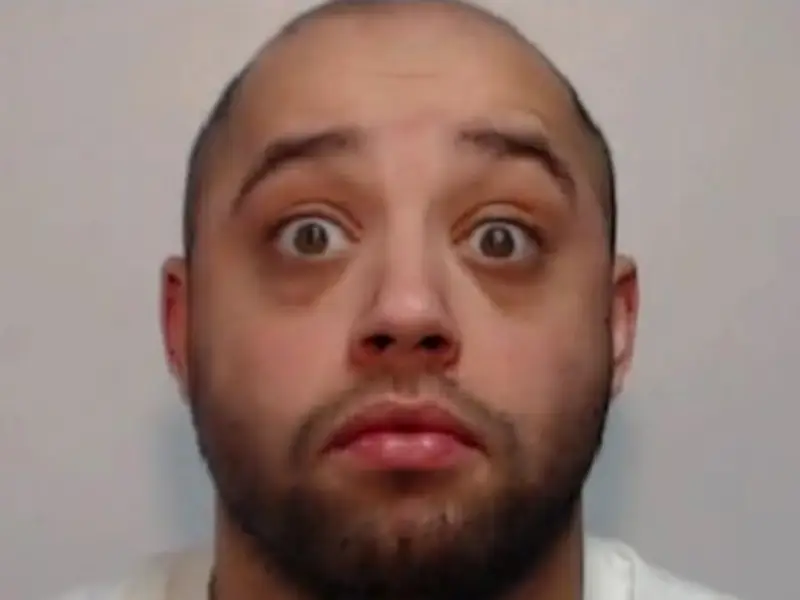
Marcus Callaghan, 34, was sentenced to 24 years in prison for running a drugs empire that moved more than £100 million of Class A substances, mostly to the North East. His conviction followed a month-long trial at Manchester's Minshull Street Crown Court in September 2018, held under intense security including armed police.
Callaghan, of Hulme, was found guilty of conspiracy to supply Class A drugs and money laundering. Eight other members of his gang were also convicted. "This is crime at a very high level," Judge Martin Rudland said as he passed sentence.
A New Year in style
On New Year's Eve 2017, Callaghan was seeing in the New Year in style. Three rooms for some of his best clients had been booked at the luxury four-star Principal Hotel in Edinburgh. A VIP table had been reserved at the city's plush Opal Lounge bar. As he racked up a £395 bill while sipping glasses of pink Champagne and downing shots from a magnum of vodka, he looked every inch the successful businessman he claimed to be.
But the money he was so conspicuously spending came from more nefarious sources. From behind the fences of a gated canalside community in Stalybridge, Tameside, the drugs lord ran his operation like a legitimate enterprise. He put security, logistics and banking systems in place and even had a lavish corporate expenses account in order to entertain associates and clients.
From Brass Handles to the top
More than a decade earlier, on the afternoon of Sunday, March 12, 2006, Callaghan could be found in the less salubrious surroundings of Salford's Brass Handles pub. It has been claimed in court that he was there watching Manchester United take on Newcastle, live on Sky Sports, when Carlton Alveranga, 20, and Richard Austin, 19, burst into the bar and started shooting in one of Greater Manchester's most notorious crimes.
Within moments of opening fire, the two young men staggered back out of the pub. They had been disarmed and shot with their own guns. Fatally injured, the would-be hitmen made it as far as a nearby grass verge where they collapsed and died. In a trademark Salford gangland move, someone then ripped out the CCTV system. No one inside the Brass Handles - and it's said there were hundreds - would speak to the police.
The target, it later emerged, was a Salford man named David Totton. The 27-year-old was shot in the face and chest as he sat drinking with friends. Another man, Aaron Travers, was also shot. Both were severely wounded but survived. The shooting had been masterminded by Bobby Spiers, Salford 'Mr Big' Paul Massey's right-hand man, who had fallen out with Totton following a row outside a nightclub. Spiers gave himself an alibi by watching United in a box at Old Trafford as the assassination bid took place.
Links to the shooting
Spiers had turned to Ian McLeod, one of the founder members of Moss Side's infamous Doddington gang, for help. McLeod recruited Austin and Alveranga for the hit-job, while using Constance Howarth - the secretary for Massey's security firm - as a 'spotter' inside the pub. After Spiers, McLeod and Howarth were jailed, Callaghan was named by police as a 'person of interest' in connection with the shooting. Speaking at the time, detectives said they believed he had vital information about the botched execution.
A decade later, Howarth - dubbed the Black Widow - put forward a different version of events. She claimed the two naïve young gunmen died as a result of feuding between the Gooch and Doddington gangs. During a Court of Appeal hearing, she claimed Callaghan - who was associated with the rival Gooch gang at the time and also said to be drinking in the pub that day - was the intended target, not David Totton. But her appeal was thrown out, with a judge describing the Callaghan theory as 'highly speculative', not least because Callaghan was of mixed heritage and had no resemblance to either Totton or Travers.
Callaghan has never been charged in connection with the shooting. No one has ever been brought to justice for the murders of Carlton Alveranga and Richard Austin.
The downfall
A few days before his lavish New Year, Callaghan's accountant, the man charged with laundering millions in dirty money, had been arrested at Knutsford services on the M6. Inside his Audi TT, police discovered incriminating documents and almost £400,000 in cash. Having been tipped off to his activities, detectives had been tracking Callaghan's operation for months. In February, one of his drugs couriers was stopped for speeding on the A19 in North Yorkshire and found with a significant amount of Class A drugs.
Days later, police searched his base at Canal View and the staggering scale of the racket became clear. Inside the small block of flats they found £130,000 in cash and drugs with a street value of more than £32 million. The stash included £30 million of cocaine, nearly £1.4 million of heroin, almost £900,000 of amphetamine and nearly £130,000 of cannabis. In total, detectives believe the gang moved more than £100 million of drugs, largely to the North East, but also to towns and estates in Greater Manchester.
A fortnight later, police returned to Canal View. This time officers uncovered a 9mm Short Ingram Model 11 machine pistol, more commonly known as a MAC-11, 51 rounds of ammunition, as well as more drugs hidden behind kick boards in the kitchen. They also found an eight-point drug dealer's 'instruction manual' aimed at ensuring the gang stayed one step ahead of police. It included tactics such as 'change car every three or four weeks', 'change numbers every two weeks', 'clean both gaffs' - a reference to both apartments at Canal View - and 'stay off grid'. It didn't work.
A journey which took Callaghan from the streets of Moss Side, to the tap room of the Brass Handles and the VIP lounges of Edinburgh, ended with him behind bars of a high security prison.