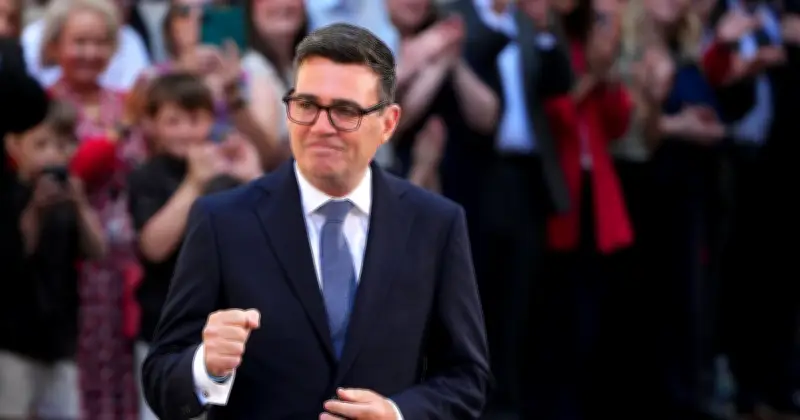
Prime Minister Andy Burnham has pledged a £210 million support package to save the British high street, but critics say the plan overlooks a major problem: the shoplifting epidemic.
The once-booming UK high street is on its knees after years of neglect. Data shows that a staggering 122,682 physical stores closed between 2016 and 2025, as businesses grappled with rising business rates and energy costs, alongside the continued growth of online shopping. A further 6,600 bank branches have also shut since 2015 amid a shift towards digital banking.
Burnham's £210m pledge
In September, Prime Minister Andy Burnham pledged a £210 million support package to save the British high street. He has vowed to transform the country's derelict shopping centres by providing local authorities with funding to buy and refurbish vacant buildings, while giving communities the support they need to protect neglected spaces such as pubs and clubs and convert empty units into shared workspaces and community hubs.
While it is difficult to argue with the thinking behind these plans, the Government is overlooking one major problem that continues to blight high street businesses. Money needs to be invested in regenerating town centres and bringing empty units back into use, but equal priority must be given to tackling the shoplifting epidemic that continues to put smaller retailers under enormous pressure.
Shoplifting at record highs
Data from the Office for National Statistics showed that shoplifting reached record highs in 2025, with over 500,000 recorded offences across England and Wales. It doesn't matter how much cash gets injected into supporting businesses with overhead costs and transforming empty buildings; if high streets are plagued with crime, they are never going to succeed.
The British Retail Consortium reported that customer theft costs shops billions of pounds every year, while billionaire Mike Ashley claimed that stock theft costs his retail empire, Frasers Group, around £40 million every year. It's clear the issue is spiralling, and the Prime Minister needs to be careful to avoid pinning all of his hope on broader retail policies in his bid to save the high street.
Small firms hit hard
A recent report from the Federation of Small Businesses revealed that 59% of small high street firms view crime as a major risk, but cannot afford their own security. Retailers should not be left to shoulder the cost of crime prevention measures such as body cameras, security guards and product tagging - which can cost up to £5,000 a month. They should be getting greater support from the Government to help protect their businesses, staff and customers.
Equally, the reporting process for businesses needs to be streamlined and made less tedious. It's reported that 50% of shop crimes go completely unreported as shopkeepers believe police will not attend for thefts valued under £200.
Impact on workers and shoppers
As well as the obvious financial losses, shop theft also impacts workers and customers. Official data shows that 2,000 retail staff are subjected to violence or abuse every day, while some shops are forced to lock doors or use doorbells to vet customers. This has objectively changed the shopping experience, making it far less enjoyable for people to pop into their own high street.
Some shoppers may also be put off from visiting their local high street if they repeatedly encounter crime. An elderly person might risk being subject to an offence when they can shop more safely and conveniently online from the comfort of their own home. It's a major problem that needs addressing by the Prime Minister as soon as possible.