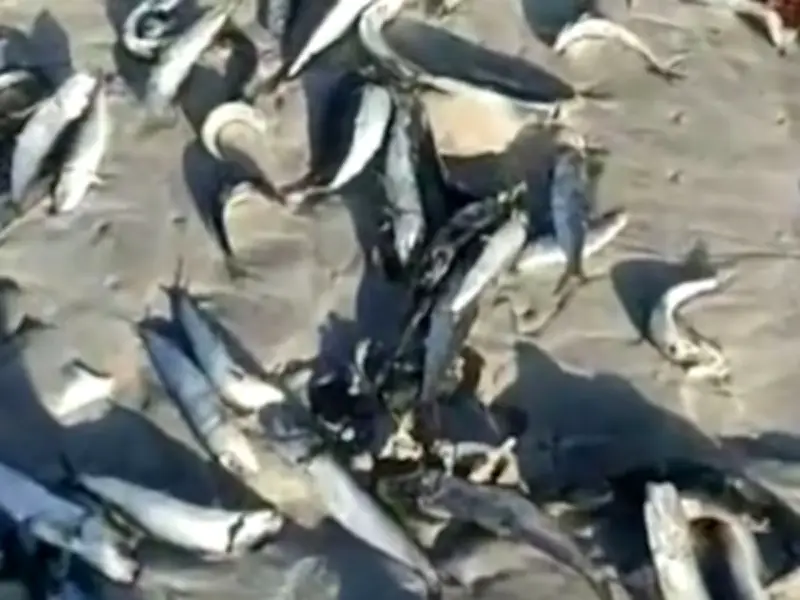
Hundreds of dead fish have washed up on beaches in South Africa, prompting an investigation into a mystery virus that may have killed thousands. Eerie footage shows massive piles of dead fish on the shore at Bloubergstrand Beach in Cape Town, spotted on Monday, August 17. More piles have been reported at Milnerton and Sunset Beach, with dead pilchards found along parts of the wider Cape Town coastline.
Virus detected in dead fish
Experts studying the dead fish have detected genetic material from the pilchard herpesvirus (PHV). The virus affects the gills of fish, making it harder for infected sardines to breathe and leaving them more vulnerable to low oxygen levels and sudden shifts in sea temperature.
The Department of Forestry, Fisheries and the Environment (DFFE) said the virus was also found at lower levels in some apparently healthy sardines off South Africa's west coast. Despite detecting the virus, officials said this does not mean the disease is responsible for the fish's deaths.
Concerns for penguins and public health
DFFE spokesman Zolile Nqayi said: “Sequencing has confirmed the presence of PHV genetic material but this alone does not prove that the virus caused the deaths.”
The disappearance of thousands of sardines has also raised concerns for other animals. Penguins in South Africa are critically endangered and rely on sardines and anchovies for food. Marine biologists have revealed penguins at three local breeding colonies have already started to show signs of weight loss.
Authorities have urged the public not to collect or eat the washed-up dead fish. The DFFE warned that dead sea life can cause wider health risks due to bacterial contamination, though the warning does not extend to commercially produced canned sardines.