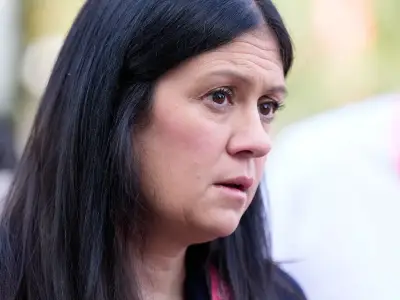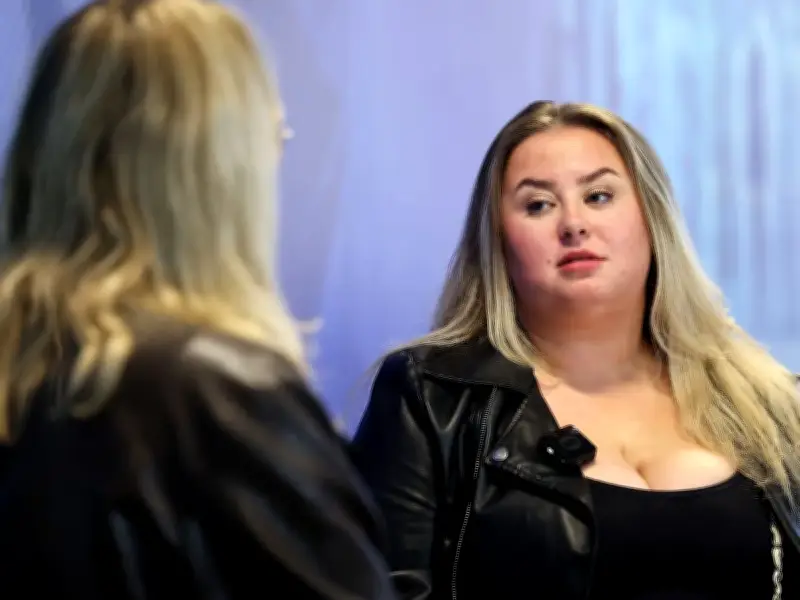
Nicole Miller, a young mother from Wythenshawe, has spoken publicly about the nine-month campaign of abuse she suffered at the hands of her ex-partner, Elliot Bulman, after he was jailed for 15 years. She has waived her automatic right to anonymity as a victim of sexual offences so her story can be told, in the hope of inspiring others to get their lives back.
Bulman, 22, of Peel Hall Road, Wythenshawe, was sentenced at Bolton Crown Court last week. He was also handed an additional five years on licence after being assessed as presenting a high risk of committing sexual offences and a high risk of harm to a partner. He must serve two-thirds of his custodial sentence before the Parole Board considers whether it is safe for him to be released.
Campaign of abuse
Bulman pleaded guilty to one count of controlling and coercive behaviour and two counts of assault occasioning actual bodily harm. Following a trial, he was found guilty of two counts of rape, four counts of causing sexual activity, one count of assault by penetration, one count of making a threat to kill and four counts of strangulation.
The court heard how Bulman attacked Nicole while she was pregnant, controlled her movements and finances, accessed her social media and restricted her access to medical treatment. He objected to her being seen by a male doctor and, on one occasion, locked her inside their home while he went out drinking.
In an early incident, while furniture was being moved for the baby, Bulman hit Nicole in the back with drawers as they were being carried upstairs. She fell, and he dragged her by her hair. She later told police: "What started as a couple of punches here and there, pulling my hair, kicking me, whatever, had progressed and progressed more frequently."
Isolation and control
The abuse continued after Nicole gave birth. She told police Bulman hit her while she was holding the baby and threw things at her while she had her child in her arms. He threatened to kill her and her baby and, on one occasion, spat at her while she was holding her newborn. In another incident, he spat in her face and made her sit with his saliva on her for 45 minutes, telling her she was 'disgusting'.
Nicole's isolation was not simply about being prevented from seeing friends. Her calls were monitored and her conversations restricted. She wasn't allowed to put the phone to her ear, instead having to have calls on speaker. Her messages and conversations were watched, meaning that even when she was technically in contact with other people, she was unable to freely tell them what was happening behind closed doors.
She said: "It's less about the isolation, more about the monitoring in that respect, where they're kind of making sure that you've got limitations on what you can say and making sure that you're not outwardly telling anybody that you're having kind of a rough time in this situation."
Escape and sentencing
Nicole said the violence was relentless from a Friday through to a Monday, and she reached the point where she thought she might not survive. She said: "It was just non-stop Friday to Monday... and I was working from home on the Monday. So I just kind of had to sit and take it."
"But it was getting to a point where I sat in the flat whilst it was happening, and I thought 'this is it, like, this is the day that I die. If I don't get out, then I'm never going to get out. I don't know what to do'. It was the worst that it had been."
At one point, even a close friend of Bulman's was telling him to stop. Nicole remembers hearing him say: "She's turning blue, she's turning blue, you need to stop." She said: "I just kind of in that moment thought 'I need to go'."
The following day, Nicole went to work carrying two small items from her child's memory box - the hospital band and umbilical cord clip - tucked into her bra. Bulman told her: "You're not coming back, you're not coming back." She told him she was, but she had already made her decision. Her mum was looking after the baby while she went to work, and Nicole messaged her: "Do not give the baby back to him, I'm coming to you after work."
She then contacted her friends and told them that if she returned to the flat that night, she feared they would never see her again. Her friends responded: "Right. Go to work, finish work, we'll come and get you. You're not going home. We'll take you to your mum's. We'll make sure you and the baby are safe."
Nicole says their support played a major part in helping her leave. She added: "I think they played a big part in me being able to leave, because I felt like people understood what was happening, and people were actually not just brushing it under the carpet."
Sentencing Bulman, Judge Jon Close described the offending as a 'campaign of terror and control' designed to break Nicole down as a person. He said Bulman's 'jealousy of other men dictated all' and described the abuse as having a 'sadistic and misogynistic' element. "You have shown neither remorse, nor empathy," the judge told Bulman.
Finding her way back
Nicole said the court process came with complicated emotions, as Bulman is also the father of her child. She said: "Part of me was really kind of hurt more because 'you've done this, you've made your own bed, now you've got in it, but you are also my child's dad'. At the start of the relationship, I thought that we were really great, like everything was fine."
There was also a feeling of validation after months of questioning her own experiences. "You think 'am I maximising my experience, thinking it's worse than it is?'. Then you also think 'am I minimising it? Was it really bad?' I think the day of the conviction was like, 'wow, this is real, this really happened'."
Nicole was surprised by the level of support she received from police officers, witness care officials and domestic abuse organisations during the case. She said officers explained the process to her, told her what to expect and did not try to give her false reassurance about what might happen. "They don't try and sugarcoat anything either, which I think is quite nice," she added. "I've asked a million times before the sentencing, 'what am I expecting?' and they don't try and coddle. They tell you exactly what you need to know because this is the reality of it."
Nicole has chosen to speak publicly because she wants something positive to come from what happened to her. She said: "I want people to hear it. I want people to listen to it. If I could scream it from the rooftops, I probably would. You see so much negativity about it."
She added: "Even under the post on social media, I've seen a lot of people say they didn't get the outcome they were hoping for, but it's happened to them and I think it's a positive share in a story where this has happened. It's been a really positive outcome for myself, for all of the officers that have worked on it."
Nicole wants people living through abusive relationships to know that there is help available, even if they do not believe they have anyone around them. She said: "I think a lot of people don't believe that they've got that person. It might be speaking to somebody at GMP. I was, like I say, quite lucky to have a support system, but even when I still talk to the officers now after court who got assigned to my case, they're there no matter what."
She added: "Whether you decide to leave now, six months, a year, there's always going to be some people that genuinely want to help you, who genuinely want to see you out of that situation. I think a lot of people believe that there isn't any support, and if you do this, you're going to have the police constantly, social services, all of these different organisations, and there's a lot of negative connotation with that. But that's not the case at all."
Nicole's focus is now to find the person she was before the relationship. She said: "My main goal for going forward is being who I was before any of this happened. Being the person that I was prior to meeting him. Because that person is so totally different. That person was happy-go-lucky, constantly talking."
She knows she will never simply return to exactly who she was before, but she says she is beginning to find her way back. "I'm definitely getting back to how I was before any of this happened," Nicole added.
And after months in which she felt trapped, controlled and terrified, she has chosen to use her voice. "I think a lot of people don't believe that they're ready," she added. "They don't believe they've got the strength. Not that they've not got it, but that they believe they've not got it. But they have, because you've already been through so much. You've already done all of this, you've already dealt with the worst of it. And as long as you're safe when you go, everything else comes in time."