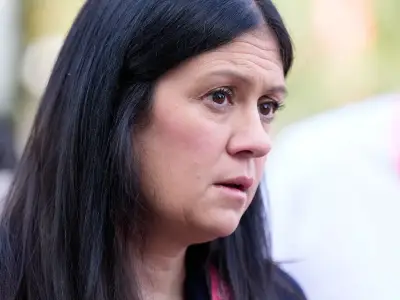
Claire Milne, 36, has said she felt sick after learning that her abusive husband, Robert Dales, is expected to be released from prison months earlier than anticipated under new early prison release arrangements. Dales was jailed for three years in March 2026 after pleading guilty to coercive and controlling behaviour.
Milne, who was in a relationship with Dales for eight years, said she endured coercive and controlling behaviour, intimidation, threats and financial abuse. She said threats were made against her life shortly before she found the strength to leave. Dales was arrested in August 2025 and was set to remain in prison until around February 2027, but Milne has been told he is now expected to be released during the week commencing November 9.
Victim's reaction to early release
Speaking to NeedToKnow, Milne said: “When he was sentenced, I felt as though I could finally start rebuilding my life. For the first time, there was a physical barrier between us, and I believed I had a period of time where I could begin recovering without constantly wondering what was going to happen next.
“I knew that no sentence could undo what had happened to me, but I took comfort from knowing there would be a period where he was in prison and I could rebuild my life. I became aware that his release date could change through information about the new release arrangements and then sought clarification through my Victim Liaison Officer.
“I felt sick. It felt as though the clock had suddenly been moved forward. I had built my recovery around believing I had until around February, and suddenly I was being told that the person I had spent so long trying to escape could be back in the community months earlier.”
Relationship and abuse history
Milne and Dales met in 2016 through work and began a relationship in 2018. She noted that he was ‘charming, attentive and loving’ at this time. The abuse Milne experienced took place between 2018 and 2025, with the couple marrying in 2019.
“There weren't immediately obvious signs that the relationship would become what it eventually became. It wasn't an overnight change. Looking back, behaviours gradually became more controlling and abusive over the years.
“It escalated significantly towards the end of the relationship, particularly after I had my baby. Towards the end, particularly after I had given birth, things became extremely volatile and frightening.
“There were threats against my life. It wasn't one isolated incident – it was a pattern of behaviour that escalated over a number of years. People didn't know the full extent of what was happening.
“I became very good at presenting a version of my life to the outside world that looked normal, while behind closed doors things were very different. By the end, I genuinely believed that if I stayed, either I would end my own life or he would eventually kill me,” she said.
Sentence and concerns for the future
Believing staying in the relationship could cost her life, Milne left Dales in April last year and reported him to the police. Dales later pleaded guilty to coercive and controlling behaviour in an intimate or family relationship and possessing an offensive weapon in a private place, including samurai and ninja swords. He was sentenced at Aylesbury Crown Court in March 2026 to three years in prison, a surcharge of £170, a restraining order and forfeiture and destruction order of weapons.
With Dales already spending around six and a half months on remand, Milne had been preparing for him to remain behind bars until around February 2027. However, under the new early prison release arrangements, he is expected to be released during the week commencing November 9.
“My biggest concern is my safety. I know what I experienced and what he was capable of during our relationship. Prison has provided a physical barrier. Once that barrier disappears, I have to live with that uncertainty again.
“What I want from the wider system is clarity about monitoring and licence conditions, meaningful communication with victims and protection that reflects individual risk. I also want victims to know what protections are actually going to be in place before the person who harmed them walks out of prison, rather than being left with uncertainty.
“Victims are not statistics attached to a prison-capacity problem. Behind every case is somebody who may have spent months or years rebuilding their life around an expected release date. When that date changes, the consequences are not administrative for us,” she said.
Claire continued: “They are personal. Victims have to live with the consequences of those decisions long after the headlines have moved on.”