Amal still bears the last name of her tormentors. Her husband, who was responsible for physically and mentally abusing her throughout their marriage, is nowhere to be found. His family, who she says were complicit in the abuse, refuse to give up his whereabouts, making a divorce all but impossible.
From high-flyer to isolation
Amal was still a young woman when she was married into the family. In India, she was a high-flyer, working in the tech industry. She stayed with her in-laws for a short while before joining her husband in the UK on a spousal visa. However, by the time she reached British shores, she had become accustomed to the restrictive life she was expected to live.
Her days were governed by her in-laws. Contact with her family was scant, she was regularly beaten, insulted for her dark skin, and pressured to work unreasonable hours, with most of her wages going to them. When it was time to join her husband in the UK, she was given a phone with no access to the internet and only a few phone numbers in the contact list.
“They took my phone; they gave me another phone with another sim,” she said. “There were no contact numbers for my parents, they said I wasn’t allowed to speak to my parents, my friends. But I didn’t speak up, I had that mentality of ‘I had to listen to my husband, I had to listen to my husband’s parents.’ I didn’t see it as abuse at first. I was really not educated on these things, socially I was disconnected.”
Abuse continued in the UK
In the UK, there was no reprieve for Amal. The physical and verbal attacks persisted. Amal says that in some instances, her ex attacked her while she was pregnant with their child but would accompany her to doctor’s appointments where she was under pressure to lie about the bruises on her skin.
“This was not something I’d ever seen before,” she recalled. “Even in my family I had never heard of a man hitting a woman. The first time my ex-husband hit me, I didn’t know how to react. Other than movies, I’d never seen it. All these questions were floating around my head. All I’d seen before is happy families and happy wives.”
After a few months in Manchester, she told her parents about what was happening. Her dad told her to ring police. She called police but wasn't ready to accept the help. “When police came, I didn’t say anything,” she said. “When they did come, I told them it was an accident with my son when I was feeding him, they didn’t believe it. It was so evident for them that something did happen, that’s when social workers got involved. When they rang, I was still denying the abuse. I told them ‘nothing happened, I want my husband back, I don’t want to be in this country.’ They never called it abuse, they were empathetic, they just listened.”
Saheli’s support and 50-year legacy
Eventually things got too much to bear. Cameras fitted in her living room and streamed back to her in-laws and an attempt to abandon her and their child in India forced Amal to claw back her agency. She says that much of her newfound freedom is owed to Saheli, a Manchester-based charity which provides specialist support services for Black, Asian and minority ethnic women experiencing domestic violence, abuse and forced marriage. Amal was referred to Saheli by a doctor during one of her visits.
“I always say to people, I didn’t go to Saheli, Saheli came to me,” she said. “They spent hours and hours with me. They educated me on the country’s rules, how the system works, why they took my husband away and why social workers were calling me. They empowered me.”
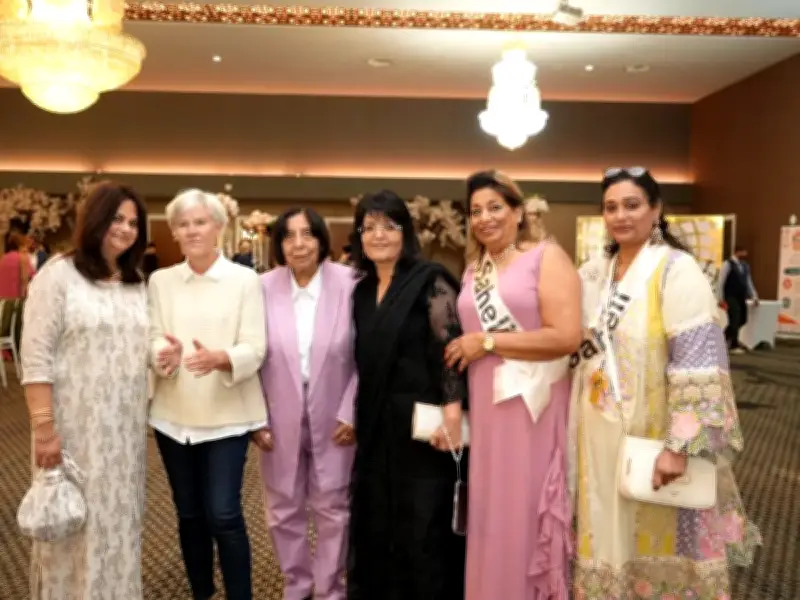
Nowadays, Amal lives an idealistic life with her son, safe, working and supported by friends and family. In September the charity celebrated 50 years in operation. One of its co-founders is trailblazing former councillor Nilofar Siddiqi, the first female Asian councillor in Manchester, today an Honorary Alderman of the city.
Nilofar worked with fellow South Asian activists to start Saheli in 1976 after she was approached by several women in crisis. “About 50 years ago I was an advice worker,” she explained. “I was working in Longsight and Moss Side, different areas as well. I wasn’t a councillor at that time. Women were coming to see me, and they were black and blue. They were really frightened. Some of them said they wanted to die. My colleague and I used to discuss among ourselves about what to do. There was a women’s aid, but culturally they were so different. The women had a limited knowledge of English and food problems. You can imagine, halal, non-halal. So, we thought, we should establish our own refuge and we spoke to our management and they wholeheartedly agreed with us.”
Ongoing work and funding challenges
For Nilofar, the work they do has always been about breaking the cycles of abuse. She said: “I think Saheli has liberated women and it has given a security to young children. We have given respect to these women and we have given respect and emotional stability to these children. When children see their mothers being respected, they will respect the women in their lives. It is hard and will take a long time, but we have to continue our work.”
At present Saheli is looking after 15 women and their children in three refuges in the north west. The organisation dealt with just over 34,000 queries from women, police, social workers and agencies between April 2021 and March 2026. Saheli has launched a campaign to buy a permanent building to house women and children.
Priya Chopra, Saheli’s CEO, said: “Losing our children's worker funding this year has been a big blow and we are constantly looking at raising funds to continue employing a worker to work with often traumatised young children.” Apart from less money being available, Priya believes the way the funding is structured also needs to be reviewed. “Many domestic violence organisations rely on short-term grants and contracts making it difficult to plan, retain skilled staff and maintain essential services such as refuge accommodation, counselling and advocacy.”
Anyone who would like to contribute to the “Buy a Refuge Appeal” can donate here.