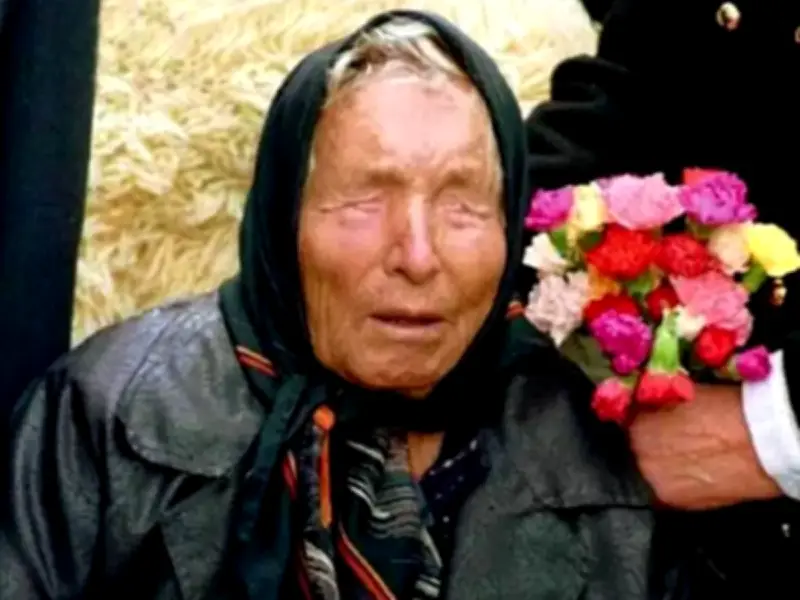
A woman has died of the plague in Russia, prompting claims that the late seer Baba Vanga predicted a global outbreak of the disease. Darya Shipilova passed away after reportedly breaking a test tube at work and catching an 'unspecified form of plague'.
Local media reports the lab leak occurred at the Irkutsk Anti-Plague Institute in Russia. According to the independent outlet Baikal People, five hospitals in Siberia have been closed for quarantine.
Baba Vanga's predictions resurface
Concerned theorists are now suggesting that Baba Vanga, the Bulgarian mystic who died in 1996, may have warned of a Black Death outbreak hitting the globe in months. Her forecasts, which reportedly included the September 11 attacks and the Chernobyl disaster, continue to fascinate scholars and the public.
One social media user warned: “Baba Vanga predicted an ancient pathogen which was frozen would be released in Siberia and spread globally. She also predicted that the same year would see the start of water scarcity issues and NHI interactions.”
2027 prophecy and fears of a lab leak
Vanga's prediction for 2027 claims humanity will endure a massive shift, with some suggesting this could be a major disease outbreak. The mystic warned that people would undergo biological changes and display superhuman abilities, though the prophecy does not detail how these changes will occur.
The Daily Mail reports these changes could be caused by a mysterious disease or genetic experiment. Vanga's prediction does not state whether such an outbreak would be intentional or man-made, fueling fears that an accidental laboratory leak could have unintended side effects.
Calls to halt air travel from Russia
Numerous US politicians are now calling for commercial air travel from Russia to be stopped over fears the suspected plague outbreak may spread. The Black Death, one of the worst pandemics in history, ravaged Europe between 1346 and 1353, killing an estimated 50 million people. It was caused by the bacterium Yersinia pestis, spread by wild rodents such as rats and fleas, and is believed to have started in Central Asia before spreading worldwide through trade.