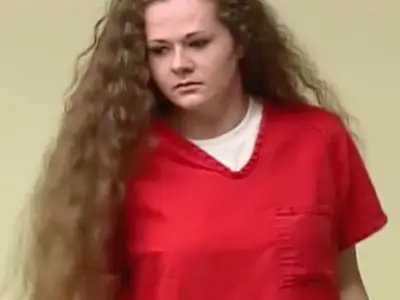
An Arizona man convicted of manslaughter in a road rage shooting had his sentence overturned after an AI-generated video of the victim speaking from beyond the grave was deemed too prejudicial for court. Gabriel Horcasitas, 55, was ordered on Wednesday to be resentenced by the Arizona Court of Appeals. Horcasitas was sentenced to 10 and a half years in prison for the 2021 shooting and killing of Chris Pelkey, 37, at a red light in Chandler.
AI video used as victim impact statement
During the sentencing, a computer-generated video of Chris saying he 'forgives' his killer was played as a victim impact statement. This video made the judge 'so prejudicial as to render the sentencing procedure fundamentally unfair', the appellate court ruling said. 'We vacate the manslaughter sentence and remand for resentencing because the AI video was not reliable,' it added.
Pelkey's sister and brother-in-law used the technology to recreate his image and voice likeness to 'talk' to the courtroom about his life and the day he met Gabriel Paul Horcasitas, who shot him during a confrontation near Gilbert and Germann roads. 'In another life, we probably could have been friends,' the AI creation of the 37-year-old Army veteran said, addressing Horcasitas. 'I believe in forgiveness?'
Family sought to bring victim 'back to life'
Chris' family decided to 'bring him back to life' by using AI to read out a statement, sister Stacey Wales told News 4 San Antonio. She fed the tech photographs of Chris and used an 'age filter' to make him appear in his 40s, which he would have been at the time if alive. Stacey also uploaded video and audio of Chris talking so the programme could clone his voice. 'All I kept coming back to, what would Chris say?' she said. 'It became so real I broke down in tears.'
Stacey scripted her synthetic sibling to tell the judge: 'It's a shame we encountered each other that day under those circumstances; in another life we could have been friends. I believe in forgiveness and God who forgives. I always have and still do.' The video showed a fake Chris wearing a baseball cap and an olive green zip-up hoodie, his mouth not quite syncing with the audio. After the video played, Judge Todd Lang said he 'loved the AI' and felt it was 'genuine'. The forged video showed the 'obvious forgiveness' of Horcasitas, which Lang said came from the victim's 'heart'.
Court finds AI video crossed the line
Victim impact statements are read to courts during the sentencing hearing so judges can consider the full extent of harm caused by the crime. Stacey's lawyer, Jessica Gattuso, initially doubted whether a statement read by a deepfake is 'even legal'. 'Our law in Arizona says victims can give their victim impact statement, they have the discretion to choose how they give their victim impact statement,' Gattuso said.
The Court of Appeals had similar concerns, writing that the state has never addressed the admissibility of AI-generated victim personas. Instead, appellate judges looked to the Arizona Supreme Court's analysis in State v Rose. Edward James Rose, sentenced to death for the 2007 killing of a Phoenix police officer, said that photos of the officer's sons at his grave were too prejudicial to be considered victim impact evidence. But the top court said that while the images came 'close' to 'crossing the line', with or without them, the sentencing would have been the same. 'By contrast, the AI video crossed that line,' the appellate judges wrote of Chris. 'Unlike the photographs in Rose, which captured a particularly poignant moment for the young surviving victims, the AI video here (excluding the embedded "real" videos of the victim) does not reflect actual events. Indeed, rather than documenting an event or recording a particular moment, the AI video presents a depiction of the victim and his thoughts created from the imaginings of the victim's sister.'
The appellate judge took issue with how the video was screened, as if the victim themselves said it from beyond the grave. The AI Chris said: 'This here is a true representation of who I was, you know, not how the courtroom portrayed me.' Stacey previously told Arizona's Family that she wrote 'what [Chris] would have said' in the victim impact statement script. 'I said, "That's pretty good, I'd like to hear that if I was the judge",' she told the broadcaster. She added that she scripted this even though she was not ready to forgive Horcasitas. 'He stood for people and for God and for love,' Stacey said. Horcasitas' resentencing date has yet to be decided.