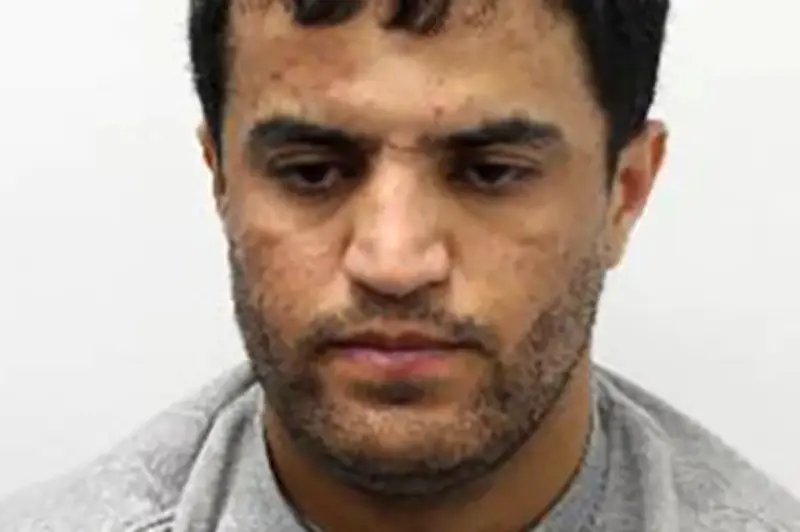
An Uber driver who killed a council street cleaner walking his dog and wounded his landlord during a stabbing spree in west London has been detained indefinitely in a secure hospital.
Dawood Safi, 28, an Afghan refugee, fatally stabbed Wayne Broadhurst, 49, in the street during a knife rampage that began at his home in Midhurst Gardens, Uxbridge, on October 27 last year. Minutes before killing Mr Broadhurst, Safi had attacked his landlord, Thames Valley Police contractor Shahzad Farrukh, while gripped by paranoid delusions.
Attack and court proceedings
Safi also stabbed a 14-year-old boy during the rampage and was described as looking “possessed” as the incident unfolded. Southwark Crown Court heard Safi, who was smuggled into the UK on the back of a lorry in 2020, had suffered a “collapse” in his mental health in the days before the stabbings and was suffering delusions that his family was conspiring against him.
Mr Broadhurst, a street cleaner for Ealing Council, had the “terrible misfortune” to walk with his dog Harry past the house in Midhurst Gardens and was stabbed 14 times by Safi, said prosecutor Jonathan Laidlaw KC.
Safi admitted manslaughter by diminished responsibility, was convicted of attempting to murder Mr Farrukh and pleaded guilty to actual bodily harm against the teenage boy as well as possession of the knife.
Sentencing and impact
On Monday, Mrs Justice Cutts ordered that Safi be held indefinitely in a secure hospital to receive mental health treatment, after finding he was “in a psychotic state” at the time of the stabbings.
“Wayne Broadhurst, a gentle and quiet man, had the misfortune to be walking his dog at the time,” she said. “As he emerged from the alleyway on to the street, you set upon and killed him in a frenzied, random, and completely unprovoked assault involving stabbing him at least 14 times.”
The judge also recommended that Safi is deported, saying his “continued presence in the UK is to its detriment”, but added that the final decision lies with the Home Secretary.
Mr Broadhurst’s partner, Ann Newman, told the court she had had a “future stolen from me” and described facing up to a daily battle with grief and loss. Her sister, Laura Ireland-Cochrane, said the family has struggled to come to terms with Safi being convicted of manslaughter rather than murder.
“We understand the court has to consider the evidence and reach its legal decisions, but as a family it has been extremely difficult to accept,” she said. “We are left having to live with the consequences of that decision.” She added that they also now have the worry that Safi could one day be set free again if his mental health improves.
Background and mental health
Safi, who was born in the Kapisa province of northern Afghanistan, was smuggled into the UK on the back of a lorry in November 2020 and lied about his age – saying he was 17 instead of 22 – to stand a better chance of asylum. Mr Laidlaw said Safi travelled through Iran, Turkey, Greece, Serbia, Belgium and the Netherlands to get to the UK, and was coached by his cousin to lie to the police and immigration authorities “to maximise his chances of gaining leave to remain”.
He pretended that his father, a fruit farmer, had been murdered by the Taliban, instead of the truth that he was killed when a land dispute turned violent, and he was granted leave to remain in the UK until 2027. Safi, who was working as an Uber driver, had studied for a mechanics qualification at Uxbridge College, worked jobs including as a driver and in a restaurant, and had no convictions since entering the country.
He had sought help from doctors for his deteriorating mental health prior to the stabbings, which began inside the home in Midhurst Gardens in the afternoon of October 27 last year. “Mr Farrukh went into the kitchen and saw the defendant’s silhouette on the other side of the blurred-glass door that provides access to the annex from the house,” said Mr Laidlaw. “Mr Farrukh opened the door to find the defendant holding a large kitchen knife in his right hand.”
The court heard Safi “lunged” at his landlord and stabbed him, sparking a prolonged struggle as Mr Farrukh desperately tried to fend him off. Safi was heard telling Mr Farrukh “you’ve ruined my life” and making comments that suggested he was angry with his landlord for not helping him with a complaint to police.
Safi was disarmed and Mr Farrukh, with the boy who had been stabbed when he intervened in the struggle, managed to seek refuge with neighbours. The landlord had been stabbed on both sides of his neck and his chest and suffered a punctured lung, but survived the prolonged attack.
Safi armed himself again with the knife and came after Mr Farrukh, but was repelled in the street by neighbours, who described him as looking “possessed” and “dead between the eyes”. Mr Broadhurst, an avid Liverpool fan, came around the corner just as Safi was in the street with the knife.
Mr Laidlaw said Safi launched a “sustained, ferocious and unsurvivable knife attack for no apparent reason, rational or otherwise”. Mr Broadhurst “was stabbed to death by this defendant in a frenzied, random and an entirely unprovoked assault”, he told the court. “He died almost instantly in the street, with the dog by his side.”
The prosecutor told the judge of Safi: “There is no dispute that he suffered a collapse in his mental health in the time leading up to the terrible events of the morning of October 27 when he stabbed to death Wayne Broadhurst, who was doing no more than walking his dog on the streets of Hillingdon.”
“The defendant was hearing voices and had been consumed by paranoid delusional beliefs, that people were talking about him and members of his family were controlling him and plotting against him.”
Safi appeared for his sentencing hearing on a video link from the high-security Broadmoor hospital. The court was told Safi moved into Mr Farrukh’s annex flat in Midhurst Gardens at the start of August 2025. In the three days before the stabbings, he attended an appointment at his GP, had a mental health assessment at Hillingdon Hospital and had sought help at Hayes police station.
After the stabbings, doctors concluded Safi was suffering from psychotic depression which had led to the violent offences. Dr Elliott Carthy, who has assessed Safi at Broadmoor, said he had “paranoid and persecutory beliefs”, and voices in his head contributed to his actions that day. He gave evidence that a hospital order with restrictions was the best way to protect the public “going forward now and in anticipation of his release into the community”.
Under questioning, he said Safi was likely to spend at least five years at Broadmoor before being considered for transfer to a medium security facility where he would stay for several more years, and if he is released into the community he will be under strict conditions and subject to lifelong monitoring.
Safi pleaded guilty to manslaughter, causing actual bodily harm and possession of an offensive weapon. He was found guilty by a jury of attempted murder. Prosecutors dropped a charge of murder after the guilty plea to manslaughter was entered, and after receiving expert reports on Safi’s mental health. The judge told the court she would have sentenced Safi to life in prison with a minimum term of eight years if he was not mentally unwell.