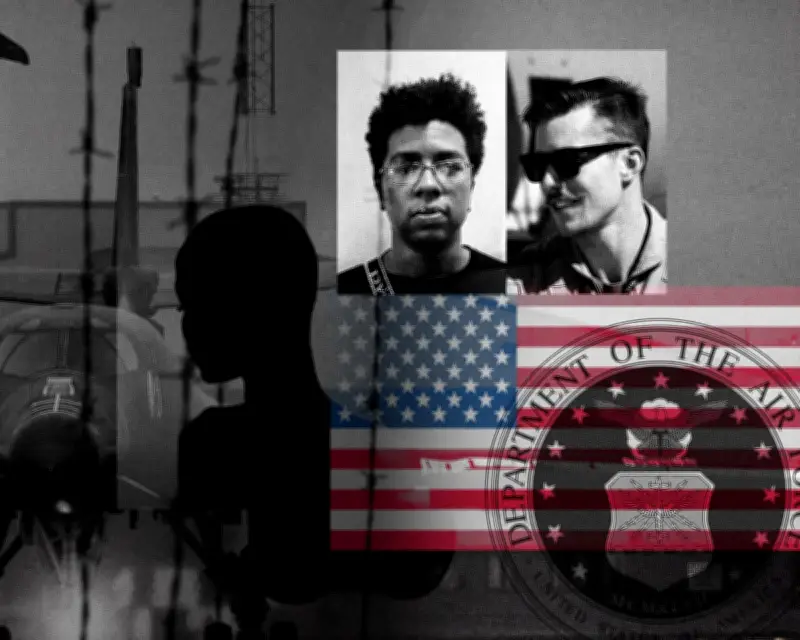
The Guardian investigations team has uncovered how US military servicemen accused of raping and sexually assaulting women in the UK have successfully avoided the British justice system. Trials are held on sealed bases, leaving British victims to navigate a justice system they cannot see or understand.
Secretive court martial
At Lakenheath airbase in Suffolk, a fighter pilot, Jacob Wulfson, was tried by a panel of eight uniformed US air force officers for sexually assaulting a British academic, Sarah Steele. She accused Wulfson of drugging and strangling her in his apartment and penetrating her without consent. Steele was subjected to six hours of gruelling questioning. Wulfson’s lawyer sought to discredit her, claiming she had fabricated her allegations for money and abused prescription drugs.
The jury were allowed to consider Wulfson’s combat record when deciding his sentence. Three former colleagues relayed tales of his military adventures in Afghanistan. “The irony was that a man’s track record in killing people was being used as mitigation for a sentence for committing a violent crime,” said Harry Davies, an investigations correspondent at the Guardian.
Under British law, Wulfson would probably have been tried for rape. Instead, he was acquitted of drugging and sexual offences, and convicted of strangling an intimate partner. He was formally reprimanded, confined to a corrections facility at Lakenheath for six months, and dismissed from the air force.
Broader pattern
Davies, along with Rob Evans and Emine Sinmaz, identified cases where US service members in the UK had been convicted by US courts martial of sexual assault, paedophilia, indecent exposure and violent attacks, often involving British victims while off duty. Three cases were particularly disturbing: an airman who allegedly exposed himself to a 16-year-old girl and four young women in Cambridgeshire; a former senior airman accused of rape by two women; and a man accused of raping women in England while they were asleep. The US military had taken jurisdiction from UK police in all three, and none were convicted for rape.
Questions over jurisdiction
The use of US bases is governed by a 1951 agreement stipulating that the US prosecutes its own personnel for offences committed while on duty or against other US forces. In all other cases, British police are supposed to decide whether to prosecute. However, police have willingly ceded control, with the US military aggressively expanding its jurisdiction. One alleged rape victim was advised that the CPS might not prosecute and that the US military would provide a quicker resolution.
Ministers and police chiefs have now pledged to examine why UK police forces have so often handed such cases to the US military.