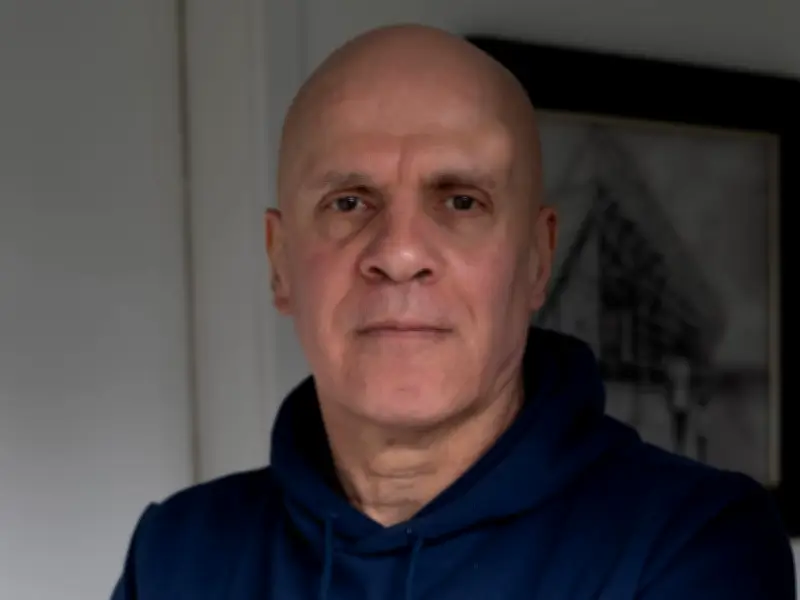
Raymond 'Ray' Gilbert, who spent 36 years in prison for a murder he says he didn't commit, has new hope after the Criminal Cases Review Commission (CCRC) confirmed it has untested forensic samples. Gilbert was 22 when he was convicted of killing betting shop manager John Suffield Jnr in Toxteth, Liverpool, in 1981.
The Murder and Conviction
Mr Suffield, 23, was attacked while opening his shop on March 13, 1981. He was tied up and repeatedly stabbed in what seemed like a botched robbery. Gilbert, a petty criminal, was arrested within three days and confessed after a long interrogation, also implicating John Kamara. He later retracted his confession but changed his plea to guilty mid-trial in a failed attempt to exonerate Kamara.
Both men were sentenced for murder. Kamara was acquitted by the Court of Appeal after 19 years, but Gilbert's guilty plea blocked his appeal. He was released in 2016 and has since fought to clear his name through the CCRC.
New Forensic Hope
Gilbert's supporters submitted a new review to the CCRC last year. Now, the CCRC has confirmed that files and forensic evidence, including scrapings from under the victim's hands and a brown envelope with a fingerprint, have been preserved. No forensic evidence has ever linked Gilbert to the scene.
Gilbert told the ECHO: "The CCRC has been aware of the exhibits since the initial application in 1998... The exhibits available contain scrapings from under Mr Suffield's hands and a brown envelope with a fingerprint on it." He added that the CCRC keeps stalling on testing, which is vital to proving whose DNA is on these items.
Expert Support
Stephanie Davies, a former senior coroner's officer and independent death investigator, supports Gilbert's case. She said: "In 1981, exhibits were seized... Forensic testing was limited back then, but at the time it was established that the blood at the scene belonged to the victim and there was no evidence of blood or fibre transfer between the victim and either of the defendants."
She noted that in 2026, the CCRC confirmed the Forensic Archive has located six case files, four packets of 'dry material' and one box of 'dry material'. She added: "We await confirmation as to which exhibits these samples came from, which is crucial for future forensic interpretation."
Parallels with Other Cases
Gilbert's team points to the cases of Andrew Malkinson and Peter Sullivan, both exonerated after DNA advances proved others were responsible. Gilbert said: "The Andrew Malkinson case has lit a fire under the CCRC and many old cases where people are protesting their innocence should be re-examined. Mine fits this bill of injustice."
Ms Davies said: "In Ray Gilbert's case it needs to be established which exhibits the samples came from; whether the samples remain viable for forensic testing; and whether any DNA profiles can be identified, and how these compare with Ray's DNA profile. If any identified DNA profiles do not belong to either the victim or Mr Gilbert this would therefore support Mr Gilbert's innocence and raise reasonable doubt about his involvement in this murder."
CCRC Response
A CCRC spokesperson said: "A review into this application is ongoing. It would be inappropriate for us to discuss the case or make any further comment while the application is being reviewed."
Gilbert's case file also claims the crime scene was misinterpreted, signs of staging were missed, and the CCRC may have missed earlier chances for forensic review. Ms Davies previously said police concluded it was a robbery gone wrong "extraordinarily quickly", ignoring that the victim had argued with punters the day before. She claims the scene was staged, with blood markings and the victim's shirt position suggesting he was moved after death, indicating a planned murder by someone known to him.
Gilbert said: "I'm innocent of murder, I will keep shouting that. I just want the opportunity to prove it. That will happen when the CCRC examines the case. I hope they act on the evidence and give me and the victim's family justice. When you know you have not done it you will fight. I will fight to my last breath."