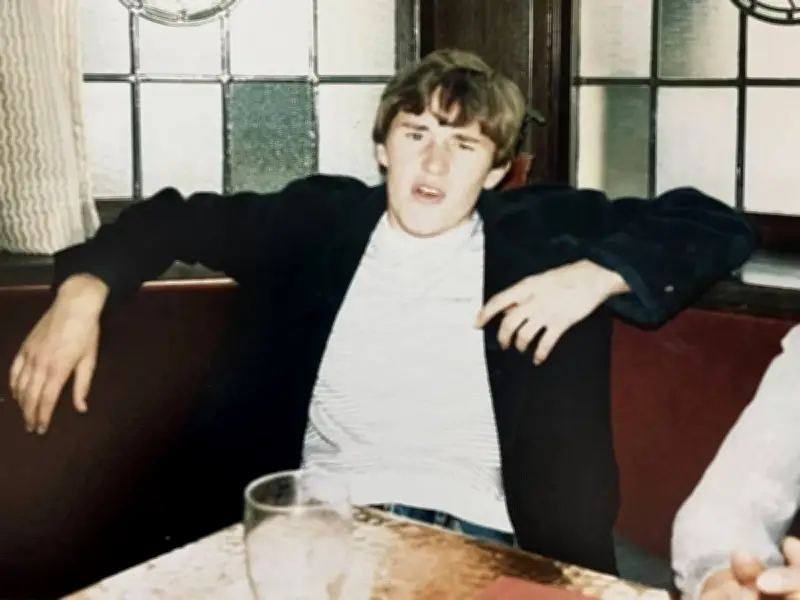
An inquest has re-opened into the death of Anthony Joseph Whittle in 1994 after the High Court quashed the original verdict. Anthony Whittle was studying at Bangor University at the time of his death. His family were told by a doctor not to worry, but his body was found several hours later near the A55 in north Wales on November 25, 1994.
Escape from secure unit
Anthony's brother Christopher told the court Anthony had suffered from anxiety and depression and aged 19 developed paranoid schizophrenia. He married later and began a BSc forestry degree course at Bangor University. However, on November 24, 1994 his brother rang home "in tears and upset".
Christopher and their father Robert Whittle travelled to his halls of residence, Bryn Eithin - at Bangor University. The inquest heard how they found his bag packed in his room but no sign of Anthony, then aged 30. Christopher recalled how he found a scribbled note stating: "The Devil's coming to kill me but God will protect me."
Doctor's reassurance
The family found out how Anthony had tried to get a train home to Burnley but couldn't face it. He was picked up by the police in Prestatyn and eventually sent to the Hergest secure unit at Ysbyty Gwynedd, Bangor. Robert and Christopher went there and were told Anthony was being kept in for "investigations into his psychotic state".
Anthony hugged his brother and father. Christopher said he looked "dishevelled, melancholic and quiet," and returned to his room. Christopher added: "We heard a crash-bang of the window in the room he was in." A doctor said: "Anthony had got out through the window and disappeared down the sloping roof." Christopher said that the same doctor - Tom McMonagle - told them: "Don't worry. We'll find him. He's safe."
Evidence at inquest
Dr Tom McMonagle, a consultant psychiatrist, gave evidence to the inquest via a link. He said he had been at the Hergest Unit in 1994 as a trainee psychiatrist with "three months experience" and as the duty doctor. He explained that it was not meant to be "highly secure", instead the unit was usually locked from 8pm until 8am.
Questioned by Mr Pojur, Dr McGonagle said he then talked to Anthony. "He told me he had seen the Devil and then he was frightened." Mr Pojur asked: "Did he tell you he was being punished for the misdeeds towards his wife over his life and that the Devil was after him and that God was punishing him?" Dr McMonagle agreed.
Mr Pojur: "Should he have been with somebody when he was in that interview room on his own? Chaperoned?" Dr McMonagle responded: "He was in the interview room from which there was no exit other than into the corridor where I was standing. I would have been able to see him if he attempted to leave. He had calmed down. He had already tried to get out the front door and found the place locked. I judged it was safe to leave him in that position (interview room)."
Dr McMonagle explained how Anthony said he had been seeing the Devil on Prestatyn beach and would walk with his eyes closed and trust in Jesus. The doctor continued: "At no time did I feel he was suicidal but if he was prepared to scale a roof and risk falling off he was motivated (and) that would increase his risk of dying by misadventure. He had somehow broken the mechanism (of the window)...I remember being amazed that he had gone out of the window without breaking (the glass)."
A witness saw someone go over the roof. Dr McMonagle and nursing assistant Michael Roberts then went round to the far side of the roof. Mr McMonagle said the pair shouted for Anthony in vain and the sloping ground led to "impenetrable" undergrowth. Asked by Mr Pojur whether someone in a "desperate state who wanted to escape" could go through it he said that he potentially could have.
Dr McMonagle told Nicholas Jones, barrister for his family: "I thought I balanced the risk correctly. I didn't believe the window was openable." He explained that he would have treated him as high risk now but admitted he was inexperienced at the time.
Post mortem and changes
The inquest also heard that Consultant Pathologist Dr Don Waite conducted a post mortem examination on November 28, 1994. He found the cause of death was consistent with a fall from height. Tom Regan, head of operations for mental health in north west Wales at Betsi Cadwaladr University Health Board, told the inquest how since 1994 there are new windows which are harder to open. He said the health board also has anti-ligature barriers and outside there is anti-climb guttering "due to absconsion risk". The inquest concludes on Wednesday.