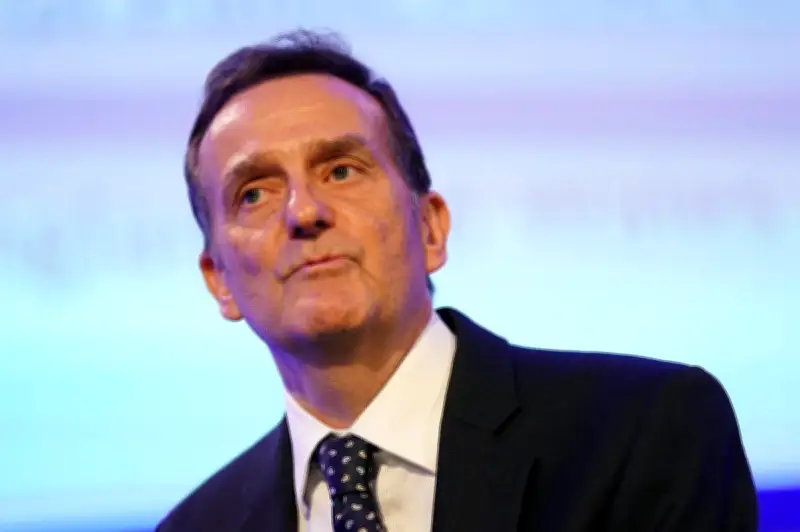
The Director of Public Prosecutions has said the justice system should stop “taking shots at each other” following criticism from the Metropolitan Police Commissioner over failings which left Simon Levy free to kill.
Stephen Parkinson hit back after Sir Mark Rowley lashed out at the courts for releasing Levy on bail, meaning the serial sex attacker was repeatedly freed and went on to kill two women and rape a third.
On Wednesday the 40-year-old was jailed for the rest of his life for killing grandmother Carmenza Valencia-Trujillo, 53, in March 2025 and mother-of-four Sheryl Wilkins, 39, in August that year, as his spiral of offending escalated from sexual assaults on the Tube to double murder.
Public row over failings
In the wake of his sentencing, the fallout of the case descended into a public row between some of the most senior leaders in the criminal justice system, all seeking to defend their organisation’s role in the catalogue of blunders.
Earlier on Thursday, Sir Mark told the BBC’s Today programme: “There’s no-one from the court service, no-one from CPS, no-one from probation stepping forward and talking about their failures.”
The Met “will always be publicly accountable, we’re the agency closest to the public”, he added.
CPS response
Later, when asked about the row by the Press Association, Mr Parkinson said: “I don’t think that different parts of the system should be taking shots at each other.
“I don’t think that’s good for public confidence. I think the public want to know that lessons have been learned and that we’re taking action as a result of the lessons.”
But he refused to say how many Crown Prosecution Service staff involved in the case faced disciplinary action.
“It is important to respect confidentiality around human resources issues and I’m not going to undermine that.
“But what I do want to say is that a very full investigation took place many months ago arising out of the failures in this case.
“Everyone involved in those has been subject to that, and appropriate action has been taken,” he added.
Pressed on how the public can have confidence appropriate action has been taken if the CPS remains so secretive, he said: “It’s important, I think, to respect confidentiality. I think what the public needs to know is that we understand, and we now do understand, what went wrong, that we’re treating it incredibly seriously, which we are, that we’re taking action as a result of the lessons that we’ve learned from that, and I can give that assurance that we are.”
Apology and reassurance
Mr Parkinson said he was “deeply sorry” for the failures in the case but urged people not to “lose faith”.
“I think the Metropolitan Police Commissioner is absolutely right to recognise that there have been failures across the criminal justice system, and we are responsible for part of that, so I do want to acknowledge our failures and apologise.
“There were failures, we were responsible for some of those failures, and I’m deeply sorry.”
He continued: “I think I would like to add, though, that this is a failure which was rare.
“It is an exceptional but tragic and appalling instance where something did go wrong. But I wouldn’t want people to lose faith in the criminal justice system.
“We are under pressure, but I think we are responding pretty well.”
Victims’ Commissioner Claire Waxman described the case as “appalling” and said it “represents one of the most shocking examples of systemic failure in recent years”, adding that she was “gravely concerned these failures and oversights will not be one-offs” in light of the justice system being under “unprecedented pressure”.
Asked how he could reassure victims that prosecutors will ask the courts to remand dangerous criminals in custody and that their cases will be handled properly, Mr Parkinson insisted: “We absolutely will seek remand for dangerous criminals.”
There were “lessons to be learned around the way we present these cases” and CPS would be given training “particularly around the risk management of cases involving escalating patterns of offending and also around robust representations and decision making”, he added.