US plans to live stream the execution of a former army major who killed more than a dozen people in a mass military shooting have been branded "barbaric" and "deeply disturbing".
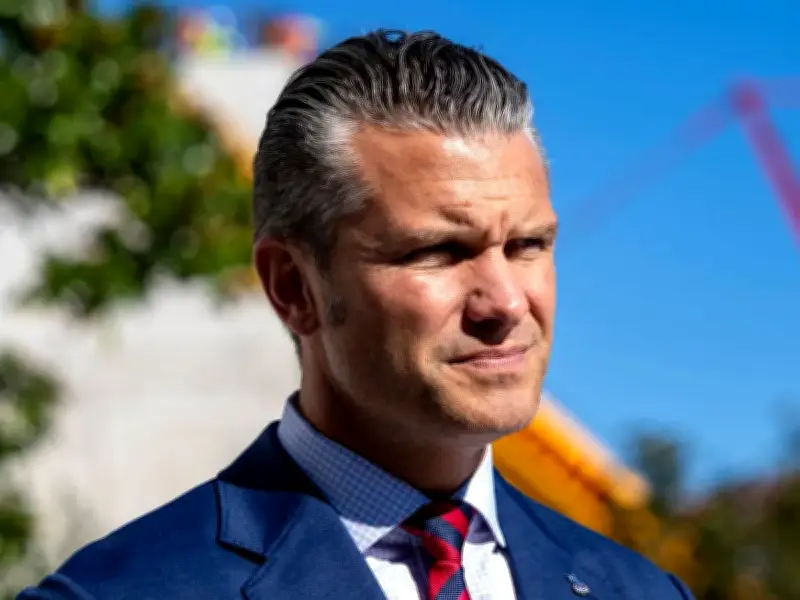
Donald Trump's defence secretary, Pete Hegseth, announced on Thursday that the public would be able to watch the moment Nidal Hasan dies by firing squad on a live feed. Hasan, 56, shot dead 12 soldiers and one civilian at Fort Hood, a US Army post in Texas, in 2009, and will become the first person to die by military execution in 60 years on December 3.
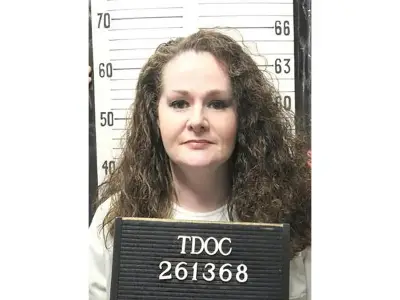
His will be the first ever US execution to be livestreamed, and the move from Hegseth has sparked massive backlash in the country and beyond. Particularly in the aftermath of the botched attempt to execute Tennessee death row prisoner Christa Pike by lethal injection.
Amnesty International leads global condemnation
Leading the global backlash was Amnesty International, which condemned the plans as "deeply disturbing" and "an appalling disregard for human dignity". Kyinzom Dhongdue, Strategic Campaigns and Advocacy Manager for the organisation said: "Pete Hegseth's comments about the planned execution of Nidal Hasan are deeply disturbing."
"The suggestion that an execution by firing squad should be livestreamed for public viewing is an appalling disregard for human dignity. Turning a state-sanctioned killing into a public spectacle only compounds the cruelty of the death penalty. Amnesty International opposes the death penalty in all cases, without exception, regardless of the crime committed. It is the ultimate cruel, inhuman and degrading punishment, and a violation of the right to life."
Labour chair Bridget Phillipson also voiced her views on BBC's Today programme, saying: "This is a matter for the US government. It's not something that the British government would routinely have a position on. The view of the government is always that we are opposed to the death penalty.
"My personal view is that I am opposed to the death penalty and I find that rather disturbing is my honest reaction." She added: "I'm proud that our country did away with the death penalty a very, very long time ago."
US politicians voice disgust
Leading figures across the US political spectrum have told of their disgust in the decision since it was announced by Hegseth and the Department of Defence. Senator Thom Tillis, a Republican senator, said that, while Hasan "should face the death penalty", the decision to make it public was "beyond disgusting".
He said: "Hasan should face the death penalty, but making his execution public and streaming it? Beyond disgusting. Public executions are what oppressive dictatorships like Iran and Afghanistan do. It should not be happening in America."
The view was shared by Democrat senator Chris Murphy, who told US broadcaster CNN the livestream plan was "disgusting". Like Tillis, he said it was reminiscent of executions carried out by the Islamic State terror group. Ordinary Americans have also offered swift condemnation of the plan, among them a former homicide detective who said Hegseth was trying to "fake tough" in a "real ugly way".
Patrick Skinner wrote on X, formerly Twitter: "As a homicide detective, I can say with all of my being that there is no lesson learned in seeing someone die. But there is a price. And that price is your peace. Your decency. And the soul of our society. We don't have to be this way, this fake tough but real ugly way. Stop."
Legal experts question viability
Judging by his own previous comments on public executions, some may have thought Donald Trump would be among those highly critical of such an action. Earlier this year he condemned Iran for its public hangings following widespread protests, and used them as a rationale for military action.
He told reporters before launching the conflict in the Middle East: "We've been told that the killing in Iran is stopping. It's stopping, and there's no plan for executions." He told representatives during his State of the Union address before launching the war: "We stopped them from hanging a lot of them with the threat of serious violence."
However, experts believe the outrageous plans ultimately will not pan out, with John Mills, a lawyer who works with inmates sentenced to death. He told the BBC the livestream decision is "unprecedented in the modern era" and "on uncertain legal terrain". But he added it was "little more than attention-seeking by the Trump administration", concluding it is "unlikely to occur, much less deliver any semblance of justice".
Elisabeth Semel, co-director of the Death Penalty Clinic at UC Berkeley Law, said Hegseth's announcement raises a host of legal and public policy questions, including concerns for the dignity of the defendant. Though there has been long-running discussion about the idea of televising an execution, she said: "I don't recall a situation in which it was instituted by the government. I think that also raises serious questions about what is the motivation of the government."
"This is a president who's about spectacle and that's, I think, precisely the message that he intends to deliver," she added. Brenner Fissell, a professor at Villanova Law and vice president of the National Institute of Military Justice, said the move was likely motivated by Hegseth's obsession with "lethality culture".
He said: "Firing squads can be a quicker, cleaner, more precise way to execute a prisoner. I don't think that's what's motivating this. There's a perceived masculinity and military-ness to firing squads that is part of the aura Hegseth is trying to emphasize - the 'lethality culture.'"