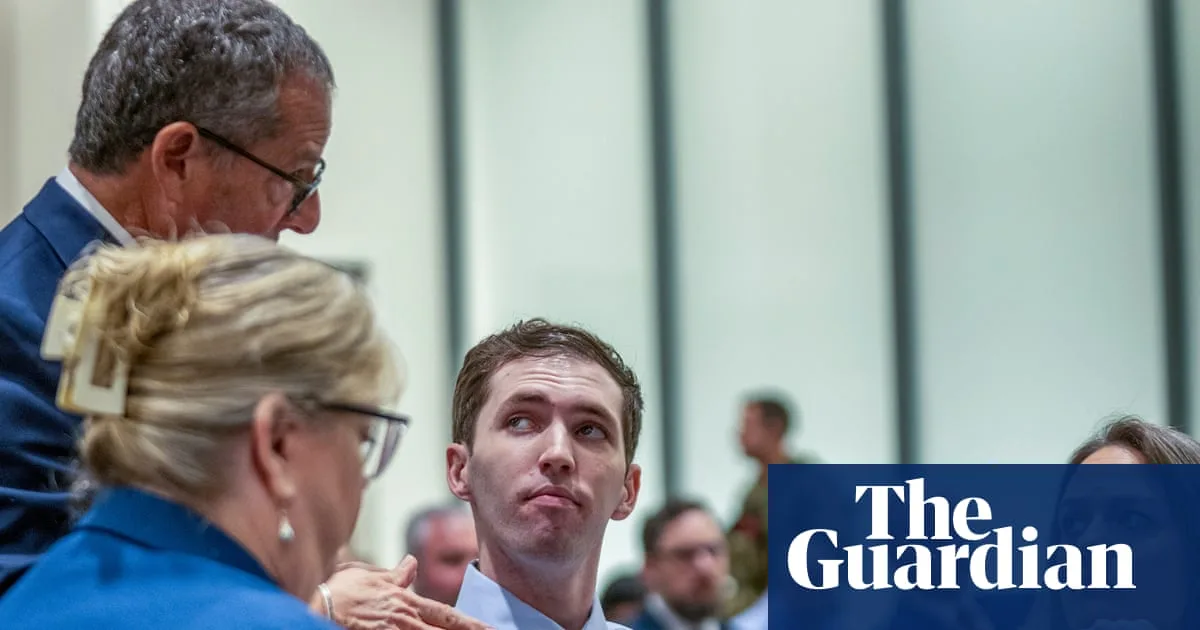
A Utah judge is weighing media access in the prosecution of Tyler Robinson, the 22-year-old man charged with aggravated murder in the shooting of far-right activist Charlie Kirk. Robinson made his first in-person court appearance on Thursday, arriving with restraints on his wrists and ankles, wearing a dress shirt, tie and slacks.
In the courtroom, Robinson smiled at family members seated in the front row, where his mother teared up and wiped her eyes with a tissue. His father and brother sat beside her. The defendant had previously appeared via video or audio feed from jail.
Robinson's legal team and the Utah County Sheriff's Office have asked Judge Tony Graf to ban cameras in the courtroom, citing concerns that media attention could prejudice potential jurors. Graf has already held a closed hearing on courtroom attire and security protocols, allowing Robinson to wear street clothes but requiring physical restraints, and prohibiting media from filming the restraints.
A coalition of news organisations, including the Associated Press, is fighting to preserve access. Attorney Michael Judd argued that open court safeguards the integrity of the fact-finding process and fosters public confidence. Additional journalists and the public can attend hearings, but typically only one photographer and one videographer are designated to document proceedings.
Charlie Kirk's widow, Erika Kirk, has called for full transparency, saying 'We deserve to have cameras in there.' Robinson's attorney Kathy Nester raised concern that digitally altered versions of his initial court photo have spread online, creating misinformation. President Donald Trump commented on the case, saying 'I hope he gets the death penalty.'