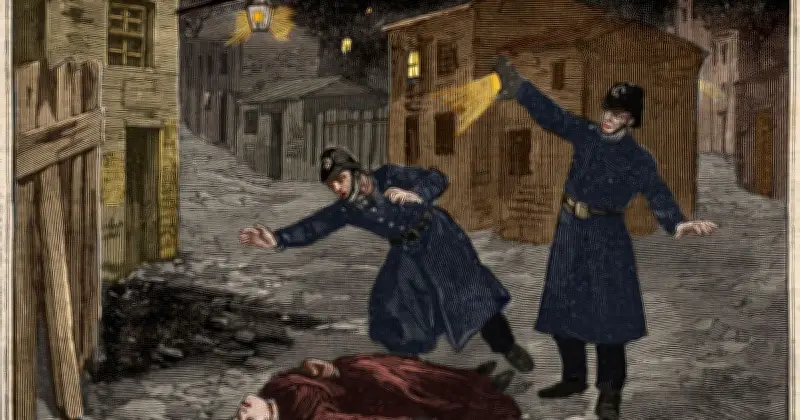
Forensic scientists believe they may have finally unmasked Jack the Ripper, one of England's greatest mysteries, more than 130 years after the serial killer terrorised the streets of Whitechapel.
Between August and November 1888, the notorious killer brutally murdered five women in the impoverished East End district, two of them on the same night. All of the victims had their throats cut, and all except one were mutilated after death.
Genetic Tests Point to Polish Barber
A series of genetic tests indicates the infamous murderer was Aaron Kosminski, a 23-year-old Polish barber who was one of the Metropolitan Police's prime suspects at the time.
Kosminski, a Polish-born Jewish immigrant who settled in London's East End after escaping persecution in the late 1800s, worked as a hairdresser in Whitechapel and reportedly exhibited early signs of serious mental illness.
Kosminski's Life and Institutionalisation
In 1891, Kosminski was committed to a psychiatric institution after threatening his sister with a knife. He was initially admitted to Colney Hatch Lunatic Asylum before being transferred to Leavesden Asylum.
He had a paranoid fear of being fed by other people and refused to wash or bathe. By February 1919, he weighed just 96 pounds (44 kg); he died the following month, aged 53.
Police officials later named him as a key suspect, with one high-ranking officer alleging an eyewitness had recognised him but declined to testify.
Shawl Evidence and DNA Match
The latest breakthrough revolves around a silk shawl reportedly discovered next to the mutilated body of Catherine Eddowes, the fourth victim, who was murdered in 1888. Forensic experts examined DNA from blood and semen on the material and matched it against specimens from living relatives of both Eddowes and Kosminski.
According to the recent study, the DNA presents a genetic match with some of Kosminski's descendants. If accurate, this would be the most compelling scientific connection yet between Kosminski and the murders.
Experts Question the Findings
Several experts have pointed out that the study fails to publish the discovered genetic sequences, instead displaying them as coloured blocks on a chart, making verification difficult. The authors cited UK privacy laws as the reason for withholding further details.
Forensic experts have challenged this justification, arguing that mitochondrial DNA presents no privacy concerns and could have been disclosed without breaching privacy regulations. Some historians also suggest there is no proof that the shawl was ever at the crime scene, while others argue it may have been contaminated numerous times over the past century.