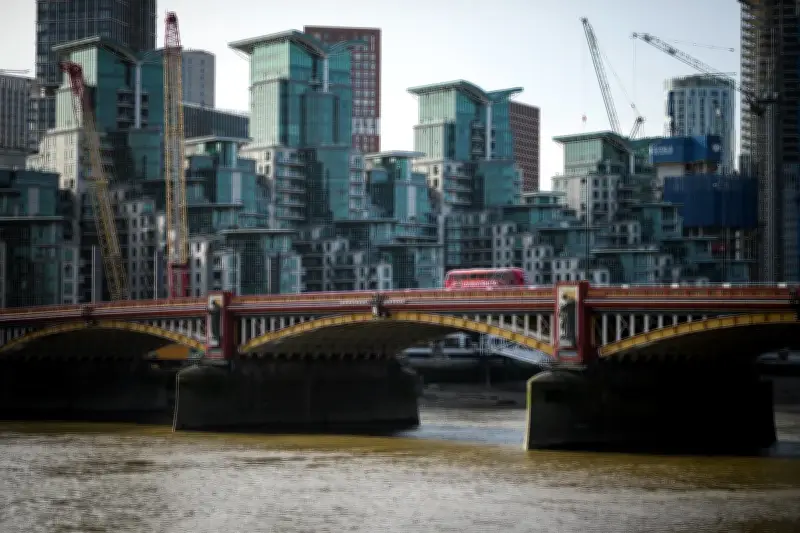
London's busiest central bridge, Vauxhall Bridge, could close to buses and fire engines within two to four years unless urgent repairs are carried out, Transport for London (TfL) has warned. The crossing, which spans the Thames, requires an estimated £60 million of work. Without the repairs, the bridge could be forced to close altogether to vehicles within four to ten years.
Deteriorating Steelwork and Weight Restrictions
TfL has applied to the government's £1 billion structures fund for the money to repair the bridge, with successful bids to be announced in due course. Its application to the Department for Transport reveals the extent of the repairs required. The primary issue is the "deterioration of the steelwork caused by water ingress", the application reads, and despite efforts to renew the waterproofing in 2020, the "deterioration of the underside steelwork persists".
The "key structural elements" are in "very poor condition" and have forced a recent 18-tonne weight restriction. TfL added that the fascia panels on the bridge are "at risk of detaching and falling onto the river below", which could pose a hazard to passing vessels.
Potential Closures and Traffic Impact
The application says without crucial investment, a 7.5-tonne limit would be introduced by 2030, meaning the bridge would be shut to buses, coaches, fire engines, and other emergency service vehicles. Without the work being carried out, the Grade II-listed bridge would need to be closed to all vehicles by 2036.
Speaking to BBC London, David Row, TfL's director of investment planning, agreed the cost of TfL's planned structures renewal would cost about £60 million, with the authority currently spending £30 million a year on renewing its structures. If the bid is unsuccessful, Mr Row said TfL would have to "look very, very carefully about where we prioritise our renewals."
"We have a certain amount that we can invest every year but with projects as big as Vauxhall Bridge... we really, really do need support alongside what we can bring", he added.
Broader Bridge Network Concerns
As many as 44,000 vehicles use Vauxhall Bridge every day, including some 2,450 buses and 1,850 heavy goods vehicles. Three of the seven road bridges owned by TfL that cross the Thames are in a "very poor state", namely Vauxhall, Lambeth, and Westminster. The other four - Twickenham, Chiswick, Battersea, and Kew - are all down as "poor".
Mr Row said TfL was investing "very significant amounts" to keep the bridges in operation, but that there was a backlog due to "reduced income." He explained that the transport authority's finances had been hit by the loss of an operating grant it received from the government until 2018 and the impact of Covid-19.
While TfL spends £850 million a year on maintaining its network, it should be spending closer to £1.2 billion a year, with the backlog on overall work required growing to £6.5 billion.
Other Funding Bids and Restrictions
The Department for Transport launched its structures fund in April. Authorities across the country are now bidding to receive part of that £1 billion pot. TfL has also put in a bid for funding to repair the Croydon Flyover in south London, which is in a "critical state of deterioration" due to water damage. Essential components of the bridge - which carries as many as 40,000 vehicles every day - are already understood to be "life-expired."
It is one of six projects which has been earmarked as "high priority" for repairs due to safety concerns. Other structures which have restrictions for safety concerns include Albert Bridge, Broadmead Bridge, Hubert Grove Footbridge, and Richmond Bridge.
London's Mayor Lord Khan told BBC London the city had struggled with its bridges because "we had anti-London governments in eight of my last 10 years." "The good news is this government has notably increased massively the capital funding that TfL gets but also that we can bid now for infrastructure projects", he said.