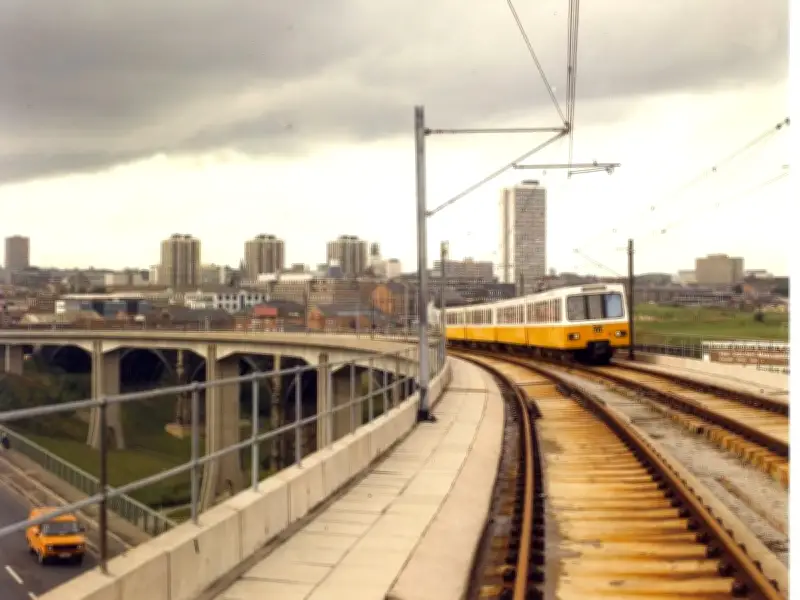
The original Tyne and Wear Metro trains have been retired from service after 46 years, having carried 1.7 billion customer journeys since entering service in August 1980. The last of the old trains ran on June 26, an event that drew large crowds from the UK and abroad.
The fleet has now been replaced by the new generation of Stadler Metro trains, which are all available for service. The old trains clocked up half a billion kilometres over their four-and-a-half decades of operation.
A game-changer for regional transport
The Metro fleet was a game-changer for local public transport and an integral part of daily life in the North East. The iconic yellow and white colour scheme and cutting-edge technology made the trains stand out from their first day in service.
The system attracted national attention, featuring on the BBC's Tomorrow's World programme. It also appeared in the 1991 television series Spender, when Jimmy Nail ran after a Metro train down a tunnel, and a whole train was transported to Gateshead for the National Garden Festival in 1990.
Design and construction history
The idea for a Metro system was pitched to Ted Heath's government in the early 1970s, with the first carriage designs drawn up to offer a futuristic vision of transport. Funding was approved in late 1972, and a procurement process began to find a company to build the trains.
By 1976 a test track had been built at Middle Engine Lane in North Tyneside, and an order was placed with Metro-Cammell of Birmingham. The manufacturer had previously built trains for the London Underground, Glasgow subway, British Rail, and the Hong Kong Metro.
Technical specifications and rollout
The design was based on a contemporary German tram called a Stadtbahnwagen B, but the trains were entirely bespoke for the Tyne and Wear Metro. They ran on high voltage power from overhead lines delivering 1,500 volts. Each train weighed 40 tonnes and had 84 seats, with room for 188 standing passengers.
By March 1980, 56 trains had been delivered by rail to Metro's Gosforth depot. The number rose to 90 over the next few years as the network expanded. The first two prototypes, carriages 4001 and 4002, were delivered to the test track in May and June of 1975 and have since clocked up mileage roughly 20 times more than an average family car travels in its lifetime.
End of an era
The test track was used for school rail safety talks before its closure in July 1980 and was visited by 35,000 people over five years of operations. Metrocar 4001 was the first test train to travel to South Hylton after the Sunderland line opened in April 2002.
In 2017 the Government approved £362m in funding to replace the old fleet, with the replacement happening in stages from 2023 through to 2026. Two original trains have been donated to local museums, one at the Stephenson Steam Railway in North Tyneside and the other at the North East Land Sea and Air Museum in Washington.