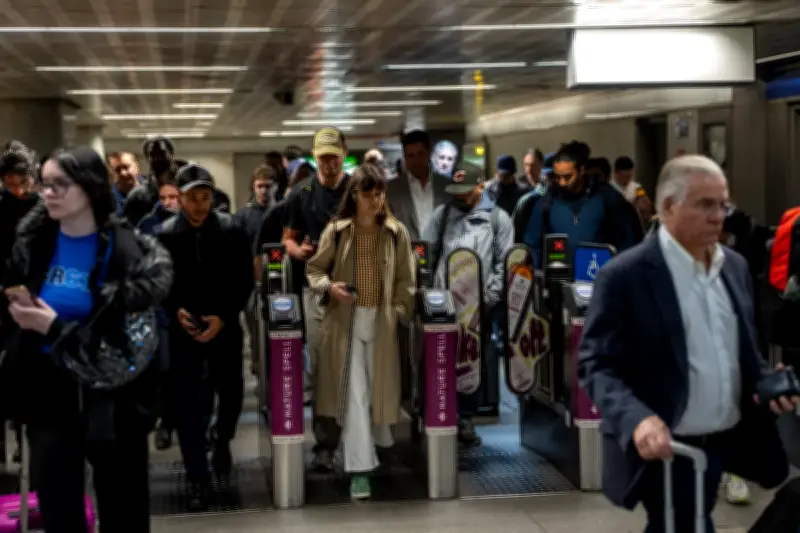
Fresh talks are due to take place next week in an attempt to prevent a series of Tube strikes by the RMT union. The National Union of Rail, Maritime and Transport Workers (RMT) and London Underground are set to meet on Tuesday under the auspices of the ACAS conciliatory service.
The two sides will again explore whether they can bridge the gap in the long-running dispute over a four-day week for Tube drivers. If the latest negotiations fail, the first RMT walkout is scheduled for next Thursday, followed by seven more in the run-up to Christmas and into the New Year.
Strike threat and festive impact
The union has been accused of threatening to “steal Christmas” from Londoners and the many businesses in the capital, including pubs, clubs, shops, restaurants and theatres, which rely on strong takings during the festive season.
The RMT’s industrial action looms as the Transport Salaried Staffs’ Association (TSSA) has ordered a snap strike at the end of this week in a dispute over the sacking of one of its members. The walkout is set to start at midday on Friday after a vote by fewer than 24 TSSA members in a control room in South Kensington, west London. The action will shut the Piccadilly line for more than 24 hours and also heavily impact the District line.
Dispute background
Politicians have criticised the walkout for holding London “to ransom” on the back of a vote by so few workers. The TSSA is also threatening to strike on Great Western Railway services in a dispute over pay, pensions and working arrangements.
The RMT went on strike earlier this year over proposals for a four-day week, with no cut in the pay of drivers, many of whom earn more than £70,000 a year. The union objected to the reforms because they meant some drivers who wanted to stay on a five-day week would have had to move depot. It also claimed they would damage drivers’ working conditions.
However, the RMT’s stance has been undermined by the Aslef train drivers’ union fully backing the reforms, which it described as offering the best working conditions on the whole of the rail network.
Proposals and next steps
Seeking to avoid the strikes, Transport for London more recently proposed a third option for drivers. They were initially offered a four-day week, working 34 hours, with new terms and conditions, paid for 35 hours per week, with other non-driving work such as safety training for a few extra days a year. Alternatively, they could stay on the current 38.5 hours over five days, old terms and conditions, with days off in lieu for hours worked over 35 a week.
Subsequently, TfL proposed the third option of drivers working 36 hours over five days, opting into the new terms and conditions, keeping the same leave allowance, and staying at their depot. The RMT again rejected this offer and stepped up its strike threat with its proposed eight walkouts, scheduled for Thursday 26 November 2026, Thursday 17 December 2026, Saturday 19 December 2026, Monday 4 January 2027, Wednesday 6 January 2027, Wednesday 17 February 2027, Tuesday 23 February 2027, and Thursday 25 February 2027.
The talks offer a glimmer of hope that the industrial action could be called off, but a series of past meetings have failed to make a significant breakthrough.