
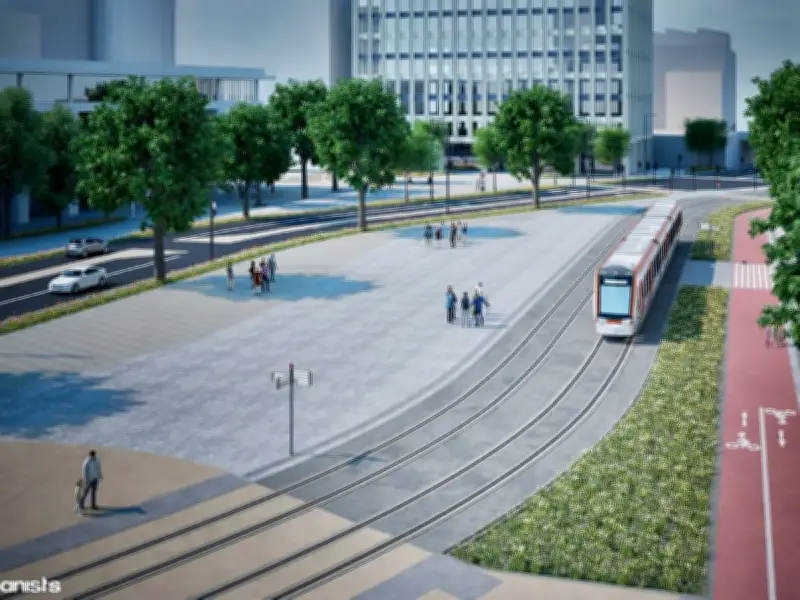
The cost of the first phase of the Cardiff Crossrail tram-train route from Cardiff city centre to Cardiff Bay is expected to come in £20m above the initial forecast. The scheme is now projected to cost £120m, up from an initial estimate of around £100m.
The project will see tram-trains run from a new dedicated station on the southside of Cardiff Central Station, travelling on-street through Callaghan Square. The route will then join the existing heavy railway line running alongside Lloyd George Avenue, which will be modified for tram-trains, before reaching a new platform at Cardiff Bay station.
Funding and Cost Pressures
This is the first phase of Cardiff Council’s long-term Cardiff Crossrail vision. The initial phase secured £50m from the then Conservative UK Government through its Levelling Up Fund over three years ago. A condition of the funding was that it be matched by the Welsh Government, which has been secured.
Work on the project began this summer, with the road network at Callaghan Square being reconfigured to allow tram-trains to run on-street. The scheme will also allow new tram-trains on the South Wales Metro to run from the Valleys to Cardiff Bay, avoiding the need to terminate at Queen Street Station.
However, amid inflationary pressures, and with rail projects in the UK not uncommonly exceeding their initial cost projections, the scheme is now expected to cost £120m. Cardiff Council is now looking to both the UK and Welsh Governments to commit a further £20m in contingency funding. As things stand, the full £20m contingency is expected to be required. Without additional funding commitments, Cardiff Council will not be able to meet the extra cost itself.
Statements from Partners
The rail element of the project, which Transport for Wales will deliver with its supply partners, is scheduled to be contractually signed off by the end of this year or early next year. Cardiff Council said it was confident the required contingency funding would be forthcoming and that the project would be completed.
In a statement, the council said: “Welsh Government and UK Government originally committed to funding the first phase of the Cardiff Crossrail project in January 2023.
“Since that time there has been significant volatility in the global economy and supply chains. Like many major infrastructure projects, Cardiff Crossrail has been affected by rising costs for raw materials, manufacturing, construction, and supply, which have increased across the sector.
“Cardiff Crossrail remains a hugely important project for both the city and the wider region. It will improve connectivity between Central Station and Cardiff Bay, support regeneration and investment, and form the first step towards a wider tram network.
“It is important that Welsh Government and UK Government continue to work closely with all partner organisations when considering options to ensure financial contingency remains in place, with any delays in the project likely to result in further cost pressures.”
The Welsh Government confirmed it was in discussions with the UK Government over a funding solution. In a statement, it said: “We are working closely with the UK Government, Transport for Wales and Cardiff Council on the delivery of the initial phase of Cardiff Crossrail.
“Cardiff Council have identified potential cost increases to the scheme that reduce the contingency within the agreed funding agreement. All partners are considering options to ensure appropriate contingency is in place to support the delivery of this important scheme.”
Funding Context and Next Steps
There is an argument that, as rail infrastructure is not devolved, the UK Government should provide the additional funding required for the first phase of Cardiff Crossrail in its entirety. In the run-up to the Senedd election, Prime Minister Keir Starmer said he was committed to funding £14bn of identified rail projects in Wales, although he did not specify a timeframe.
However, that was a political commitment made by a Prime Minister who is no longer even an MP. It does not bind the Department for Transport, or, more importantly, the Treasury, to provide £14bn for rail enhancement projects in Wales.
In its last spending review, the UK Government allocated just £300m to Wales for new rail projects, compared with £34bn for England. The next spending review, which is under way ahead of its publication next year, will be the acid test of the UK Government’s commitment to addressing decades of underinvestment in new rail projects in Wales.
The Welsh Government has a track record of having to fund rail enhancements that are not devolved, using money that could otherwise have been spent on devolved areas such as health and education. It spent £160m on upgrading the Ebbw Vale line, including a £70m, non-interest-bearing loan to Blaenau Gwent repayable over 50 years. It has also had to commit around £22m towards a £140m revamp of Cardiff Central railway station, while the Cardiff Capital Region, which comprises the 10 local authorities of south-east Wales, has pledged a further £40m. The Department for Transport is contributing £77.8m.




