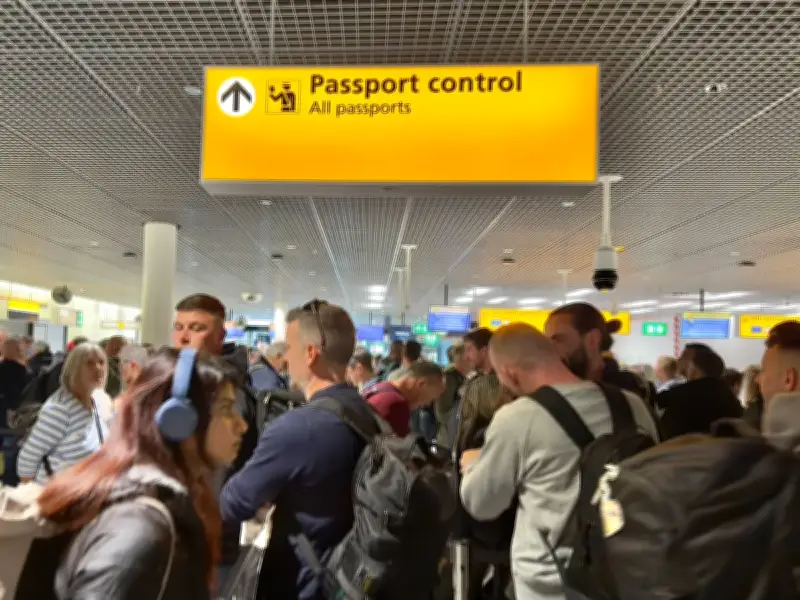
British holidaymakers heading to Europe are being urged not to fall for websites claiming to sell the European Travel Information and Authorisation System (ETIAS), as search interest suggests many are already trying to understand what the delayed travel permit means for future trips. The official ETIAS fee is listed as €20, which is around £17, but travellers do not need to pay this yet, according to travel experts at The Luxury Holiday Company.
The scheme, which will require travellers to apply for authorisation before travelling to the EU, had been expected to launch towards the end of 2026, but applications are not currently being collected and a start date has yet to be announced.
ETIAS Not Yet in Operation
The EU's ETIAS website states: "ETIAS is currently not in operation and no applications for travel authorisations are collected at this point. The European Union will inform about the specific date for the start of ETIAS several months prior to its launch."
Recent Google search data showed there had been 338,000 searches for ETIAS, after interest previously peaked at 582,000 searches between December 2024 and January 2025. Travel experts predict a similar spike could happen again as people start researching 2027 holidays and try to work out which European rules apply.
While UK travellers do not currently need to apply or pay for ETIAS, the separate Entry/Exit System (EES) is already in place and can mean biometric checks, such as fingerprints and a facial image, when travelling to the Schengen Area for short stays.
Expert Advice on What Applies Now
Rachel Pennycook, Europe travel specialist from The Luxury Holiday Company, said: "The confusion is understandable because ETIAS was expected to be the next big change for Europe travel and many people thought they would need to deal with it around now. But the important thing is that ETIAS is not live, applications are not open, and travellers should not be paying anyone to process it yet."
She added: "That does not mean Europe travel rules have stood still. EES is already changing how UK passport holders are processed at Schengen borders, and experiences can vary depending on the country, airport, port, route and time of travel."
"For anyone booking a European holiday for late 2026 or 2027, the message is not to panic, but to be clear on what applies now. Do not worry about applying for ETIAS yet, but do check your passport, allow extra time for border checks, and avoid assuming every destination will be handling EES in exactly the same way."
Beware of Scam Sites and Plan Ahead
Pennycook warned: "ETIAS will be a new online travel authorisation for visa-exempt travellers visiting 30 European countries, including British travellers heading to most Schengen destinations. However, it is not live yet, so there is nothing travellers need to apply for today, even if they are already booking holidays for 2027."
She continued: "This is where people need to be careful. A site may look official, but if it is offering to secure ETIAS now, that should be treated as a red flag. When ETIAS does open, travellers should apply through the official EU website or app, rather than paying third-party sites that may charge unnecessary fees on top of the official cost."
On EES, she said: "Although the ETIAS visas have been delayed, EES is already in place and is a separate system travellers still need to be aware of. While ETIAS will require travellers to apply before their trip once it launches, EES records non-EU travellers as they enter and leave the Schengen Area."
Pennycook also noted that recent research found 87% of Brits would be interested in taking a rail or cruise-style holiday, with almost half saying these trips offer better value for money and 40% drawn to the more relaxed pace of travel. Rail, cruise and hybrid rail-and-cruise trips are up 31% year-on-year, and group trips have increased by 55%.
She advised booking complex trips earlier, especially at peak times, saying: "The more moving parts a trip has, the earlier it is worth planning. This is particularly true for journeys involving rail connections, cruises, specialist accommodation, popular European cities or travel over Easter, summer and Christmas." She added that planning ahead gives travellers more choice and time to check details such as passport dates, border checks, travel authorisations and connection times.