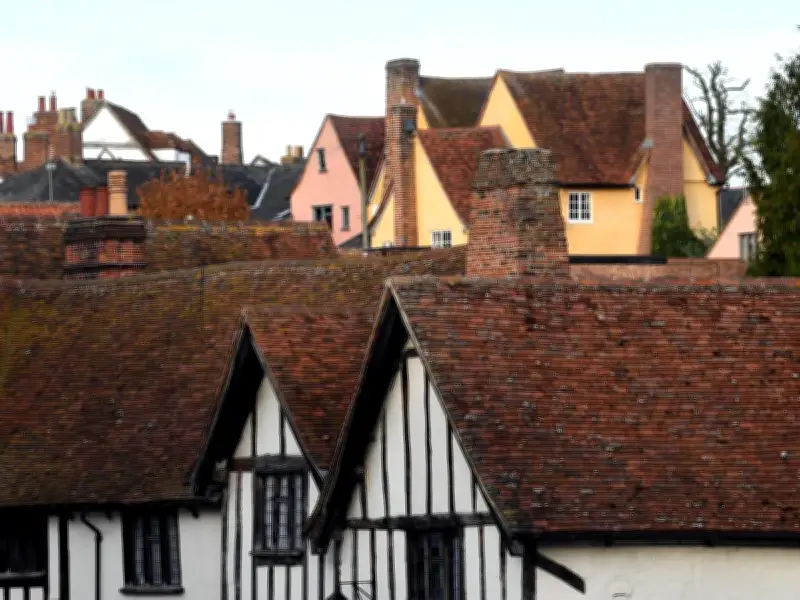
Lavenham in Suffolk is one of the UK's best-preserved medieval towns, famous for looking frozen in time after its primary industry collapsed, leaving homes as they appeared in the 16th century.
Back in the 15th century, Lavenham was one of the wealthiest settlements in England thanks to the booming wool trade. Wealthy merchants built large, opulent homes and funded the late-Gothic Church of St Peter and St Paul.
Industry collapse preserved the town
In the late 16th century, the wool industry was decimated by cheap foreign imports and heavy taxation. The formerly wealthy residents saw their money disappear overnight, and people could no longer afford to rebuild or modernise their homes.

These same timber-framed Tudor homes have stood in place for centuries, untouched, and are now an iconic sight on the town's high street. More than 300 of them are listed as historic structures, and hundreds lean at odd angles due to the warping of the timber over the years.
Historic landmarks and famous connections
One of the must-sees of the village, aside from its history-lined streets, is the spectacular Lavenham Guildhall. This 16th-century building is now managed and maintained by the National Trust, with displays telling the story of the village and its residents through the centuries.
As you wander through the town, keep an eye out for the famous Crooked House, thought to be the inspiration behind the nursery rhyme "There was a crooked man, who lived in a crooked house". Keen-eyed tourists might also recognise the De Vere House on Water Street, which was used as a shooting location for the Harry Potter franchise.
Now, the De Vere House is luxury accommodation where tourists can spend the night in four-poster beds, admiring the wooden beams that are an emblem of the style of architecture.