The UK's coastline is dotted with historic harbours, each offering a unique blend of maritime heritage, fresh seafood, and scenic beauty. From the working fishing port of Pittenweem in Fife to the palm-fringed village of Plockton in the Highlands, these ten destinations are among the best for a coastal escape.
Scottish Harbours: Pittenweem and Plockton
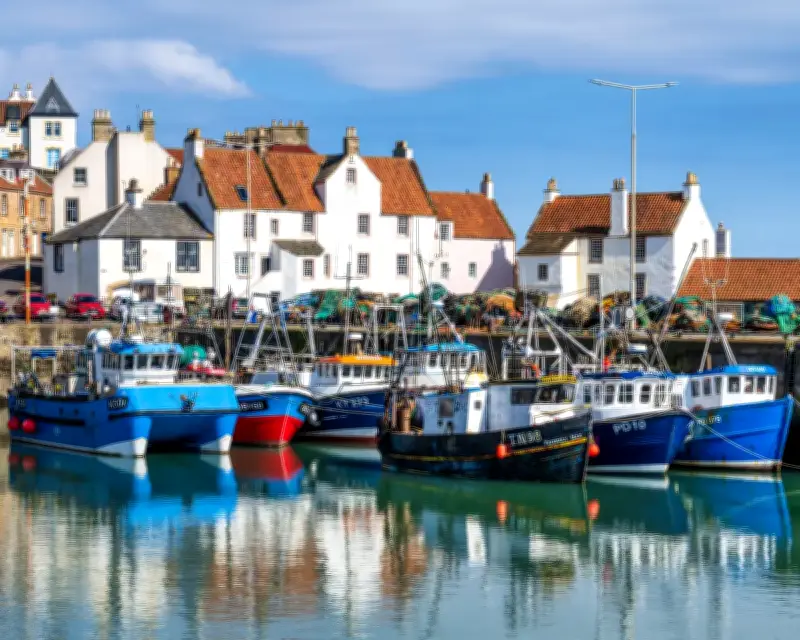
Pittenweem, a working East Neuk fishing port in Fife, is home to a fleet of about 30 small trawlers and creel boats. Their catches are sold at the covered market on the quay each weekday morning and served at the harbourside Dory Bistro and Chip Ahoy at the Larachmhor pub. The village, whose name means “place of the cave,” also boasts a Victorian-era swimming pool next to the beach, filled by the tide twice a day. After falling into disrepair, it was saved by a local group called the West Braes Project and reopened in 2021, along with the crazy golf course.
Early each August, Pittenweem hosts an annual arts festival with exhibits by nearly 200 artists in harbourside spaces, heritage buildings, homes, and studios. It is flanked by two other pretty harbour villages, St Monans and Anstruther, while a third, Crail, is a little further north; the Fife Coastal Path links them all. The Bank in Anstruther offers harbour-view rooms with doubles from £120 B&B.

Northern Ireland and Wales: Carnlough and Solva
Carnlough in County Antrim has had a harbour since the late 1700s, but the one standing today dates to 1853, built on the orders of the Marchioness of Londonderry to transport limestone from her quarries. Game of Thrones fans may recognise it as the Braavos canal. The old railway line between the quarry and harbour is now a footpath with panoramic views, leading to Cranny Falls. The harbour bustles with local fishers, and boat trips set sail daily (£10 adults, £6 children; trips last 45 minutes). The Twilight coffeeshop serves brunch and has bunkhouse accommodation upstairs, while the Harbourview hotel offers more than 200 Irish whiskeys and hosts an annual whiskey festival (doubles from £120 B&B).
Solva in Pembrokeshire sits at the bottom of a steep-sided valley on St Brides Bay, a few miles from St David’s. At high tide, it is popular with paddleboarders, but at low tide it becomes a huge stretch of sand with the River Solva meandering down the middle, revealing rock pools, caves, and safe, shallow swimming spots. The village is split into Lower Solva, by the harbour, and Upper Solva, with views over both from the Gribin headland. Cafe on the Quay and the Harbour Inn have outdoor tables, while the Cambrian Inn is a restaurant with five rooms (doubles from £140 B&B).
English Harbours: Craster to Lymington
Craster in Northumberland is known for its kippers, produced by L Robson & Sons at its smokehouse since 1856. The harbour, built in 1906, has the ruins of Dunstanburgh Castle as a backdrop. Visitors can buy kippers from the shop, enjoy them at the Piper’s Pitch hut, or try them in a scotch egg at the Jolly Fisherman pub. The Cottage Inn has 10 rooms (doubles from £105 room only), and the Dunstanburgh Castle Inn in Embleton has 16 (doubles from £120 B&B).
Clovelly in Devon, once the property of William the Conqueror, is still privately owned (entry is £10.90 adults; £6.25 children). The tiny harbour stands at the foot of a 122-metre cliff, reached via a steep, cobbled street, with goods transported by sledges and donkeys. The Red Lion hotel has 17 rooms with sea views (doubles from £225 B&B), and the Fisherman’s Cottage & Kingsley Museum is a 1930s time capsule.
Staithes in North Yorkshire, meaning “landing place” in Old English, was once one of the busiest fishing ports in the north-east. Today, a handful of cobles remain, plus boats running wildlife-watching trips, from which minke whales can be seen in August and September. The Cod & Lobster pub is on the harbour wall, and the Endeavour B&B has four rooms (doubles from £120 B&B). There is an annual arts festival (this year running 11-13 September).

Porthleven in Cornwall, with its double harbour opened in 1825, is said to have been built by French prisoners of war after Waterloo. It is lined with pubs, restaurants, and galleries, with a craft market most days from Easter to the end of October and a food festival in April. The Harbour Inn is a refurbished pub with 15 rooms (doubles from £110 B&B).
Lyme Regis in Dorset features the Cobb, a breakwater and jetty first mentioned in 1328, rebuilt in the late 18th and 19th centuries. It is on the west side of the town, known locally as the Pearl of Dorset, and is great for sunset strolls. Seals and dolphins are often seen, and the beaches are fertile ground for fossil hunters, including the ichthyosaurus excavated by Mary Anning in 1812. The Cobb Arms has three rooms (doubles £155 B&B).
Lymington in Hampshire, first mentioned in the Domesday Book, is now a yachting hub with two marinas and the old town quay. The town’s seawater baths, established in 1833, are still open for swimmers. The Wightlink ferry port at Lymington Pier takes passengers to Yarmouth on the Isle of Wight, a crossing of about 40 minutes.
Plockton: The Jewel of the Highlands
Plockton, a planned harbour village built in the early 1800s for the herring industry, is known as the Jewel of the Highlands. It sits in a sheltered bay on Loch Carron, with a mild climate that allows palm trees to thrive. Visitors can buy fresh fish and prawns off the pier when boats come in at about 3pm, go on sea-kayak tours and seal-watching trips, and watch the annual summer regatta in July. The Plockton Inn serves local langoustines, and the Plockton hotel has six rooms with loch views and five overlooking the gardens (doubles £180 B&B). It is about an hour’s drive over the bridge to the Isle of Skye and on to Portree.